
Bowtech Core SS Review
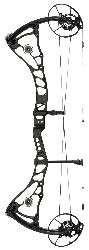

from $825
Pros
- The smoothest draw in its class - the pull rolls into the valley and eases onto the back wall with no late hump, the kind of cycle you can shoot all afternoon without fatigue
- Full DeadLock cam tuning corrects a left or right paper tear with an Allen key on the shooting line - no press, no shims, the complete flagship system
- Dead, quiet shot - the lowest post-shot vibration of the bows measured against it, with twin Orbit dampeners soaking up any residual buzz
- Firm, rigid back wall paired with an unusually honest speed rating - owners clock the real numbers right where the 337 IBO promises
- GripLock lets you set the grip angle to your hand and CenterMass drops the sight and rest into the riser itself for a low, balanced front end
Cons
- Tuned for a smooth, forgiving draw over raw velocity - a shooter chasing maximum speed can flip the FlipDisc to Performance for roughly ten more feet per second, or step to the faster Core SR
- Angling the GripLock grip far out from the riser adds a touch of hand vibration - most owners find it feels best tucked in tight against the riser, which is a two-screw adjustment
Video
content from YouTube
Editors' review
Bowtech's own reviewers call the Core SS the super-smooth half of a two-bow idea, and the label is earned in the first six inches of the draw. Where most hunting bows fight you over the top, this one rolls into the valley so quietly that owners describe pulling seventy pounds and feeling like the limbs are barely loaded. It launched for 2024 as Bowtech's forgiving flagship and carried unchanged into 2025 - a 31.5-inch axle-to-axle hunter built around the brand's full tuning suite rather than a speed chart. The story here is not the number on the chronograph; it is how little the bow asks of the shooter while still carrying every piece of hardware from the top of the line. DeadLock cams you tune by hand, a grip you set to your own wrist, a sight that mounts into the riser instead of hanging off the side - all of it wrapped in a compact chassis that clears a treestand window. Whether that trade of a few feet per second for an all-day draw is the right one depends entirely on what you value when you settle in behind the string.
Finish
The Core SS ships in a broad spread of solids and camo patterns: Black, Flat Dark Earth, OD Green, and Smoke Grey on the solid side, with Mossy Oak Country DNA, Realtree Edge, Gore Optifade Subalpine, Gore Optifade Elevated II, and Kuiu Verde covering the patterned options. That range lets the bow read as a clean range rig in a single tone or disappear into timber under a full camo wrap, and Bowtech's durable factory finish is the same coating it runs across the line - it shrugs off the scrape of a bow hanger and the rub of a saddle platform without showing wear quickly. Solid Black and Smoke Grey suit the shooter who splits time between the woods and the practice bale, while the earth-toned solids and the Optifade patterns lean toward the hunter who wants a rig that breaks up in the tree. Color availability can shift through the model year, and the camo finishes carry a small upcharge over the solids. It is a wider palette than most flagship hunters offer, which matters more than it sounds when a buyer wants a specific look.Riser
The riser is machined aluminum - not carbon, despite the near-flagship feature set - cut into a compact 31.5-inch axle-to-axle chassis that owners consistently describe as clean, sleek, and solid, among the better risers Bowtech has shipped lately. The headline is CenterMass: instead of hanging the sight off the side of the riser, Bowtech built a flat mounting bar that slides through a slot in the riser itself, letting the sight and a low-profile quiver sit tight to the center of the bow for better balance and a narrower carry. A drop-away rest can integrate the same way, and the traditional side mounting locations remain for shooters who want a conventional setup, so nothing is lost by keeping a standard rest and sight. Twin Orbit dampeners bolt to the riser top and bottom to kill post-shot vibration, and a roller cable guard keeps the cables running clean off to the side. In my experience the CenterMass integration is the kind of feature that looks like marketing until you shoulder the finished rig and feel how little the front end wants to twist. It is a lot of engineering packed into a chassis short enough to swing through a tight shooting lane.Grip
The Core SS carries Bowtech's GripLock, borrowed from the brand's target bows - a slim panel grip whose angle you set yourself by loosening two screws and turning a drive screw to pitch the grip in or out. That replaces the old system of buying separate grip plates to change wrist height; here it is one grip that rotates to whatever high-wrist or low-wrist position fits your hand. The shape itself is the low, torque-neutral Bowtech panel owners have liked for years, and it indexes the hand into a repeatable position at full draw. One honest note from hands-on use: angling the grip well out from the riser can add a little vibration into the hand, and most owners settle on tucking it back in tight against the riser where it feels deadest - which is exactly the adjustment the two screws let you make. For a shooter who has dialed in a specific wrist angle on another bow, being able to match it here rather than living with a fixed grip is a genuine advantage. Set it once and it stays.Limbs
Bowtech offers the Core SS in 50, 60, and 70-pound peak weights, and because the limb bolts back each set down roughly ten pounds, the bow covers a full 40-to-70-pound hunting window with enough floor to suit a smaller-framed or recovering shooter. The limbs seat into Bowtech's Dual Lock pockets, which genuinely lock - unlike the mostly-cosmetic locking pockets on many bows, these hold the limb bolt captive until you deliberately loosen the pocket screw, so once the bow is set the limb-and-pocket interface stays put across a season. Owners rate these among the most solid limb pockets on the market and note how far back they sit on the limb for a rigid foundation. Winding the weight up or down at the limb bolts is straightforward with a single Allen key. The one visual quirk hands-on owners mention is that the limbs do not always sit flush against the front face of the pocket - it is consistent across the bow and does not affect function, but it is worth knowing before it catches your eye. The whole limb-and-pocket system is shared with the rest of Bowtech's DeadLock line, a design with a long reliability track record.Eccentric System
The DeadLock cam system is the reason a bow this smooth still counts as a serious tuning platform. If the Core SS throws a left or right tear, you loosen a set screw and turn a drive screw that walks the cam sideways on its axle, then lock it back down - no press, no shims, done on the shooting line, and this is the full DeadLock system rather than the simplified version on Bowtech's cheaper hunters. TimeLock adds a second adjuster that pulls timing creep out of the cables without a press, so a season's worth of cable stretch or a hot-to-cold timing shift is a quick fix in the field. Let-off is selectable at 80 or 85 percent - the share of peak weight your arms stop holding at full draw - and the module-and-draw-stop layout lets an advanced shooter dial holding weight further still without buying new mods. The 337 fps IBO rating (the industry's fixed-setup speed number at 30 inches, 70 pounds, 350 grains) is one owners single out as unusually honest: on a chronograph at 70 pounds and a 29-inch draw, the bow pushed a 350-grain arrow to 308 fps, a 450-grain shaft to 277 fps, and a heavy 500-grain arrow to 263 fps, while a 389-grain setup at 28 inches ran 296.7 fps with almost no shot-to-shot variation. FlipDisc is the versatility switch: a rotating module in the cam that flips between a Comfort setting and a Performance setting, trading the smoothest draw for roughly ten feet per second. Draw length adjusts from 26 to 31 inches in half-inch steps through those rotating modules, and that 31-inch ceiling gives a taller shooter a bit more reach than many compact hunters allow.Draw Cycle/Shootability
This is where the Core SS makes its case, and it makes it hard. Drawing it at seventy pounds the first thing that struck me was how little the bow announces peak weight - the cam rolls up and eases into the valley with none of the late-draw hump that defines most hunting bows, and the transition into the back wall is about as clean as anything I have pulled. Owners who shoot dozens of bows a year keep landing on the same verdict: the way this one moves into the valley is hard to match, and more than one called it the best draw they felt all season. The back wall behind it is firm and rigid without clunking - you hit a wall, not a slope, and it stays quiet doing it. The shot itself is dead in the hand and genuinely quiet, with the lowest post-shot vibration of the bows it was measured against and the twin Orbit dampeners taking the edge off any residual buzz. Flip the disc to Performance and the character sharpens: a small hump appears early in the draw and the bow firms up in exchange for its extra speed, a fair trade for the shooter who wants it but not the setting most owners leave it in. In Comfort, where the Core SS is meant to live, it is the rare hunting bow you can shoot for an afternoon without your form falling apart - the entire point of the design.Usage Scenarios
Picture a saddle hunter twenty feet up a white oak on a cold November morning, drawing slowly on a buck at eighteen yards with hands that are anything but steady: the smooth cycle lets that draw happen without a jerk that blows the stalk, the 6.25-inch brace height forgives the imperfect release, and a 60-pound setting drives plenty of energy for the shot. That is the Core SS's home - the treestand and saddle hunter who values a quiet, forgiving shot over raw speed, and who may sit for hours before a single opportunity. The compact 31.5-inch axle length clears tight shooting lanes and blind windows that foul a longer-limbed rig, while the low 40-pound floor of the draw-weight range opens the bow to a smaller-framed or shorter-draw adult who wants a real hunting setup rather than a youth platform. It doubles as an easy range and backyard bow precisely because the draw is so forgiving - a shooter working on form logs more good repetitions before fatigue sets in. The do-it-yourself DeadLock tuning rewards the owner who likes to keep their own gear shooting bullet holes without a shop trip. What it is not is a dedicated speed rig for the archer who wants every last foot per second downrange - that shooter is looking at the other half of the Core family.Bowtech Core SS vs Mathews Lift 33, Hoyt Ventum Pro 30
| Bow | Bowtech Core SS | Mathews Lift 33 | Hoyt Ventum Pro 30 |
| Version | 2025 | 2024 | 2022 |
| Picture |  |  |  |
| Brace Height | 6.25 " | 6.5 " | 6 " |
| AtA Length | 31.5 " | 33 " | 30 " |
| Draw Length | 26 " - 31 " | 26 " - 31.5 " | 25 " - 30 " |
| Draw Weight | 40 lbs - 70 lbs | 45 lbs - 80 lbs | 40 lbs - 80 lbs |
| IBO Speed | 337 fps | 343 fps | 342 fps |
| Weight | 4.5 lbs | 4.26 lbs | 4.45 lbs |
| Let-Off | 85% | 80% or 85% | 80% or 85% |
| Where to buy Best prices online | |||
| compare more bows | |||
The Core SS lands in the smooth-and-forgiving flagship-hunter class, and two cross-brand rivals bracket it on axle length. The Mathews Lift 33, at a $1,429 launch MSRP, is the longer bow at 33 inches and the faster one on paper - its SwitchWeight cam is rated to 343 fps and it reaches to 80 pounds, so a shooter who wants a lighter overall rig with more top-end speed and a longer, steadier hold has a real case for it. The Hoyt Ventum Pro 30, launched around $1,249, comes at the Core SS from the other side: a shorter 30-inch, 342 fps hunter for the archer who wants the most compact package for tight quarters. Against both, the Core SS trades a few feet per second of rated speed for the two things it does better than either - the smoothest draw of the three and the deepest do-it-yourself tuning, since DeadLock and TimeLock let you correct tune and timing on the shooting line without a press. The decision comes down to priorities: the Mathews Lift 33 for the buyer who wants a light, fast, long-axle flagship, the Hoyt Ventum Pro 30 for the shooter who wants the most compact chassis, and the Core SS for the hunter who values an all-day-comfortable draw and hands-on tunability above the last few feet per second.