
Bowtech Alliance Review
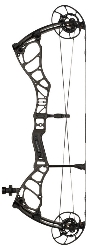

from $1000
Pros
- Dead in the hand after the shot - almost no post-shot vibration or hand shock; the faint nudge a bare bow gives disappears the moment a stabilizer goes on
- Comfort-mode draw builds and holds with no hump or dump - pulled at 70 lb it genuinely reads lighter than the number on the limb bolt
- Press-free DeadLock tuning shifts the cam left or right with an Allen key; finer threads and laser-etched marks turn paper-tuning into a shop-free job
- FlipDisc is two bows in one - flip to Performance for roughly 10 fps more, or back the module a half-inch for a deeper valley and low-90s let-off
- New 60 and 75 lb draw-weight options plus the angle-adjustable GripLock widen the fit well past the old 65-to-70 window
Cons
- Comfortable but thick GripLock grip is rubberized only at the throat, not stippled end to end - running it flush at the zero setting and seating the hand high settles the early flyers some shooters see
- Performance mode's extra speed rides a stiffer draw that stacks and dumps into the valley - most hunters simply leave it in Comfort, so treat the speed setting as a situational bonus, not the daily driver
Video
content from YouTube
Editors' review
Most flagship hunting bows make you choose up front: a smooth, forgiving draw or the headline speed number, pick one. The 2026 Bowtech Alliance refuses the choice. A small FlipDisc in each cam lets the same bow run a butter-smooth Comfort setting or flip to a faster, stiffer Performance setting - two personalities on one chassis, swapped without a new module or a trip to the press. And the chassis itself is a story: the Alliance is essentially last year's Proven 34 platform put on a diet, shedding the TimeLock hardware and more than half a pound to land at a compact 30.5-inch axle-to-axle (ATA - the tip-to-tip cam distance that sets how a bow handles in tight cover) and 4.09 pounds. The result is a press-free, dead-in-the-hand whitetail and turkey bow built for treestands and ground blinds, with a forgiving 6 7/16-inch brace height (the gap from string to grip - more is more forgiving of form) and an IBO rating up to 338 fps. This review covers the 30.5-inch Alliance; the longer 33-inch Alliance 33 is a separate platform for hunters who want more reach.
Finish
Bowtech offers the Alliance in seven finishes, a deeper bench than most premium hunters carry at launch. The lineup spans solid earth tones - Red Dirt, Stealth Grey, OD Green, and Sandstone - alongside three camo patterns: Mossy Oak Bottomland, Kuiu Verde, and GORE Optifade Subalpine. The solid Stealth Grey draws the most attention in hands-on coverage, a flat gunmetal tone that flatters the new riser's deep cutouts. The dip-coated camo options cover the two dominant whitetail-country and Western-terrain palettes, so a hunter can match the bow to bottomland timber or open subalpine slopes without an aftermarket wrap. Coverage is even into the riser pockets and around the limb cutouts, where past dip jobs sometimes left thin spots. For a bow this maneuverable, the finish choice is less about concealment math and more about matching the rest of a hunter's kit - and seven options make that easy.Riser
The Alliance rides an all-new riser, noticeably skinnier than prior Bowtech hunters with larger, more aggressive cutouts that are where most of the half-pound weight savings live. Bowtech kept the Integrate Mounting System (IMS), which bolts a compatible rest directly to the riser instead of hanging it off the side - cleaner alignment and a tidier load path. The Gen2 CenterMass sight slot returns, routing a compatible sight's mounting bar through the riser so its mass sits centered rather than cantilevered out front, and it picks up a new center adjustment this year. The limb pockets are now machined as 100-percent aluminum pieces and carry threaded holes that hint at bolt-on accessories down the road. A short lower stabilizer dampener ships on the bow to kill residual buzz; it threads off if a shooter prefers to run a full stabilizer in its place. In my experience the IMS rest mount is the quiet time-saver here - the rest seats square on the first try, and tuning starts from a known reference instead of a guess.Grip
The GripLock grip is the Alliance's most-debated piece of hardware, and the debate is worth understanding before purchase. It is a low-profile grip with a rubberized throat that stays warm in cold weather and a pair of set screws that, with an Allen key, let a shooter rotate the grip angle to match a high or low wrist. The angle adjustment is genuinely useful - dialing torque out of the hand is something most factory grips can't do at all. The recurring critique across hands-on use is that the grip is on the thick side and rubberized only at the throat rather than stippled the full length, the way premium grips from Mathews and Hoyt run a consistent surface from heel to web. Some shooters chase a few early flyers until they find their seat on it; running the GripLock flush at the zero setting and seating the hand high on the throat consistently tightens groups. It is a characteristic to shoot in person, not a defect - and the angle adjustment is a tool the competition mostly doesn't offer.Limbs
The Alliance uses split limbs seated in the redesigned 100-percent aluminum pockets, and the draw-weight story is the headline: Bowtech finally added 60 and 75 lb options alongside the familiar 65 and 70, a range archers had asked for across several model years. The 60 lb peak opens the bow to smaller-framed and youth-transitioning hunters who want a real hunting bow rather than a capped youth model, while the 75 lb ceiling serves the high-poundage crowd chasing kinetic energy. Adjusting draw weight runs through the limb bolts with no press required, and the redesigned pockets make the turns notably smooth and consistent through the full range rather than binding near the hard stop. The limb geometry stores enough energy to push the bow to its 338 fps IBO ceiling in Performance mode while keeping the 6 7/16-inch brace forgiving. It is a conventional, proven split-limb layout - Bowtech is not reinventing the limb here, and that reliability is the point on a bow meant to be tuned once and hunted hard.Eccentric System
The heart of the Alliance is the updated DeadLock cam paired with FlipDisc, and together they define the bow. DeadLock is Bowtech's press-free tuning system: two set screws and an Allen key shift the cam left or right to chase out arrow tears, and this year the threads are finer for smaller increments and the reference marks are laser-etched for repeatability - no bow press, no shop trip. FlipDisc is the dual-personality switch. In Comfort, the cam draws softer with an 85-percent let-off (let-off is the percentage of peak weight the cam sheds at full draw, so 85 percent leaves a hunter holding a fraction of the peak); flip the disc to Performance and the bow trades smoothness for roughly 10 fps and an 80-percent let-off. Draw length sets from 26 to 31 inches through a rotating module, no separate mod to buy. The published IBO is 338 fps in Performance at 30 inches and 70 pounds; real-world chronograph numbers land lower and depend on arrow weight - a 350-grain arrow at 70 pounds and a 30-inch draw clocks around 319 to 320 fps, while heavier hunting arrows in the 410-to-470-grain range run in the high 270s to high 290s in Comfort. There is a clever wrinkle: leaving the draw stop at the shooter's length while backing the module a half-inch short opens a much deeper valley and pushes let-off into the low-to-mid 90s, trading only a few fps - a free customization most cam systems can't touch.Draw Cycle/Shootability
In Comfort mode the Alliance is the bow Bowtech wants you to remember. The draw builds evenly off the front, climbs to peak without a hump, and rolls into a short, defined valley against a solid back wall - the kind of clean ramp that recalls a Darton or an older Hoyt RX draw, building force and then simply staying there until the wall stops the hand. Drawing it at 70 pounds in Comfort, I kept glancing at the scale, because the even ramp genuinely reads lighter than the number says it should. The valley is not the deepest on the market - it asks the shooter to stay engaged rather than letting the string drift - but it never feels like it wants to run away. Post-shot, the riser just sits there: hands-on measurement puts the three-shot noise around 70.65 decibels, dead in the hand with only a faint nudge bare that vanishes once a stabilizer threads on. Flip to Performance and the character changes - the back half stacks and the cam dumps harder into the valley, and across an afternoon of switching between the two I left it in Comfort, because the 10 fps wasn't worth surrendering the glide for a hunting setup. Accuracy follows from that smooth cycle: in expert testing the bow punched bullet-hole tears through paper and split a lighted nock at 45 yards, the kind of result a forgiving brace and a clean back wall make repeatable.Usage Scenarios
Picture the classic setup the Alliance was built for: a whitetail hunter twenty feet up an oak in tight timber, a quartering buck stepping into a narrow shooting lane, no room for a 34-inch bow to clear the tree. The 30.5-inch ATA pivots inside that lane, the 4.09-pound mass holds steady on a long sit, and the dead-in-hand shot means the deer hears the arrow hit before the bow finishes settling. The same compactness serves a turkey hunter folded into a ground blind, where every inch of ATA fights the blind walls. The new 60 lb option brings smaller-framed and younger hunters into a real hunting platform without a youth-bow ceiling, while the 75 lb setting feeds the kinetic-energy crowd. Where the Alliance reaches its limit is open Western country - long, exposed shots at elk or mule deer reward a longer, more stable axle, and that is exactly the buyer Bowtech points toward the 33-inch Alliance 33. For treestand and blind hunting of whitetail, turkey, hogs, and black bear at sensible bowhunting ranges, the 30.5-inch Alliance is squarely in its element.Bowtech Alliance vs Bowtech Proven 34
| Bow | Bowtech Alliance | Bowtech Proven 34 |
| Version | 2026 | 2026 |
| Picture | 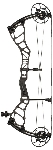 | 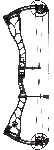 |
| Brace Height | 6.4375 " | 6.625 " |
| AtA Length | 30.5 " | 34 " |
| Draw Length | 26 " - 31 " | 25 " - 30 " |
| Draw Weight | 50 lbs - 75 lbs | 40 lbs - 70 lbs |
| IBO Speed | 338 fps | 336 fps |
| Weight | 4.09 lbs | 4.7 lbs |
| Let-Off | 80 / 85% | 80 / 85% |
| Where to buy Best prices online | ||
| compare more bows | ||
At a $1,499.99 launch MSRP, the Bowtech Alliance sits in premium compact-hunter territory, and its most natural cross-shop is in-house. The Bowtech Proven 34 is the step up for hunters who want more forgiveness and a steadier hold at distance - at $1,449.99 launch MSRP it shares the DeadLock and FlipDisc DNA but stretches to a 34-inch axle and 4.7 pounds, keeping the TimeLock hardware the Alliance drops, so it answers the Western and longer-shot brief where the Alliance answers the treestand one. The decision comes down to priorities: the Alliance for the treestand hunter who wants one compact, press-free bow with two draw personalities, and the Bowtech Proven 34 for stability and a steadier hold at longer range.