
Bowtech Samson Review
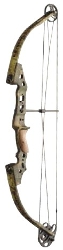
Pros
- Built for pass-through penetration - owners report clean bear and deer kills with the 100-pound version, backed by roughly 118 ft-lb of kinetic energy on tap
- Fills the rare 80-to-100-pound draw-force niche almost no production bow of its era covered
- Fast for a heavy rig - 325-333 fps IBO from the single Infinity Cam keeps the extra poundage moving on a flat line
- Up to 80% let-off keeps even a 100-pound peak holding at a manageable weight at full draw
Cons
- The 80-100 pound draw force is a hard fit boundary - this is a bow for strong, experienced shooters, and even backed down at the limb bolts it stays a heavy-poundage tool, not a general-purpose hunter
- Discontinued after 2004, so it is a used-market buy today - custom shops such as 60X and America's Best Bowstrings still build Samson strings and cables, worth budgeting a fresh set on any used purchase
Video
content from YouTube
Editors' review
Most compound bows of the early 2000s topped out at 70 pounds of draw weight. The Bowtech Samson started roughly where they stopped. Sold in peak weights of 80, 90, and 100 pounds, it was Bowtech's answer for the narrow slice of archers who needed more raw draw force than any mainstream hunting bow offered - and it delivered that force on the same fast speed chassis as the Extreme and Patriot rather than some slow, over-built specialty frame. Produced from 2002 through 2004, the Samson paired an aggressive single cam with heavy-deflection limbs to push arrows at a 325-333 fps IBO rating (the industry-standard chronograph speed measured at a fixed 70-pound, 30-inch, 350-grain setup) even while carrying limbs rated far beyond the norm. This is not a beginner's bow and never pretended to be. It is a purpose-built power tool for the shooter who wants the deepest possible penetration on heavy game, and today it survives almost entirely on the used market.
Finish
The Samson's finish options tracked Bowtech's mainstream lineup of the period rather than any special treatment. The 2004 model is documented in Mossy Oak Obsession camo alongside a run of solid target colors, giving a buyer the choice between a concealment pattern for the treestand and a clean solid for the range. Earlier Samsons shared the camo-and-solid split typical of Bowtech's speed bows of the era. The dip-and-coat camo of the period was durable enough for hard field use, though two decades on, any used example should be inspected for the wear, fading, and edge chips that accumulate on an early-2000s bow. There is no premium or tribute finish here - the Samson spent its budget on limbs and cam, not on cosmetics.Riser
The Samson is built on a CNC-machined aluminum riser, the same construction philosophy Bowtech used across its Extreme and Patriot speed bows of the era. The 2002 version carried a 35-inch axle-to-axle length (the tip-to-tip measurement between the cam axles); the 2003 move to the VFT platform shortened that to 34 1/16 inches, a more compact geometry that shares its skeleton with the Extreme VFT. Accessory mounting follows the standard Berger-hole and bushing pattern of the day - the owner's manual explicitly notes the bow is set up to fit most manufacturers' rests and sights, so a used buyer is not locked into any proprietary mounting system. The riser is a straightforward, rigid platform whose job is to anchor limbs that store far more energy than a normal hunting bow, and it does that without drama. There is nothing exotic in the machining; the engineering interest here lives in the limbs and cam, not the handle.Grip
The Samson uses the slim machined grip common to Bowtech's platform bows of the early 2000s, a narrow profile that seats the bow low in the hand and keeps the palm contact tight to the riser centerline. That narrow, low-wrist geometry helps a shooter repeat hand placement, which matters more than usual on a bow this heavy - any torque at 100 pounds of draw is magnified through the shot. The grip is functional rather than plush; it is a bare machined-and-covered surface, not the molded rubber Bowtech would adopt on later hunting models. Shooters with larger hands or those who want a warmer surface in cold weather can add an aftermarket slip-on or wrap, which the standard riser profile accepts without issue.Limbs
The limbs are the whole story of the Samson. Where a standard hunting bow of the era used limbs rated to a 60- or 70-pound peak, the Samson carried heavy-deflection limbs built to reach 80, 90, or 100 pounds - the single design choice that defines the bow. From 2003 the Samson adopted Bowtech's VFT limbs; VFT stands for Vertical Force Technology, a limb geometry engineered to settle the shot and cut vibration, not a let-off feature as the name is sometimes misread. Getting a limb design to store the energy of a 100-pound peak while still shooting cleanly is a genuine engineering ask, and the VFT limbs were Bowtech's answer to it. Adjustment range is deliberately narrow: the owner's manual limits the limb bolts to no more than two and a half turns, so a 100-pound Samson only comes down into the low 90s - not something a shooter walks back into normal territory. These are true heavy limbs - a buyer chooses a peak weight and lives near it.Eccentric System
The Samson runs a single cam - Bowtech's Infinity Cam - which is the source of both its speed and its low-maintenance character. A single cam has no top-and-bottom timing to synchronize, so there is one less thing to drift out of tune on a bow already asking a lot of its hardware, and it drives the 325-333 fps IBO rating that keeps the Samson genuinely fast for its class. One owner measured roughly 330 fps from a 100-pound example at a 30-inch draw, and the same setup penciled out to around 118 ft-lb of kinetic energy (the arrow's energy at the shot, the number that governs penetration) - a figure no 70-pound bow of the period could approach. Across its run the Samson carried 65 to 80 percent let-off (the share of peak weight the bow sheds at full draw) - the Infinity Cam offered it from the start, and the 2004 Freedom Cam option used an adjustable draw-stop post for the same range. That let-off is what makes a 100-pound bow shootable at all: at 80 percent, the holding weight drops to about 20 pounds; at 65 percent, closer to 35. Draw length is set by physical modules - one module per inch across the 25-to-30-inch range - swapped by a dealer rather than dialed with a wrench. The combination is coherent: a fast single cam, extreme stored energy, and enough let-off to let a strong shooter actually hold the thing.Draw Cycle/Shootability
There is no way around it - pulling 80 to 100 pounds is a physical act, and the Samson's draw cycle is aggressive by any modern standard. In my experience with heavy-poundage rigs, a single cam pushing this much weight ramps hard and asks for the shooter's full back and shoulder before it breaks over, and the Samson is squarely in that camp. What makes it manageable is the let-off: the 80 percent setting sheds four-fifths of peak weight at the wall, so the hold at full draw is far more civil than the pull that got there. The back wall on the single cam is defined enough to anchor against, which a shooter needs when the whole system is under this much tension. The VFT limbs on the 2003-2004 bows are aimed at damping the shot despite the load, and that intent matters here - the energy this bow releases has to go somewhere, and quieting the limbs is how Bowtech kept the shot from feeling violent. The reward for the demanding draw shows up downrange: owners consistently describe the 100-pound Samson driving arrows clean through bear and deer, the kind of pass-through that is the entire point of shooting a bow like this. This is a rig that punishes a weak or lazy draw and rewards a strong, disciplined one.Usage Scenarios
The Samson exists for one job: maximum penetration on heavy game. A hunter chasing bear, hogs, or big-boned animals who wants absolute confidence that the arrow buries and passes through is the natural owner - the owner-reported 118 ft-lb of kinetic energy from the 100-pound version puts it in a different conversation than any standard hunting setup. Picture a heavy-game hunter who has watched marginal-energy setups fail to reach the offside and decides the answer is simply more force behind the arrow; the Samson is that decision made into a bow. It is emphatically not a bowfishing tool - that discipline uses light draw weights so the arrow does not over-penetrate and lodge - and it is not a bow for a new or average-strength archer, who is far better served by a normal 60-to-70-pound rig. Strong, experienced shooters who can command the draw and want the most kinetic energy a production bow of its day could deliver are the audience. On the used market it also draws collectors of early-2000s Bowtech speed bows and shooters who specifically hunt out heavy-poundage classics. For the right owner, nothing about its era makes it less lethal.Versions
The Samson was produced for three model years, all sharing the 80/90/100-pound peak-weight identity but differing in chassis and cam. The 2002 Samson used a 35-inch axle-to-axle aluminum chassis offered in two configurations - a 5.625-inch brace height rated 325-333 fps IBO for maximum speed, or a 6.625-inch brace at 311-319 fps for a touch more forgiveness - driven by the Infinity Cam. The 2003 Samson VFT moved to the shorter 34 1/16-inch VFT platform with a 6 5/8-inch brace and a 3.75-pound mass. The 2004 Samson kept that VFT chassis and added the Freedom Cam draw-stop option alongside the Infinity Cam, in Mossy Oak Obsession and target colors. Bowtech did not publish an MSRP that survives in period sources, so no launch price can be honestly quoted; the Samson trades used today, and any purchase should budget for a fresh string and cable set from a custom shop.Bowtech Samson vs Mathews Switchback, Hoyt Trykon
| Bow | Bowtech Samson | Mathews Switchback | Hoyt Trykon |
| Version | 2004 | 2007 | 2007 |
| Picture | 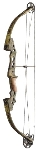 |  | 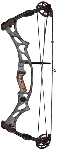 |
| Brace Height | 6.625 " | 7 " | 7 " |
| AtA Length | 34.0625 " | 33 " | 33 " |
| Draw Length | 25 " - 30 " | 25 " - 30 " | 25 " - 31 " |
| Draw Weight | 80 lbs - 100 lbs | 40 lbs - 70 lbs | 40 lbs - 80 lbs |
| IBO Speed | 325 fps - 333 fps | 318 fps | 316 fps |
| Weight | 3.75 lbs | 4.34 lbs | lbs |
| Let-Off | 65% - 80% | 65% or 80% | 65% or 80% |
| Where to buy Best prices online |
| ||
| compare more bows | |||
The Samson has no real peer on draw force, so the useful comparison is against the balanced hunting bows a mid-2000s buyer would have cross-shopped. The Mathews Switchback, the defining single-cam hunting bow of the era, and the Hoyt Trykon, a similarly all-around hybrid-cam hunter, both live in the normal 60-to-70-pound world with roomy 7-inch brace heights and smooth, forgiving draw cycles built for all-day shooting and repeatable accuracy. The Samson trades exactly that forgiveness and comfort for raw power: its lower brace and heavy limbs give up the Switchback's and Trykon's easy shootability in exchange for kinetic energy neither of them can match. Within Bowtech's own lineup the Samson is essentially the Extreme VFT and Patriot VFT speed chassis pushed to extreme poundage, so a shooter who wants that same fast platform at normal draw weight should look there rather than at the Samson. The decision comes down to priorities: the Mathews Switchback or Hoyt Trykon for the hunter who wants a smooth, forgiving, do-everything bow at a sane draw weight, and the Samson only for the strong shooter whose single requirement is the deepest possible penetration on heavy game.