
Bowtech Extreme Review


from $200
Pros
- Fast for its generation - a single-cam hunting bow rated 325-333 fps IBO when most single cams of the era sat in the 305-318 band
- VFT limbs settle the shot - owners describe a smoother, lower-vibration release than the conventional limbs of the day
- Single-cam simplicity - factory-tuned out of the box with an idler wheel up top, so there is no cam timing to synchronize and little to maintain
- Broad, tool-simple tuning - 65-80% let-off set by the draw post and 1-inch-per-module draw-length changes across the 25-30 inch range
Cons
- Some owners note a touch of hand shock the VFT limbs do not fully erase - a good stabilizer settles it, and it is mild for a bow of this vintage
- Some owners report the camo coating wearing at high-contact spots with hard field use - a solid/target color, or a later dip or wrap, sidesteps it
Video
content from YouTube
Editors' review
The VFT badge on the 2003-2004 Extreme is the first thing most people read wrong: it names Vertical Force Technology, a limb design built for a smoother, lower-recoil shot - not a cam, and not a let-off number. Under that badge the Extreme stayed what it always was, a single-cam bow with a power cam on the bottom and an idler wheel on top. What makes it worth remembering two decades on is the speed. Rated 325-333 fps IBO (the industry chronograph standard at 30 inch, 70 lb, 350-grain arrow), it was genuinely quick for a single cam in an age when most stopped short of 320. This one review covers the whole lineage as one bow across its versions - the 2001-2002 Extreme Solo, the short-draw variant, and the 2003-2004 Extreme VFT - because the through-line never changed: a simple, low-maintenance, fast single cam for the hunter who wanted speed without the tuning fuss of a dual cam.
Finish
The Extreme shipped in the camouflage patterns of its day - Mossy Oak-era Break-Up-style woodland camo - alongside solid and target colors for shooters who did not need to disappear into a treestand. The camo was the default hunting dress; the solids were the quiet secret for anyone who spent more time on a 3D range than in the timber. One honest caveat from long-term owners: the camo coating can rub and wear at the high-contact points - the grip throat, the limb tips, the cam edges - after seasons of hard field use. It is a cosmetic wear pattern, not a structural one, and buyers who care about a pristine look have always had two outs: order a solid or target color from the start, or send a favorite Extreme out for a modern dip or wrap. For a bow you can still find on the used market, a worn camo finish is usually a price-negotiation point, not a reason to walk.Riser
The Extreme is built on a machined aluminum riser in the reflex geometry BowTech leaned on through the early 2000s, the shape that lets a relatively short 34-inch-class bow store energy for its speed rating. Cabling runs through a conventional cable guard and slide rather than any roller system - this is a pre-roller-guard BowTech, and the setup is exactly what a shop from that era expects to see on the bench. There are no modern accessory-integration tricks here: it is a traditional Berger-hole rest mount and standard stabilizer bushing, which is a quiet advantage today because every rest and stabilizer ever made still bolts straight on. The riser carries the VFT limb pockets that define the platform, and the whole chassis is tuned around the single-cam-plus-idler layout rather than a dual-cam sync. It is a straightforward, serviceable riser - nothing about setup will surprise anyone who has worked on a bow from the period.Grip
The grip is the slim, direct-to-riser style typical of BowTech's early-2000s hunting bows - a narrow throat that puts the web of the hand close to the centerline and rewards a relaxed, low-torque hold. There is no bulky rubber overmold to get between the hand and the shot; it is a lean grip that hunters in cold weather usually supplement with a stick-on side plate or a slip-on for warmth. Because it follows the standard riser-grip pattern of the era, aftermarket and printed replacement grips are straightforward to fit for anyone who wants to change the feel. It is a grip that stays out of the way rather than one that tries to be a feature - appropriate for a bow whose whole pitch is simplicity.Limbs
The VFT limbs are the headline hardware. Vertical Force Technology was BowTech's answer to shot vibration and recoil - a limb and pocket design aimed at a cleaner, more settled release than the conventional limbs it replaced, and the improvement is the thing owners of the 2003-2004 bows most consistently point to. The limbs carry a draw-weight ladder that widened over the run: the 2003 VFT came in 50, 60 and 70-pound peaks, and the 2004 added a 40-pound option, opening the bow to smaller-framed and younger shooters without changing anything about how it shoots. The earlier 2001-2002 Extreme Solo used the pre-VFT limb set in a 60-70-pound band. Weight adjustment is the usual limb-bolt method - one full turn of the limb bolt moves peak weight, no press required for the coarse changes - and the single-cam layout means there is no dual-cam timing to disturb when you back the weight down.Eccentric System
This is a single cam, full stop - the point the VFT name so often obscures. A power cam sits on the bottom limb and a plain idler wheel rides the top, which is the whole reason the Extreme is so low-fuss: there are no two cams to time against each other, and the bow comes factory-tuned and holds it. BowTech called the eccentric the PF cam on the 2001 Solo and the Infinity cam from 2002 onward, the VFT bows included, but the working principle is the same single-cam-plus-idler arrangement. Let-off (the percentage of peak weight the holding weight drops to at full draw) is adjustable across 65-80% through the draw post, so a shooter can trade a firmer, more surprise-release hold for a lighter, longer hold at the wall. Draw length changes through modules - each module equals one inch - across a 25-30 inch range on the VFT, with the Solo reaching to 31 inches in its longer-brace configuration. And the speed is the number that carries this cam: 325-333 fps IBO put the Extreme ahead of most contemporary single cams, and the surviving owner clips still describe it, plainly, as very fast. The InfinityCam's back wall is firm rather than mushy, the kind of defined stop a hunter wants when the shot has to break clean.Draw Cycle/Shootability
Drawing the single cam, what I keep coming back to is how uneventful it is in the best sense - the pull rolls up without the aggressive front-end spike some speed bows of the era used to hit their IBO numbers, and it settles into a usable valley behind a firm wall. This is a single cam doing what single cams did best in 2004: an honest, repeatable draw that does not fight you. At the shot the VFT limbs do most of what they promise - the release is noticeably more settled than the conventional-limb BowTechs that came before it - though I would not oversell it against a modern parallel-limb bow; there is a touch of hand shock left over that a good stabilizer takes care of, and owners who add one stop mentioning it. Noise is moderate for the vintage, in line with other single cams of the period and quieter once dampeners and a stabilizer are hung. For a hunter, the practical read is simple: it draws smooth, holds steady, breaks clean, and sends the arrow faster than its contemporaries - and the small amount of residual buzz is the easiest thing in the world to tune out with accessories that cost a fraction of the bow.Usage Scenarios
The Extreme is a whitetail-and-Western-deer hunting bow first, and a very capable one at its distances - inside 40 yards from a treestand or a ground blind, its speed flattens the arrow's arc enough to forgive a slightly misjudged yardage, which is exactly where a fast single cam earns its keep. The 25-30 inch draw range and up-to-70-pound peak cover the great majority of adult hunters, and the 2004's 40-pound option quietly makes it a workable bow for a smaller-framed or younger shooter growing into a full hunting setup. Picture a hunter who bought one new in 2004, shot it hard for a decade, and still keeps it as a backup or a loaner - that is the most common Extreme story you find today, and it says something about the platform's durability. On a 3D range it holds its own at practical stake distances, particularly in a solid or target color; it is not a dedicated long-range target bow, and the shorter 6 5/8-inch brace height asks for cleaner form than a forgiving 7-inch-brace target rig would. For a first serious bow bought used on a budget, it remains a lot of honest speed and simplicity for the money.Versions
Treat the Extreme as one platform with year-versions rather than separate bows - the single-cam identity runs straight through all of them:- 2001 Extreme Solo - single cam (the PF cam), 36-inch axle-to-axle, offered in two brace configurations (a faster 5.65-inch and a more forgiving 6.65-inch), 60-70 pound peaks.- 2002 Extreme Solo - the same bow trimmed to a 35-inch axle-to-axle and running BowTech's Infinity cam, with the brace configurations revised to 6 and 7 inches.- 2001-2002 Extreme Short Draw - the short-draw variant of the Solo platform for shooters below the standard draw range.- 2003 Extreme VFT - adds Vertical Force Technology limbs, 34 1/16-inch axle-to-axle, 6 5/8-inch brace, 50/60/70-pound peaks.- 2004 Extreme VFT - carries the VFT platform forward, adds a 40-pound option, and carried a $649 launch MSRP.All versions are single cam; the differences are the limb technology, the brace-height configuration, and the draw-weight ladder, not how the bow fundamentally shoots.Bowtech Extreme vs Mathews Switchback, Hoyt Trykon
| Bow | Bowtech Extreme | Mathews Switchback | Hoyt Trykon |
| Version | 2004 VFT | 2007 | 2007 |
| Picture | 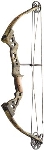 |  | 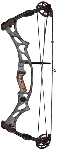 |
| Brace Height | 6.625 " | 7 " | 7 " |
| AtA Length | 34.063 " | 33 " | 33 " |
| Draw Length | 25 " - 30 " | 25 " - 30 " | 25 " - 31 " |
| Draw Weight | 30 lbs - 70 lbs | 40 lbs - 70 lbs | 40 lbs - 80 lbs |
| IBO Speed | 325 fps - 333 fps | 318 fps | 316 fps |
| Weight | 3.75 lbs | 4.34 lbs | lbs |
| Let-Off | 65% - 80% | 65% or 80% | 65% or 80% |
| Where to buy Best prices online | |||
| compare more bows | |||
In the mid-2000s a hunter shopping a simple, fast single cam was usually holding three bows against each other, and these two are the natural foils to the Extreme. The Mathews Switchback was the era's single-cam benchmark - a 33-inch, 7-inch-brace bow rated around 318 fps IBO, prized for a famously dead, quiet shot and a forgiving longer brace. Against it the Bowtech Extreme trades a little of that forgiveness for speed: the shorter 6 5/8-inch brace and the 325-333 fps rating make it the quicker, flatter-shooting bow, while the Switchback answers with a quieter release and a more relaxed geometry for imperfect form. The Hoyt Trykon comes at it differently - a 33-inch hunting bow around 316 fps that runs a Cam & 1/2 hybrid rather than a single cam, giving it a crisp hybrid draw and a wide 40-80 pound range, but also the extra tuning attention a two-cam-adjacent system asks for. The Extreme's pitch between them is clear: it is the fastest of the three and the simplest to keep running, a single cam with nothing to time. The decision comes down to priorities: the Mathews Switchback for the hunter who ranks a silent, forgiving shot above all; the Hoyt Trykon for the shooter who wants hybrid-cam crispness and the widest draw-weight span; and the Extreme for the one who wants the most speed out of the least maintenance.