
Bowtech Independence Review
Pros
- Smooth FreedomCam draw that pulls lighter than its speed suggests - platform owners rank it among the easiest-drawing BowTech cams of its era
- Quiet, low-vibration shot from the VFT limb design - the bow settles fast into the hand with little post-shot hand shock
- Long 40-inch axle-to-axle steadies the hold and flatters a deliberate shooter, which is exactly why it crosses so well to target and 3D
- Let-off dials anywhere from 65 to 80 percent right at the draw post - a relaxed hold for long spot lines or a tight valley for a firm anchor, no module swap needed
Cons
- FreedomCam is a twin-cam system that rewards periodic timing checks - a bit of upkeep a modern binary-cam shooter has to relearn, handled by a bow press or a quick shop visit
- The long 40-inch riser and low-290s speed make it a target and field specialist, not a tight-cover hunter or a modern speed-chaser - shooters who want a compact treestand bow should look to the shorter Justice or Liberty instead
Editors' review
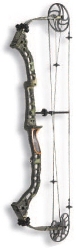
Most of BowTech's 2005 FreedomCam lineup was built for the treestand, so the surprise in the group is the one bow that was not: the Independence VFT, a 40-inch target and field rig hiding among hunters. Where its Justice and Liberty siblings run 31 to 33 inches between the axles for the woods, the Independence stretches to a full 40-inch axle-to-axle (the distance between the two cam axles, the number that most governs how steadily a bow holds), the longest, heaviest, and slowest bow of the family - and that is the whole point. Sold only in 2005, it took the same smooth FreedomCam twin cam and the same quiet VFT limbs the hunters used and wrapped them in a long, stability-first chassis with the group's widest draw range and a solid Target Colors finish option. The question it answers is not "how fast" but "how still can it hold," and the answer is why a shooter would pick it off the rack for a 3D stake or a field round rather than a whitetail stand. The FreedomCam's draw post sets let-off anywhere from 65 to 80 percent, so the same bow can hold relaxed through a long spot line or snap into a firm, short valley for a disciplined anchor. Two decades on it is a used-market bow, but it remains a genuinely smooth, forgiving, long-axle target rig for the shooter who values the hold over the horsepower.
Finish
The Independence VFT shipped in two finish directions: Mossy Oak Obsession, the high-contrast camo BowTech ran across its mid-2000s bows, and a set of solid Target Colors. That second option is the tell - in the FreedomCam group only the Independence and the Liberty offered target colors, while the camo-only Justice stayed a pure hunter. For a 40-inch field bow the solid-color option is not a cosmetic afterthought; it is the finish a spot or 3D shooter actually wants on the line. Coverage was even across the machined riser and the split limbs, and the dip-and-cure coatings of the period have generally aged well, with clean two-decade-old examples still showing intact camo or solid color. There was no premium or tribute finish tier. For a used buyer today, finish is mostly a cosmetic call - the coating does not change how the bow shoots - so choose by pattern preference and overall condition.Riser
The riser is machined aluminum with the reflex geometry and skeletonized cutouts typical of the FreedomCam era, and it is built long. The defining number is the 40-inch axle-to-axle - not just long for a mid-2000s bow but the longest in its own family, a target-and-field dimension rather than a hunting one. That length is the single biggest reason the Independence holds the way it does: the greater the distance between the axles, the quieter the sight pin sits and the more a small hand error is forgiven, which is precisely what a spot or 3D shooter is buying. The 7-3/8-inch brace height (the gap from the string at rest to the grip's deepest point) sits in forgiving territory without going to a target-bow extreme, a sensible middle ground that keeps the bow pleasant to shoot in. This is a rigid, accuracy-first platform from a company that, even then, was obsessive about its risers - BowTech's period literature made a point of hand-shooting and chronographing bows before they shipped. The finished bow is the heaviest of the FreedomCam group at 4 pounds 8 ounces, and on a target rig that mass is a feature, not a penalty: it damps the shot and steadies the hold the way a heavier bow always does on a long shot.Grip
The Independence VFT uses a traditional grip integrated into the riser with side plates, the standard approach of its era rather than the interchangeable modular grips that came later. It is a medium-fill shape that fills the hand without forcing a high or low wrist, and the material stays comfortable in cold weather where bare aluminum can bite. On a long-riser target bow a low-torque grip matters even more than it does on a hunter, because the same length that steadies the hold will faithfully magnify any hand torque you feed into it out at the pin. There is no swappable-grip system, so a shooter who wants to change the throat angle is looking at an aftermarket grip or a wrap, but for most archers the stock grip lands in a neutral, repeatable position straight out of the box. It is a period-correct grip that does its job without drama, which on a bow built around the hold is exactly what you want.Limbs
The Independence VFT runs split limbs seated in BowTech's pivoting limb pockets, and this is where the VFT name actually lives. VFT stands for Vertical Force Technology - a limb design engineered so the limbs' working forces act in a vertical plane and cancel one another on release rather than driving forward, which is what gives the bow its quiet, low-vibration shot. It is a genuinely separate thing from the cam and the let-off, and it is the hardware owners of these bows describe when they call the FreedomCam generation among the calmest BowTech ever shipped. Draw weight came in peak options of 50, 60, and 70 pounds, each backing down about 10 pounds for fine-tuning, which covers a lighter-drawing target shooter through a full 70-pound setup. The split-limb design is well proven across BowTech's early lineup; on a used example, a one-minute inspection for stress cracks near the limb tips is worth doing, the way it is on any twenty-year-old bow.Eccentric System
The engine is the FreedomCam, BowTech's modular twin cam from just before the brand's Binary Cam arrived, and it is worth separating cleanly from the VFT limbs - the limbs quiet the shot, the cam sets the draw and the hold. Rather than a fixed grid of drilled holes, the FreedomCam adjusts draw length by module in 1-inch and half-inch steps, then uses a draw post for micro-adjustment in increments as small as a sixth of an inch - and on the Independence that adjustment reaches a long 27-to-32-inch range, the widest in the family and the one that fits tall and long-draw target shooters the 25-to-30-inch hunters simply cut off. That same post sets the let-off (the percentage of peak weight your holding weight drops to at full draw) anywhere from 65 to 80 percent, so a shooter can trade a longer, more relaxed hold for a shorter, snappier valley without buying a single part. IBO speed (the industry chronograph rating at a fixed 30-inch, 70-pound, 350-grain setup) lands at 290 to 298 fps - the slowest of the FreedomCam group, and deliberately so, because a 40-inch field bow spends its length on stability rather than speed. The post rotates until it contacts the limb, which BowTech's literature called the most solid wall on the market, and on the platform that claim holds up: the back wall is firm and the anchor repeats. As a twin cam it does ask for the occasional timing check to keep the two cams synchronized, the one piece of upkeep a modern binary-cam shooter has to relearn.Draw Cycle/Shootability
What stays with me about a FreedomCam bow of this generation is how little the draw fights back, and on a long, heavy target chassis like the Independence that easy pull turns into something genuinely restful to shoot. The cam draws lighter than its speed has any right to, and the 40-inch axle-to-axle does the rest, settling the pin and steadying the hold in a way no compact hunter can match - the first time you float a pin on a long shot with a bow this long, you understand what the extra inches are for. Drawing it, the VFT limbs keep the shot quiet with little hand shock, and the post wall arrives firm and repeatable for a clean, defined anchor. The let-off is the tuning trick I keep coming back to: set it toward 80 percent and the holding weight falls away for a relaxed aim on a long 3D stake or a field round; dial it toward 65 percent and the valley tightens for a shooter who likes to stay hard into the wall. The 7-3/8-inch brace is honest about what it is - forgiving enough to flatter a developing shooter, without the error-erasing exaggeration of a dedicated spot bow - so the Independence rewards a clean, consistent release rather than hiding a sloppy one. Heavy for the family and long between the axles, it is a bow that holds still and shoots calm, which is the entire reason a target or field shooter would choose it over the quicker, shorter hunters beside it.Usage Scenarios
The Independence VFT is a target and field bow first, and that is the lens to view it through. Picture a 3D shooter stepping to the stake on a July club night: the long 40-inch axle-to-axle quiets the pin on an unknown-distance shot, the let-off set near 80 percent lets the hold relax while ranging the target in the head, and low-290s speed is plenty across a 3D course. The same bow suits a field or spot archer who wants a steady, forgiving rig without paying for a dedicated tournament frame. Its 50-to-70-pound range and wide 27-to-32-inch draw fit most adult shooters, including taller and longer-draw archers who get cut off by shorter hunting bows. It can certainly hunt - a target bow will cleanly take a deer inside normal ranges - but the long riser is less handy in a tight treestand or a cramped blind than its Justice and Liberty siblings, so a hunter who wants compact should look there. Where it is not the right tool is the modern speed race or a serious national tournament line, and that is fine, because this bow is about a long, smooth, forgiving hold, not chasing fps or hanging modern target hardware.Bowtech Independence VFT vs Bowtech Constitution, Mathews Conquest 4
| Bow | Bowtech Independence | Bowtech Constitution | Mathews Conquest 4 |
| Version | 2005 | 2008 | 2019 (MaxCam) |
| Picture |  |  |  |
| Brace Height | 7.375 " | 8.25 " | 7 " |
| AtA Length | 40 " | 41 " | 40.625 " |
| Draw Length | 27 " - 32 " | 27 " - 30.5 " | 28 " - 32 " |
| Draw Weight | 40 lbs - 70 lbs | 40 lbs - 70 lbs | 30 lbs - 70 lbs |
| IBO Speed | 290 fps - 298 fps | 312 fps - 320 fps | 310 fps |
| Weight | 4.5 lbs | 4.2 lbs | 4.4 lbs |
| Let-Off | 65% - 80% | 65% - 80% | 80% or 65% |
| Where to buy Best prices online |
| ||
| compare more bows | |||
In its day the Independence VFT lined up against the long-axle target bows of the mid-2000s, and the two closest cross-shops come from very different cams. The Bowtech Constitution was BowTech's other long target and field flagship in the very same 2005 catalog, also priced at $799, but built on the Equalizer Binary Cam rather than the FreedomCam: the same 40 inches between the axles in its 2005 form, taller-braced, and quicker at 300 to 308 fps, with a shorter 27-to-30.5-inch draw and no draw-post let-off adjustment. The Mathews Conquest 4 is the single-cam benchmark of the era - a SoloCam target and field bow running a 40.6-inch axle-to-axle, a 28-to-32-inch draw, and 310 fps, built around the quiet, hump-free draw Mathews single cams are known for. Against both, the Independence gives up a few fps but answers with its own case: a genuinely smooth twin-cam draw, a let-off you can set anywhere from 65 to 80 percent right at the post, the widest draw range of the three, and the solid Target Colors finish that marks it as a field bow out of the box. The decision comes down to priorities: the Bowtech Constitution for the shooter who wants the faster binary-cam long bow with a firmer, no-fuss wall; the Mathews Conquest 4 for the one who wants the classic single-cam smoothness and quiet; and the Independence VFT for the shooter who wants the adjustable-let-off FreedomCam draw and the broadest draw range in a long, forgiving target and field rig.