
Bowtech Constitution Review


from $80
Pros
- Long 40-to-41-inch axle-to-axle and a tall 8 1/4-inch brace make it exceptionally forgiving - owners report it holds dead-still on aim and outgroups bows they had shot for years
- Binary Cam System delivers a rock-solid back wall and repeatable timing, the shot-to-shot consistency target and field archers are after
- Smooth to draw for a fast bow and free of felt hand shock - several owners chose it over the era's Hoyt and Mathews target flagships
- Modular half-inch draw-length tuning and 65-to-80-percent adjustable let-off let a shooter dial in the exact hold, valley, and speed they want
Cons
- Aggressive Binary cams leave a short valley that punishes creeping at full draw - the flip side of the hard, consistent wall; staying leaned into the back wall handles it, and it rewards disciplined, repeatable form
- A long, roughly 4.5-pound target and field platform - hunters who carry all day are better served by a shorter bow, though owners report no trouble hunting the 41-inch length from a treestand
Editors' review
Hand a target archer a 41-inch bow with an 8 1/4-inch brace height and they will assume they are trading away speed for forgiveness. The Constitution's trick is that it refuses to make that trade - BowTech built its longest, most stable platform on the same aggressive Binary Cam System as its hunting bows, so the rig that sits dead-still on aim also shoots genuinely fast. Produced from 2005 through 2008, it was BowTech's answer to the long target and field flagships from Hoyt and Mathews, and in owners' hands it kept winning the shoot-off: shooters who cross-shopped the Hoyt UltraElite and the Mathews Apex 7 kept walking away with the Constitution for its harder back wall and its hold. This is a release-or-finger target, field, and 3D bow first - long, forgiving, and demanding of consistent form in equal measure. The reward for that discipline is a platform that aims like nothing else in its era and stacks arrows at distances where lesser bows are still finding the group.
Finish
Across its run the Constitution wore both sides of BowTech's palette, because it had to serve two crowds - the field and 3D shooter who wants woodland camo and the indoor spot shooter who wants a clean, low-glare riser. The 2008 model led with Realtree Hardwoods HD Green camo paired with black anodized Binary cams and a bright green-and-tan string set, while the 2006 catalog offered dedicated anodized target colors in Black/Pewter, Black/Red, and Black/Blue alongside the camo options. For 2008 BowTech also wrapped the bow in InVelvet, a soft, velvet-touch protective coating that resists DEET and shop chemicals and adds a little insulation and noise-deadening - a nicety a target archer notices on a cold indoor line as much as a hunter does in the field. The coating work is hard-wearing for the period; a Constitution still on the line today is usually carrying its original finish. Because the bow has been discontinued since 2008, the exact per-year color list is not fully documented from a single primary source, so treat the camo and the three named target colors as confirmed and the rest as era-typical options.Riser
The Constitution's riser is the whole point of the bow: it is the longest in BowTech's line for those years, machined from aluminum with the deeply skeletonized cutout pattern of the era to shed weight without giving up the mass that steadies a long bow. The story of the platform is really the 2007 redesign - BowTech reworked the riser that year, and owners who shot both the earlier and later bows are consistent that the newer riser balances noticeably better in the hand. There is no modern integrated-rest dovetail or Picatinny rail here; accessories mount the traditional way, through the standard threaded bushings every riser of the period used, which is exactly what a period target or field setup expects. In my experience with long target risers of this generation, the deliberate forward mass is a feature rather than a penalty - it holds the sight picture in a tighter window and slows the bow's tendency to wander off center while you settle the pin. The long riser and limbs stretch the axles out to a full 40 to 41 inches depending on the model year, and that length is what buys the forgiveness the bow is known for.Grip
From 2007 the Constitution carried BowTech's new modular grip system, and it is well suited to a bow whose entire job is repeatability. The standard fit is a pair of thin, laminated two-piece side plates that keep the hand close to the riser centerline, with a one-piece contoured grip and two-piece rosewood side plates available for shooters who want a different feel. BowTech machined a shelf trough and a contoured thumb groove into the grip area specifically to close the distance between the hand and the arrow, which reduces vertical torque and helps the bow index into the same spot shot after shot. Drawing it, what I notice is how little the grip asks of the hand - there is no fat palm swell to fight, so the wrist settles behind the shot the same way every time. That low-torque hand position is a real contributor to the aim: several owners shoot the Constitution with the side plates removed entirely, gripping the bare riser, and describe it as one of the most stable bows they have held. Larger-handed shooters can build the grip up or swap in the one-piece option without any special hardware.Limbs
The Constitution runs its limbs on the long chassis, offered across a 40/50/60/70-pound range in the 2005 and 2006 bows and a 50/60/70-pound range from 2007 on, so the same platform covers a light indoor spot setup and a heavier outdoor field or 3D rig. Draw-weight changes are made the period way, backing the limb bolts out from peak or moving to a lower bracket, and any work beyond the bolt range calls for a bow press. The long limbs matched to the long riser are what let the bow store and deliver its energy smoothly rather than harshly, and they are a well-proven design - this same limb architecture carried across BowTech's mid-2000s Binary lineup and earned a reputation for staying put once tuned. On a bow whose whole value is consistency, a limb that does not shift under a season of range sessions is doing quiet, essential work. The strings and cables are part of that reliability story too: the factory set is 22 strands of 452X, built and pre-stretched in-house, which owners repeatedly single out as holding tune shot after shot.Eccentric System
The Binary Cam System is the heart of the Constitution and the reason it shoots the way it does. In a binary setup the two cams are slaved to each other and timed off one another rather than off the limbs, which forces level, repeatable nock travel and removes much of the timing drift that can creep into a two-cam target bow over a long season. Speed is genuine for a bow this forgiving: BowTech rated it at 308 to 316 fps IBO in 2006, climbing to 312 to 320 fps by 2008 (IBO is the industry chronograph standard at a 30-inch draw, 70 pounds, and a 350-grain arrow). Real target setups land where you would expect once you factor in heavier arrows and shorter draws - owners have chronographed the bow at 278 fps with a 384-grain arrow at 29.5 inches and 61 pounds, and at 280 fps with a 343.5-grain arrow at 29.75 inches and 60 pounds, with a light 70-pound, 29-inch setup touching 300 fps. Let-off is adjustable across a 65-to-80-percent range (let-off is how far the peak weight drops at full draw, so 65% leaves a firmer holding weight for a steadier aim and 80% eases a long practice session). From 2006 the draw length is set by swapping cam modules in half-inch increments; the 2005 cam predates those modules, so each draw length is cam-specific rather than module-set and early bows want a knowledgeable hand during setup. What the cams give back for that attention is a hard wall and a repeatable stop - the consistency that shows up on a scorecard.Draw Cycle/Shootability
For a bow that shoots this fast, the Constitution draws more smoothly than its speed numbers suggest - the cams build to peak without a vicious hump and roll into a firm, defined back wall (the hard stop you pull into at full draw). The catch is the valley, the small window of reduced holding weight just before the wall: it is short and narrow, so creeping forward even a little bit lets the aggressive cams bite. That is the one thing the bow asks of you, and staying leaned into the wall answers it. What I keep coming back to on this platform is the hold - a 40-to-41-inch bow with an 8 1/4-inch brace simply sits still, and owners describe almost smiling at how the pin settles and stays put rather than chasing around center. Hand shock is a non-issue: shooters consistently report no felt recoil, though one long-time owner honestly notes it is not quite as dead in the hand as BowTech's General or Guardian hunting bows - it is no worse than any other BowTech, just not a dedicated vibration-killing flagship. There is no independent decibel or chronograph lab data for a bow this old, so the feel comes straight from the people who have shot it for years, and the through-line never changes: fast, forgiving, rock-solid on the wall, and happy to be held on target all day at a comfortable draw weight.Usage Scenarios
The Constitution is a target, field, and 3D bow first, and that is where it earns its keep. Picture an indoor spot line in January: the shooter who wants to hold dead-center and trust the bow to stay there through a clean release, dozens of times over, is the Constitution's natural owner, and the 65-percent let-off option gives them the firmer hold that steadies the pin. Move outdoors to a club 3D range or a field course and the same long-axle stability that flattered the spot shooter now shrugs off the wind and the awkward stances, while the modular draw length out to 30.5 inches makes it a genuine fit for the taller, long-draw archer that short hunting bows leave cramped. It doubles as a strong learning platform - the forgiveness that lets a veteran stack arrows also flatters a newer target shooter still building form. It can hunt, too: owners report no trouble taking the 41-inch bow into a treestand, and the deep brace makes it a forgiving choice for a whitetail sit. Where it starts to work against you is the long spot-and-stalk or the all-day pack-in, where the length and the roughly 4.5-pound mass are more than a dedicated hunting bow would ask you to carry.Versions
The Constitution ran as one platform across four model years, and the differences between them are worth knowing on the used market. The 2005 debut used the early Equalizer-type Binary cam with no interchangeable draw-length modules - each draw length is cam-specific, so early bows want a knowledgeable hand during setup - on a 40-inch bow offered from 40 to 70 pounds. The 2006 bow added the modular half-inch draw-length cams and the anodized target-color options, holding the 40-inch axle length with an 8 1/4-inch brace and a 308-to-316 fps IBO rating. The 2007 model is the turning point: BowTech redesigned the riser and introduced the new modular grip with its shelf trough and thumb groove, dropped the 40-pound option to a 50/60/70-pound spread, and took the bow to its full 41 inches axle-to-axle - owners widely regard it as the best-balanced, best-shooting year of the run. The 2008 bow refined that platform to its highest 312-to-320 fps IBO rating, adding the InVelvet coating, Realtree Hardwoods HD Green camo, and the in-house 22-strand 452X string set. There was no separate package, youth, or hand-specific SKU under the Constitution name, and BowTech did not publish a launch MSRP that survives in a reliable primary source, so today the bow is strictly a used-market proposition.Constitution vs Mathews Ovation, Hoyt 38 Pro
| Bow | Bowtech Constitution | Mathews Ovation | Hoyt 38 Pro |
| Version | 2008 | 2009 XT 1000 (Cam & 1/2 Plus) | |
| Picture |  | 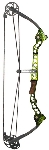 |  |
| Brace Height | 8.25 " | 8.125 " | 7.75 " |
| AtA Length | 41 " | 40 " | 38 " |
| Draw Length | 27 " - 30.5 " | 28 " - 32 " | 25 " - 33.5 " |
| Draw Weight | 40 lbs - 70 lbs | 40 lbs - 70 lbs | 40 lbs - 80 lbs |
| IBO Speed | 312 fps - 320 fps | 300 fps - 302 fps | 306 fps |
| Weight | 4.2 lbs | 4.5 lbs | 4.6 lbs |
| Let-Off | 65% - 80% | 80% | 65% or 75% |
| Where to buy Best prices online |
| ||
| compare more bows | |||
Anyone shopping a long, forgiving target and field bow from the mid-2000s was choosing among exactly these three, and they separate cleanly on feel. The Mathews Ovation is the smoothest and most set-and-forget of the group: a 40-inch, 8-inch-brace single-cam (Solocam) bow rated at 300 to 302 fps IBO, it trades top-end speed for a single cam that never needs timing and a draw that is gentle from front to back - the pick for the shooter who wants forgiveness with the least fuss. The Hoyt 38 Pro comes at the same job from Hoyt's side of the aisle: a 38.5-inch, 8 1/4-inch-brace Cam & 1/2 bow rated around 305 to 306 fps, it offers a softer back wall and a longer, more relaxed valley than the BowTech, and its slightly shorter length is a touch easier to carry if the bow ever leaves the range. The Constitution splits the difference on paper and then pulls ahead on two fronts - it is the fastest of the three at 308 to 320 fps IBO, and it has the hardest, most defined wall, backed by modular half-inch draw tuning and 65-to-80-percent adjustable let-off that the others do not match. The cost of that harder wall is the shorter valley that punishes creeping, where the Ovation and the 38 Pro are more relaxed. The decision comes down to priorities: the Constitution for the shooter who wants the most speed, the firmest wall, and the most tuning control; the Mathews Ovation for the smoothest, lowest-maintenance single cam; and the Hoyt 38 Pro for a softer wall, a longer valley, and the shortest, most carry-friendly length of the three.