
Mathews ARC 30 Review

from $64.99
Pros
- Second-generation SWX-2 cam adds perimeter weight to hold velocity once a sight, rest, peep, and stabilizer are mounted - chronograph testing reads 328 fps at 30 inches and 70 pounds with a 350-grain arrow
- Silent Connect anchor, V-bar port, and rear stabilizer mounts are machined into the riser rather than bolted on, removing three of the brackets a Lift X build required and the rattle points that come with them
- Dead in the hand at the shot - shooters running it beside the Lift X note clearly less post-shot vibration despite a string carrying no monkey-tail dampeners
- Quiet shot signature - independent decibel testing recorded 94.7 dB with the standard mod and 92.7 dB with the smoother Comfort Z mod
- Optional SWX-Z Comfort mod softens the draw curve for shooters who prefer feel over the last few fps, and retrofits to existing Lift and Lift X bows
Cons
- Shallower valley than the prior Lift X - the bow wants an aggressive, engaged shot and creeps forward if you relax at full draw; shooters who prefer a deep valley can fit the SWX-Z Comfort mod to soften the cycle
- Draw weight starts at a 55-pound floor - lighter-draw archers and youth shooters in transition are better served by the Lift platform, which drops to 45 pounds
Video
content from YouTube
Editors' review
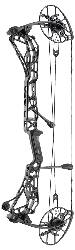
For three model years Mathews has published nearly the same spec sheet on its compact hunting platform - a 6-inch brace height, 3.99 pounds on the scale, up to 348 fps IBO (the industry-standard chronograph rating at a fixed test setup) - first as the 29.5-inch Lift and Lift X, and now the ARC 30, which stretches the axle-to-axle to a full 30 inches. The numbers a buyer compares on paper barely moved; what changed is almost everything you feel after the shot. The headline is the second-generation SWX-2 cam, which adds perimeter weight at the outer edge of the wheel to hold speed once hunting accessories are bolted on. Behind it sits the bigger practical story: the Silent Connect anchor, the V-bar port, and the rear stabilizer mounts are now machined directly into the riser instead of bolted on, so three of the brackets a Lift X build needed are simply gone. Add a redesigned, lighter limb cup, a limb angle pulled back closer to - but not past - parallel, and an optional SWX-Z Comfort mod for a softer draw, and the ARC 30 reads as a chassis Mathews has spent two prior years quietly sharpening. For the hunter who shoots from a treestand or a ground blind and values a silent, dead-in-hand shot in a compact package, this is the current Mathews answer.
Finish
The ARC 30 ships in 13 finish options, the broadest selection Mathews has offered on the compact hunting platform to date. The nine base finishes are Black, Kodiak Brown, Shale, Earth, Green Ambush, Mossy Oak Bottomland, KUIU Verde, First Lite Specter, and Optifade Subalpine - covering the major camouflage licensors alongside a set of solid earth tones for shooters who prefer a clean look or plan to wrap the bow themselves. Kodiak Brown is the new addition for 2026 and has driven the strongest early visibility for the platform on social media. The four Fade-to-Black variants - Kodiak Brown, Shale, Earth, and Green Ambush, each transitioning to black at the limb tips - give the bow a two-tone look that pairs a body color with black limbs and accessories. The anodized hard-coat finish on the aluminum riser has held up well across the Lift and Lift X generations, and the ARC 30 carries the same process. Buyers set on a specific Fade-to-Black variant should confirm availability with their dealer, since not every option ships to every region at launch.Riser
The riser is the most heavily reworked part of the platform. Mathews describes it as a reinforced design built for added strength and rigidity, and the practical evidence is in what is now integrated rather than bolted on: the Silent Connect System anchor is machined directly into the riser, the V-bar mounting port is a full integrated feature rather than a separate plate, and rear stabilizer mounts are built into the chassis for the first time on a Mathews hunting flagship. The visual lineage is unmistakably Mathews, but the geometry reads closer to the Title target riser than the prior Lift X - more aggressive skeletonized cutouts and added bracing in the rear, yet the longer riser still comes in at the same 3.99-pound mass as last year, which is the genuinely surprising part. The Bridge-Lock mounting standard carries over, so a shooter moving from a Lift, Lift X, V3X, or any prior Bridge-Lock Mathews can transfer existing sight bars and stabilizers directly. Setting one up, I found the integrated riser removed three of the bolt-on steps a Lift X build asks for - the SCS bracket, the rear stabilizer mount, and the V-bar plate - and with them the small hardware that tends to work loose over a season. Two indexing lines machined into the front of the grip area give a clean visual cue for repeating hand placement, a small touch that matters more than it sounds once you are settling the bow in low light.Grip
The ARC 30 uses Mathews' current BOND grip system, a two-piece polymer side-plate design that lets the shooter swap colors or step up to other profiles without touching the underlying chassis. The default Engage grip is not universally loved - some shooters find its rounded profile encourages a left-right hand position - but the BOND system answers that directly, offering the full Contour, Taper, and Engage line plus aftermarket options that fit the standard pattern. The throat is narrow enough to repeat the same hand placement shot to shot without crowding the heel of the hand, and the side plates pop off easily for shooters who prefer riser-direct contact for indexing in warm weather. Torque resistance is in line with the Lift X 29.5 and the Lift before it, since the grip geometry did not change across this generation. The practical takeaway: if the stock grip does not suit your hand, the fix is a low-cost plate swap, not a compromise you live with.Limbs
The ARC 30 carries a split-limb configuration with the limb assembly Mathews redesigned for the 2026 ARC platform. The new limb angle sits closer to parallel than older Mathews designs but not as far past parallel as some recent generations - the limb axle travels more vertically into the bow rather than wrapping in and back out, which is where the platform's efficiency gains come from. The redesigned limb cup is smaller and lighter than the Lift X version, helping the bow hold its 3.99-pound mass even as the riser gained material for the SCS and stabilizer integration. Limb Shift technology carries over, so the bow still tunes on the line without a press. Draw-weight modules ship in 55, 60, 65, 70, 75, and 80-pound peak settings, and each module covers 10 to 12 pounds of bottom-end adjustment by backing the limb bolts out a few turns. The implication for a buyer is straightforward: the ARC 30's limbs are sized for the adult hunter shooting real hunting poundage, while the still-available Lift X 29.5 remains the better pick for anyone who needs a lighter floor. One detail owners keep returning to is how little this bow vibrates through the limbs at the shot - for an aluminum hunter under four pounds, the stillness stands out.Eccentric System
The SWX-2 cam is the technical centerpiece. The "2" marks the second generation of the Crosscentric cam used on the Lift and Lift X, and the new feature is perimeter weight technology - mass concentrated at the outer edge of the cam wheel, a system Mathews has run on its Title target bows for several years and has now brought to the hunting line. The goal is to keep the cam turning over efficiently and hold velocity after the string picks up the mass of a peep and D-loop, the additions that quietly cost most bows several fps off their rated number. The IBO claim of up to 348 fps matches the Lift X 29.5 exactly - Mathews kept the paper speed flat and routed the engineering into how the bow behaves once it is set up. Let-off is selectable between 80% and 85% through the module, so one buyer can choose either holding-weight profile without ordering a different cam, and the draw-length range covers 25 to 30.5 inches across a single cam family. Real-world chronograph numbers at 30 inches and 70 pounds with the standard mod land at 328 fps with a 350-grain arrow, 298 to 300 fps with a 440-grain hunting arrow, and 270 fps with a heavy 545-grain FMJ. Drop the draw to 28 inches and the same arrows read 315, 283, and 255 fps - a consistent loss of seven and a half fps per inch, useful math for a buyer cross-comparing platforms. The optional SWX-Z Comfort mod trades five fps for a noticeably softer front end, and because it uses the same module interface it retrofits to a Lift or Lift X as well.Draw Cycle/Shootability
The ARC 30 draws like a refined Lift X with one caveat worth stating plainly: the valley is even shorter, and the bow wants to creep forward at full draw if you let off. Owners who shot the Lift X back to back describe the ARC's valley as shallower still - this is a bow that rewards an aggressive, engaged shooter and frustrates one who likes to settle deep before triggering the release. Drawing it at 70 pounds with the standard module, I found the front-end ramp smoother than the Lift X cam and the back wall genuinely firm, with the only creep showing up right at the edge of the valley if I relaxed. The perimeter-weighted cam noticeably damps the post-release pulse shooters felt from the older SWX cam; the bow settles dead in the hand, with just a thump of the string and no twang even though the string carries no monkey-tail dampeners. Independent decibel testing put the shot at 94.7 dB with the standard mod and 92.7 dB with the Comfort Z mod, both well within the quiet band Mathews is known for. For a shooter who finds the standard cam too aggressive, the SWX-Z mod softens the front ramp for the small speed cost already noted and turns the ARC into a far more forgiving draw - the cleanest way to tailor the bow to how you like to shoot.Usage Scenarios
The ARC 30's 30-inch axle-to-axle, sub-four-pound mass, and Mathews-grade quietness point it squarely at treestand and ground-blind whitetail hunting, dense-cover spot-and-stalk, and elk hunts where both pack weight and a silent shot matter. At 30 inches between the axles it is short enough to maneuver inside a ground blind without clipping the window edges, and light enough to carry comfortably on multi-day backcountry trips. The 6-inch brace paired with the up-to-348 fps speed gives enough kinetic energy headroom for elk and black bear at honest archery distances, and the perimeter-weighted cam helps the bow hold that energy with a loaded hunting arrow. Western hunters who want a longer brace and a steadier hold at distance should look at the longer-axle ARC 34 sibling instead - same cam and riser philosophy, stretched to 34 inches. The ARC 30 handles 3D rounds competently thanks to Mathews' tunability, but a shooter focused mainly on target work is better served by that longer ARC or by Mathews' dedicated Title line. Family-share use is limited by the 55-pound floor, which cuts out younger shooters - a household passing one bow between an adult and a teenager is the Lift platform's job, not this one. The ARC 30 is the dedicated hunting flagship, and that is the buyer it rewards.Mathews ARC 30 vs Bowtech Solution LS, PSE Mach 30 DS
| Bow | Mathews ARC 30 | Bowtech Solution LS | PSE Mach 30 DS |
| Version | 2026 | 2026 | 2026 FDS |
| Picture |  |  | 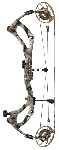 |
| Brace Height | 6 " | 6.375 " | 5.875 " |
| AtA Length | 30 " | 30 " | 30 " |
| Draw Length | 25 " - 30.5 " | 24.5 " - 30 " | 24.5 " - 30 " |
| Draw Weight | 55 lbs - 80 lbs | 40 lbs - 70 lbs | 40 lbs - 80 lbs |
| IBO Speed | 348 fps | 330 fps | 348 fps |
| Weight | 3.99 lbs | 4.2 lbs | 3.6 lbs |
| Let-Off | 80% or 85% | 85 / 87% | 70% - 85% |
| Where to buy Best prices online | |||
| compare more bows | |||
The ARC 30 enters the 2026 compact-hunting-flagship segment between two credible 30-inch alternatives, each pitching a different priority. The Bowtech Solution LS shares the 30-inch axle-to-axle length and lands lighter on the wallet at $1,299.99 launch MSRP, with a slightly longer 6-3/8-inch brace and a 4.2-pound mass; its DeadLock and OverDrive technologies build the vibration-damping and easy-tuning story, and the longer brace makes it the more forgiving hold of the three. A buyer who wants flagship-class size and quiet at a lower price, and who values a forgiving brace over outright speed, should weigh the Solution LS carefully. The PSE Mach 30 DS plays the opposite end - same 30-inch axle-to-axle and 6-inch brace as the ARC 30, but built on a Dead Frequency Carbon riser with PSE's FDS cam and an adjustable 70-to-85% let-off, carrying a $1,799 launch MSRP and the 2024 Outdoor Life Editor's Choice title. It is the premium carbon option for the buyer who wants the lightest-feeling riser material and the widest let-off range, and is willing to pay for carbon. The ARC 30 sits in the middle at $1,459 launch MSRP, and the decision comes down to priorities: the ARC 30 for the buyer who wants the current aluminum Mathews flagship with integrated riser hardware and a dead-in-hand shot; the Bowtech Solution LS for the shooter prioritizing a forgiving brace and value; the PSE Mach 30 DS for the buyer set on a carbon riser and the broadest let-off adjustment.