
Mathews LX Review


from $65
Pros
- Among the smoothest single-cam draws Mathews ever built - owners rank the LX at the top of the SoloCam era for draw feel
- Long 35-inch axle-to-axle with a settled, on-target hold that keeps owners shooting it on the 3D range two decades later
- Single-cam design with nothing to sync - quick to set up and easy to keep in tune season after season
- Selectable 80% or 65% let-off through the cam module lets the shooter dial hold weight to preference
Cons
- Modest speed by modern standards at 315-317 IBO - shooters chasing today's fps will feel the era, though that is the price of the smooth, forgiving draw
- No factory string suppression as it shipped - a string stop and a fresh set of strings quiet the era-typical shot, both inexpensive add-ons
Video
content from YouTube
Editors' review
Here is the strange thing about the Mathews LX: plenty of owners spent the last twenty years buying a newer bow every season, from every brand, and then came back to this one. It is a 2003-2004 SoloCam from the era before string stops and short parallel-limb hunters, a long 35-inch target-length rig that most catalogs would call outdated on paper. Yet it does two things that never go out of style - it draws about as smoothly as any single cam Mathews has made, and it sits dead still on the target. The LX was Mathews' do-it-all bow of its day, equally at home in a treestand and on a 3D course, built on a fully machined riser with a perimeter-weighted single cam and parallel limbs. Two decades on it survives on the used market for a fraction of a new bow, which makes it one of the most bow-for-the-dollar classics you can still shoot. This review is about who that classic is still right for - and where a modern bow earns its premium instead.
Finish
Mathews offered the LX in the finish options standard to its 2003-2004 lineup. Because these bows are now bought used, the finish you find is whatever a given example has carried for twenty years, and condition varies far more than the original palette did; a clean black riser and a faded camo dip are both common on the same model. The machined aluminum riser wears its anodizing well, and surface scuffs on a used LX are cosmetic rather than structural. Buyers shopping the used market should judge each bow on wear and string age rather than on which finish left the factory. The specification page carries the exact factory finish availability for each year.Riser
The LX is built on a single-piece, fully machined aluminum riser Mathews called the AeroRiser, with a long 24.5-inch riser length that drives the bow's generous 35-inch axle-to-axle stance. That length is the whole point of the design: a long riser spreads the geometry out, lengthens the effective sight radius, and is a large part of why the LX holds so steadily on target. Cable management runs through a ball-bearing roller guard, which cuts the friction and torque a plain slide guard adds to the shot. Accessory mounting is the era-standard Berger-hole arrangement rather than any modern dovetail or integrated rail, so rest choice is wide open on the used market. There is no built-in string stop or rear-mounted suppressor here - this riser predates that feature becoming standard. In the hand the LX feels like what it is: a substantial, stable, target-leaning platform rather than a light, whippy treestand bow.Grip
The LX carries the slim Mathews grip of its generation, a narrow throat that sets the hand low and close to the riser's centerline. That thin profile is a quiet strength - it gives the palm a single, repeatable contact point and leaves little surface for torque to creep in, which pairs naturally with the bow's steady hold. Shooters coming off a fatter modern rubber grip will notice how directly the LX puts the bones of the hand behind the shot. The grip is straightforward to shoot with a relaxed, low-wrist hand position, and because it is a classic Mathews shape, aftermarket and replacement grips from the era are still findable for anyone who wants to change the feel. It is not a heated, sculpted modern grip, but it does the one thing a grip most needs to do: it gets out of the way of a clean release.Limbs
The LX uses a parallel limb design - the limbs are angled toward parallel so that, at the shot, their opposing motion cancels much of the recoil the riser would otherwise transmit to the hand, the idea behind Mathews' "speed without the kick" tagline of the period. The limbs seat in Mathews' V-Lock Zero Tolerance Limb Cup System, which locates them precisely and repeatably in the pockets so the bow returns to the same place shot after shot. Draw weight spans 40 to 70 pounds, adjusted the traditional way through the limb bolts, giving the bow real hunting-weight capability rather than a capped entry-level ceiling. This limb-and-cup arrangement was used across the Mathews SoloCam lineup of the era and earned a reputation for holding tune and standing up to years of use - a meaningful point for a bow you are buying two decades after it was made. For a used LX, limb condition and any hairline cracks near the cups are the things worth inspecting before purchase.Eccentric System
The heart of the LX is the StraightLine HP (High Performance) SoloCam - a single cam paired with an idler wheel, which Mathews marketed as the least complex, most advanced cam it had tested to that point. The practical payoff of a single cam is the one that still matters: there are no two cams to time against each other, so the bow cannot drift out of cam sync the way a dual or hybrid system can, and setup is genuinely simpler. The cam is perimeter-weighted - mass concentrated at the rim for both speed and rotational stability - and the 2004 version added ball bearings for a cleaner roll. IBO speed lands at 315 fps in the 80% let-off configuration and 317 fps in the 65% configuration, respectable for a smooth single cam of its day if modest against modern bows. The let-off itself is the LX's underrated trick: the shooter chooses an 80% module for a light 14-pound hold at 70 pounds of draw, or a 65% module for a firmer, more target-style holding weight, matching the bow to how they like to aim. What strikes me picking up an LX today is how little the cam asks of you - no press-hungry rotating-module dance, no timing marks to chase, just a single cam that stays where it is set. Draw length adjustment does require a cam or module change rather than a tool-free rotation, so buyers should confirm a used bow is already in their draw length or budget a press visit.Draw Cycle/Shootability
Drawing the LX is where its reputation was earned. The weight builds early and evenly and then melts into a defined, comfortable valley rather than stacking hard at the end - the SoloCam draw that owners consistently rank among the smoothest Mathews has made. The back wall is solid against the cushioned draw stop, giving a repeatable anchor to pull into, and the long riser makes the pin float settle and sit. Parallel limbs and Mathews' Harmonic Damping keep recoil low and the shot composed, and the single cam contributes to a quiet, uncomplicated release; owners describe the LX as quiet for its generation, and quieter still once a string stop and fresh strings are added. In my experience a long, high-let-off single cam like this rewards a patient shot - you settle in, the hold does the work, and the arrow is gone before the bow finishes moving. It is not the dead-in-hand silence of a modern flagship with an integrated suppressor, but it is composed, forgiving, and easy to shoot well over a long session. For an archer learning to hold and aim, that combination of a smooth pull and a steady hold is close to ideal.Usage Scenarios
In its day the LX was a genuine do-it-all bow, and that is still where it fits. The long 35-inch axle-to-axle length, the steady hold, and the choice of a firmer 65% let-off make it a natural on the 3D course and for target and spot shooting, which is where many owners still shoot theirs. With the 80% module and a 40-to-70-pound draw range it is fully capable as a whitetail and general big-game hunting bow at moderate ranges, better suited to a ground blind or a roomy stand than to tight, brushy quarters where its length works against you. As a used buy it makes a superb first "real" bow - forgiving, smooth, and simple to keep running - for someone who wants to learn good form on a rig that holds still and won't punish a developing release. It also serves well as an inexpensive backup or a project bow for an archer who likes the single-cam simplicity. What it is not is a modern speed bow or a compact treestand hunter; shooters who need top fps or the shortest possible axle-to-axle should look to a current design.Versions
The LX was sold across two model years, both as a single bow with a choice of let-off module rather than as separate packages. The 2003 LX runs Mathews' High Performance Cam on a 6.25-inch brace height; the 2004 LX carries the renamed StraightLine LXHP Cam on a slightly taller 6.625-inch brace, with everything else - the 35-inch axle-to-axle, 315/317 IBO, 40-to-70-pound draw weight, 25-to-30-inch draw range, and 4.25-pound mass - unchanged between the two years. Within either year the buyer chose an 80% let-off cam module for the lightest hold (315 IBO) or a 65% module for a firmer, target-style hold (317 IBO). The LX carried a $719 launch MSRP per period owner records, a step above the Mathews Legacy of the same era. Today it is strictly a used-market bow, typically found between $100 and $325 depending on condition, draw specifics, and included accessories.Mathews LX vs Hoyt Trykon, Bowtech Allegiance
| Bow | Mathews LX | Hoyt Trykon | Bowtech Allegiance |
| Version | 2004 | 2007 | 2008 |
| Picture |  | 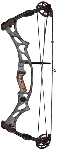 |  |
| Brace Height | 6.625 " | 7 " | 7.25 " |
| AtA Length | 35 " | 33 " | 33.25 " |
| Draw Length | 25 " - 30 " | 25 " - 31 " | 26.5 " - 30.5 " |
| Draw Weight | 40 lbs - 70 lbs | 40 lbs - 80 lbs | 50 lbs - 70 lbs |
| IBO Speed | 315 fps - 317 fps | 316 fps | 317 fps - 335 fps |
| Weight | 4.25 lbs | lbs | 3.8 lbs |
| Let-Off | 80% or 65% | 65% or 80% | 65% - 80% |
| Where to buy Best prices online | |||
| compare more bows | |||
Set the LX beside two other premium bows of the same mid-2000s window and the choice comes down to how you want the bow to behave, because all three sit in the same speed class. The Hoyt Trykon (2006-2007) is the compact forgiving hunter of the group - a shorter 33-inch axle-to-axle with a tall, error-tolerant 7-inch brace height and a Cam & 1/2 hybrid system rated at 316 IBO, built to be draped in camo and carried into a treestand. The Bowtech Allegiance (2005-2008) is the aggressive one - a binary-cam design at 317 IBO and a 7.25-inch brace that earned its name as a fast, tunable benchmark of the era. Against them the Mathews LX is the longest and smoothest of the three: its 35-inch axle-to-axle and single StraightLine cam trade the Trykon's compactness and the Allegiance's binary-cam bite for the steadiest hold and the simplest setup, with no cam timing to maintain. All three offer the same 80%/65% let-off flexibility, so hold weight isn't the deciding factor. The decision comes down to priorities: single-cam simplicity and target-length forgiveness point to the LX, high-brace hunting forgiveness in a shorter package points to the Trykon, and binary-cam speed with a tuning-focused reputation points to the Allegiance. Mathews shooters who want to stay in the family will also recognize the LX's in-house siblings - the shorter Legacy and Outback and the Switchback that followed it - as natural cross-shops.