
Mathews Ovation Review

Pros
- Long 40-inch axle-to-axle and tall 8-inch brace height make it remarkably forgiving - owners report stacking arrows at 60 to 80 yards
- Smooth, easy-to-shoot-well single cam that owners find forgiving enough for target, 3D, and shooters still new to the tournament line
- Confidence-inspiring build that long-time owners rate among the best target bows Mathews made in the Solocam era
Cons
- Heavy and long at roughly 4.5 pounds and 40 inches - built for the stationary target and 3D line, so hunters who carry all day are better served by a shorter hunting model
- Comparatively slow at a 300 to 302 fps IBO rating - a deliberate trade for the forgiving geometry that spot and 3D scoring never punishes, though speed-focused buyers should weigh it
Video
content from YouTube
Editors' review
When the tournament is on the line, this is the bow Mathews built for your hand - that was the pitch in 2004, and two decades later the Ovation still reads as a pure target instrument rather than a hunting bow pressed into range duty. It is a long, deliberate Solocam (Mathews' single-cam system) rig: a full 40 inches axle-to-axle (the distance between the two cam axles), an 8-inch brace height (the gap from string to grip), and a single StraightLine HP cam that trades top-end speed for the kind of consistent, forgiving arrow flight spot and 3D shooters chase. What owners keep coming back to is accuracy - the recurring line across years of feedback is that the Ovation stacks arrows at distance the way lesser bows group at half of it. It is not a fast bow and it was never meant to be. It is a stable, quiet, dead-in-hand platform aimed squarely at the archer who scores their shooting on a card, not on a scale.
Finish
The Ovation launched wearing Realtree Hardwoods HD camo, then the newest pattern in Mathews' catalog, which suited the crossover 3D-and-field shooter who also stepped into the woods. As a dedicated tournament platform, the Ovation also lived comfortably in the solid and target-color side of the era's palette, where a spot shooter wants a clean, low-glare riser rather than woodland camo. The finish work is standard Mathews for the period - a durable anodized riser and coated limbs that hold up to years of range sessions and case travel. Because this is a discontinued model, the exact per-year color list is not fully documented from a primary source, so treat camo as the confirmed launch option and solid target colors as the era-typical alternative. What matters more than the palette on a bow like this is that the finish is hard-wearing: an Ovation still on the line today is usually wearing its original coat.Riser
The Ovation's riser follows the long target-length geometry that defines the platform - the length is the point, spreading the axles to 40 inches so the bow sits still through the shot. Mathews built the vibration control straight into the riser package: the Harmonic Damping System, a mass damper tuned to cancel post-shot buzz, works alongside string-mounted String Suppressors to kill residual string oscillation. In my experience with long single-cam target risers of this generation, that combination is what produces the "speed without the kick" character Mathews advertised - the bow is quiet and settles fast rather than jumping in the hand. The riser carries a ball-bearing idler wheel at the top for smoother, more consistent cable rotation. There is no modern Picatinny or integrated-rest mounting here; accessories mount the traditional way, through the standard threaded bushings every riser of the era used, which is exactly what a period target setup expects. It is a heavy riser, and that mass is deliberate: weight forward of the grip steadies the sight picture.Grip
The Ovation uses Mathews' InLine grip, a slim, straight-profile grip that sits low in the hand and keeps the wrist behind the shot. For a target bow this is the right call - a narrow grip gives the shooter one repeatable contact point and reduces the hand torque that pulls groups apart at distance. Drawing it, what I notice is how little the grip asks of you: there is no fat palm swell to fight, so the bow indexes into the same spot draw after draw. Shooters with larger hands sometimes prefer to build the grip up with an aftermarket wrap or a side-plate change, and the standard riser accepts those without fuss. The low, in-line hand position is a big part of why owners describe the Ovation as forgiving - a torque-free hand and a long riser reinforce each other.Limbs
The Ovation runs on Mathews' V-Lock Limb Cup System, the era's limb-pocket location design, which seats the limbs in a repeatable, positively located pocket for consistent limb behavior shot to shot. The draw-weight range spans 40 to 70 pounds, so the same bow covers a light indoor spot setup and a heavier outdoor 3D or field rig. Limb-weight changes are made the period way - backing the limb bolts out from peak, or a limb swap for a lower bracket - and require a bow press for any work beyond the bolt range. This is a well-proven limb architecture: the V-Lock system carried across the Mathews Solocam lineup of the mid-2000s, from hunting bows to the target flagships, and it earned a reputation for staying put. On a bow whose entire job is repeatability, a limb pocket that does not shift is doing quiet, essential work.Eccentric System
The single StraightLine HP cam is the heart of the Ovation and the reason it shoots the way it does. A Solocam has only one cam to time, which removes the cam-synchronization drift that can creep into two-cam target bows over a long season - the nock travels a clean, consistent path, and that consistency is the foundation of the bow's accuracy reputation. Speed is modest by design: the Ovation is rated at 300 to 302 fps IBO (the industry chronograph standard at 30-inch draw, 70 pounds, 350-grain arrow), which corresponds to an AMO figure around 230 fps - numbers that place it firmly in forgiving-target territory rather than the speed race. The draw length covers 28 to 32 inches with half-size stops at 28.5 through 31.5 inches, wide enough to fit the long-draw target shooter that the 40-inch axle length is built around. Crucially, the Ovation was offered in two let-off options - 80% and 65% (let-off is the percentage the peak weight drops to at full draw). The 80% setting eases the hold for long practice sessions; the 65% option gives the firmer holding weight and more defined pull that many spot shooters prefer for a steadier aim. That choice, more than raw speed, is what marks the Ovation as a shooter's target bow.Draw Cycle/Shootability
Drawing the Ovation is a smooth, gradual affair rather than an aggressive one - the single cam builds to peak weight without a harsh hump and rolls into a comfortable valley, which is what you want when you are cycling dozens of shots across a practice round. The back wall is defined enough to give a repeatable anchor, and with the 65% let-off module the increased holding weight actually helps a target shooter settle the pin and break a clean shot. What I keep coming back to on this platform is the hold: a 40-inch, 4.5-pound bow simply sits still, and the long axle-to-axle plus the low InLine grip let the sight picture float in a tight, steady window instead of chasing around the middle. The Harmonic Damping System and String Suppressors do their work at the shot - owners consistently describe the Ovation as quiet and dead in the hand, with none of the jump a lighter bow delivers. There is no independent chronograph or decibel data for a bow this old, so the feel comes straight from the people who have shot it for years, and the through-line is the same: forgiving, stable, easy to shoot well. The trade is portability - the same mass and length that steady the shot make the Ovation a handful to carry, which is exactly why it lives on the target line and not in a treestand.Usage Scenarios
The Ovation is a target and 3D bow first, and that is where it shines. Picture a club 3D range on a Saturday morning: the shooter who wants to hold dead-center on a foam elk at 40 yards and trust the bow to stay there while they aim is the Ovation's natural owner. It is equally at home on an indoor spot line, where the 65% let-off option and the steady long-axle hold help drill the same ten dozens of times over. The wide 40-to-70-pound range and 28-to-32-inch draw make it a genuinely good fit for the taller, long-draw archer whom short hunting bows leave cramped. It also earns a real place as a learning platform - the forgiveness that lets a veteran stack arrows also flatters a newer target shooter building form, which is why owners have handed it to family members stepping onto the line. Where it does not belong is the hunt: at 40 inches and 4.5 pounds it is cumbersome in a treestand or on a spot-and-stalk, and its modest speed is not built for that game. Buy it to shoot a card, not to pack a mountain.Versions
The Ovation was sold as a single model with minor year-to-year refreshes across its 2004 to 2006 run rather than as distinct package SKUs - the "three versions" collectors refer to are small spec tweaks (brace height nudging between 8 and 8.125 inches, the IBO rating listed at 300 or 302 fps) rather than different bows. The one choice that genuinely changes how the bow shoots is the let-off module: buyers selected either 80% for the easiest hold or 65% for the firmer, more target-oriented holding weight, and a used Ovation today can be wearing either. Finish at launch was Realtree Hardwoods HD camo, with target-color options typical of the era. There is no separate hunting or youth SKU under the Ovation name - it is one dedicated target platform.Mathews Ovation vs Bowtech Constitution, Mathews Conquest 3
| Bow | Mathews Ovation | Bowtech Constitution | Mathews Conquest 3 |
| Version | 2008 | 2007 | |
| Picture | 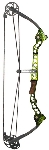 |  |  |
| Brace Height | 8.125 " | 8.25 " | 7 " |
| AtA Length | 40 " | 41 " | 41 " |
| Draw Length | 28 " - 32 " | 27 " - 30.5 " | 28 " - 32 " |
| Draw Weight | 40 lbs - 70 lbs | 40 lbs - 70 lbs | 40 lbs - 70 lbs |
| IBO Speed | 300 fps - 302 fps | 312 fps - 320 fps | 310 fps |
| Weight | 4.5 lbs | 4.2 lbs | 4.4 lbs |
| Let-Off | 80% | 65% - 80% | 65% or 80% |
| Where to buy Best prices online |
|
| |
| compare more bows | |||
Cross-shop the Ovation against the two bows a mid-2000s tournament archer actually weighed it against, and the picture sharpens. The Bowtech Constitution is the near-twin from across the aisle: 40 to 41 inches axle-to-axle, an even taller 8.25 to 8.44-inch brace height, a 300 to 320 fps IBO band, and the same 65 to 80% let-off flexibility, all at a comparable 4.2 to 4.5-pound mass across its 2005 to 2008 run. The Constitution edges the Ovation on top-end speed and offers a slightly more forgiving brace, while the Ovation counters with the Solocam's single-cam simplicity - one cam to time, nothing to sync. The Mathews Conquest 3 is the in-house rival and the more direct decision for a Mathews loyalist: a 41-inch, single-cam tournament bow from the overlapping 2003 to 2007 era, rated at 310 fps IBO on a shorter 7-inch brace, with 60, 65, and 80% let-off options. The Conquest 3 trades a little of the Ovation's forgiving brace height for a touch more speed and an even longer competition pedigree. The decision comes down to priorities: the Ovation for the shooter who wants the most forgiving hold and the simplest single-cam maintenance, the Bowtech Constitution for the buyer chasing a hair more speed and brace-height forgiveness across brands, and the Mathews Conquest 3 for the Mathews shooter who values the deepest tournament lineage.