
Mathews Phase4 33 Review

Pros
- Measured 92.9 dB at the shot - the eight-limb RPD design makes it the quietest Mathews of its era
- Long 33-inch axle-to-axle on a target-length riser holds rock-steady at full draw
- Forgiving 6.5-inch brace height smooths out form errors for hunting and 3D alike
- SwitchWeight modules set peak weight and let-off, so one bow spans 60-75 lb without new limbs
- Tunes fast and predictably - many owners dial it in without touching the top-hat shims
Cons
- The rubber Engage grip divides owners - those who dislike it can pop it off for flat side plates or an aftermarket grip
- The 27-inch draw-length floor rules it out for shorter-draw shooters, who fit the Phase4 29 better
Video
content from YouTube
Editors' review
The Mathews Phase4 33 answers a question that seemed already settled: how do you make a bow quieter than the V3X 33, which barely made a sound to begin with? Mathews' answer lives in the limbs. Rather than the usual four split limbs, the Phase4 carries eight - four top, four bottom - each pair divided by a thin layer of vibration-dampening rubber that stops noise and vibration at the source before it reaches the riser. On a decibel meter the payoff is concrete: 92.9 dB at the shot, quieter than any Mathews before it. Wrap that around a 33-inch axle-to-axle frame - the span between the cam axles - built on a riser as long as the company's TRX 36 target bow, and you get a hunting flagship that holds like a target rig and shoots almost silently. This is the long, steady, forgiving half of the 2023 Phase4 platform, and what follows is what that combination does on the shooting line.
Finish
Mathews dressed the Phase4 33 in a restrained lineup of solids and camo rather than loud graphics. The solid options covered black, granite, and an ambush green that disappears into early-season timber, while camo buyers could choose Realtree Edge, First Lite Specter, and Optifade in both Elevated II and Subalpine. All of it is Mathews' hardcoat finish over the machined aluminum riser, chosen for durability against blind frames, target stakes, and pack straps rather than for shine. No finish carried a price premium, so the choice is purely about where you shoot and what hides you there. The color runs consistently across limbs, riser, and hardware for a coherent look. On a bow this size, which spends time on both a treestand rail and a 3D range, a coating that shrugs off scuffs is the right priority - and this one does.Riser
The Phase4 33's riser is its quiet advantage. Machined from aluminum and stretched nearly the full 33-inch axle length, it is the same riser length Mathews uses on its TRX 36 target bow - and that mass low and wide is what makes this bow hold so still at full draw. Apart from the stabilizer mount it mirrors the V3X 33 geometry, so the balance shooters trusted carries straight over. The headline change is Bridge-Lock stabilizer integration: the bar slides into a channel machined into the riser rather than threading onto a bushing, giving far more contact and a stiffer, more secure connection. In my experience that mount transforms how planted the bow feels - the weight sits out where it steadies the sight picture without any of the flex a bolt-on bar allows. The riser keeps the integrated wrist-sling dovetail, the Silent Connect rope posts, and a harmonic damper ahead of the lower limb pocket. Everything tucks close, so nothing but the quiver breaks the bow's clean profile.Grip
The Phase4 33 uses Mathews' Engage grip, a rubber-coated piece with a subtly textured back and a rounded profile. Its clearest benefit shows up late in the season - the rubber stays warmer against bare skin than an aluminum grip ever will, which matters on a cold December sit. The shape encourages a low-torque, repeatable hand position for most shooters. It is also the bow's most divisive component: some owners are perfectly happy with it, while others find the rounded surface doesn't match their palm. The remedy is easy and cheap - the grip pops off and Mathews' flat side plates let your hand ride directly on the finished riser for a flatter reference, and aftermarket grips fit as well. For a bow that pulls double duty on hunts and 3D courses, the ability to set your own grip feel is worth knowing about before you buy.Limbs
The limbs are what separate the Phase4 from everything before it. Mathews took the split-limb design - two limbs per pocket - and split each one again, producing eight individual limbs, four top and four bottom, with a thin strip of vibration-dampening rubber sandwiched between each pair. The system is called Resistance Phase Damping, and its logic is simple: the limbs are where the vibration and noise begin as they transfer energy to the arrow, so kill it there and far less ever reaches the riser and your hand. The limbs seat in Mathews' well-proven pockets and store energy for a 336 fps IBO rating - IBO being the standard speed measured at 30 inches, 70 pounds, and a 350-grain arrow. Because draw weight is set by the SwitchWeight module, a single limb set spans the full 60-to-75-pound range. Visually the only tell is the rubber line down the center of each limb where a solid limb used to be, but that small change is the entire reason this bow shoots quieter than the class-leading V3X it replaced.Eccentric System
The Phase4 33 carries Mathews' Crosscentric cam with the SwitchWeight module system, deliberately unchanged from the V3X. One module sets peak weight (60, 65, 70, or 75 pounds), draw length across the 27-to-31.5-inch range, and let-off at 80 or 85 percent - let-off being the share of peak weight that falls away at full draw, so at 85 percent you hold only a light fraction and can wait out an animal or hold a 3D pin without shaking. On the chronograph the long 33 delivers steady, honest numbers: at 70 pounds and a 29-inch draw it reads 320 fps with a 350-grain arrow, 301 fps at 400 grains, and 281 fps at 450 grains, with heavier hunting shafts settling around 283 fps. Notably, it tracks within a couple feet per second of the shorter Phase4 29 in real testing despite the longer, more forgiving geometry - you give up almost nothing in speed for the added stability. The centered roller guard keeps cam load balanced for clean nock travel, which is a large part of why the bow tunes so readily; many owners get a bullet hole without ever adjusting the top-hat shims. It is a cam built for repeatability, and on this long riser it rewards a patient, deliberate shot.Draw Cycle/Shootability
The Phase4 33 draws the way a good Mathews should: a consistent, even pull with no harsh spike, rolling over the peak and settling into the valley before it reaches the back wall. That wall is firm with a slight sponge - a defined stop that still lets you creep into it - and it holds you honestly at full draw. Where this bow separates itself is the hold and the shot. The long riser and 6.5-inch brace height make the sight picture unusually calm; the pin simply parks and sits, which is why this hunting bow makes such a natural 3D and target crossover. Then there is the silence. On a meter the shot reads 92.9 dB, and in the hand it is almost eerily dead - the eight-limb RPD system strips out the last of the vibration the V3X still had, and there is virtually nothing coming back through the grip. In my experience that stillness does something subtle but real: with no hand shock to brace against, it is far easier to stay relaxed and let the shot surprise you, which is exactly what steadies a long-range pin. Heavier arrows quiet it even further. The arrow is gone before the bow finishes settling.Usage Scenarios
The Phase4 33 fits the shooter who wants one bow for the treestand, the 3D course, and the target range. Picture a taller hunter with a 30-inch draw settled into a stand on a cold morning - the long axle-to-axle and heavy-riser balance park the pin dead still, and the near-silent shot gives a close deer nothing to react to. The same steadiness pays off on a summer 3D range, where holding a pin through a long shot at an unknown distance is the whole game, and the 336 fps speed keeps the arrow flat enough to forgive a yardage misjudgment. Its 27-to-31.5-inch draw range and 60-to-75-pound spread suit longer-draw adults especially well; shorter-draw shooters are better served by the compact Phase4 29. Western hunters glassing open country will value a bow that holds steady in wind and reaches ethical ranges on mule deer, antelope, and elk with the right arrow. It is a forgiving, versatile platform that rewards the shooter who values a calm hold over a compact frame.Mathews Phase4 33 vs Hoyt Ventum Pro 33, PSE EVO NXT 33
| Bow | Mathews Phase4 33 | Hoyt Ventum Pro 33 | PSE EVO NXT 33 |
| Version | 2024 | 2022 | 2020 |
| Picture | 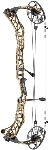 |  |  |
| Brace Height | 6.5 " | 6.375 " | 7 " |
| AtA Length | 33 " | 33 " | 33 " |
| Draw Length | 27 " - 31.5 " | 26 " - 31 " | 26.5 " - 32 " |
| Draw Weight | 50 lbs - 75 lbs | 40 lbs - 80 lbs | 40 lbs - 80 lbs |
| IBO Speed | 336 fps | 334 fps | 314 fps - 322 fps |
| Weight | 4.68 lbs | 4.67 lbs | 4.5 lbs |
| Let-Off | 80% or 85% | 80% or 85% | 80% - 90% |
| Where to buy Best prices online |
| ||
| compare more bows | |||
In the 33-inch hunting-and-3D-crossover class, the Phase4 33 lines up against the Hoyt Ventum Pro 33 and the PSE EVO NXT 33, two bows built around the same long-axle, forgiving-brace formula. The Hoyt Ventum Pro 33 shares the 33-inch axle length but comes with a slightly shorter 6.375-inch brace height and Hoyt's own damping, trading a touch of forgiveness for speed, while the Phase4's measured 92.9 dB and dead-in-hand shot give it the clearest quiet-and-vibration edge. The PSE EVO NXT 33 goes the other way with a more forgiving 7-inch brace and comes in at a lower price anchor near $1,099 launch, making it the value pick for a long, stable hunter, though it trades away some of Mathews' silence and premium feel. All three hold well and reach across the same speed band, so the decision comes down to priorities: choose the Phase4 33 for the quietest shot and target-grade stability, the Hoyt Ventum Pro 33 for Hoyt's carbon-era feel and a slightly shorter, faster brace, and the PSE EVO NXT 33 for the most forgiving brace at the lowest price. Mathews' own compact sibling, the Phase4 29, covers shorter draws and tighter cover for buyers who want less axle. The 33 is the one you pick when the hold matters most.