
Bowtech Tech 29 Review
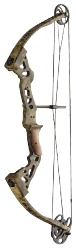

from $150
Pros
- Compact and light at 29.5 inches and 3.6 pounds - easy to carry and swing in tight cover or from a treestand, and owners have taken plenty of deer with it
- Genuinely fast for its size - a 314-320 fps IBO rating from a sub-30-inch single cam puts real arrow speed in a small package
- Single-cam PF simplicity with an easy-drawing feel - one cam to keep in tune and a gentle pull even at heavier peak weights that owners appreciate on long sits
Cons
- The short 29.5-inch axle-to-axle makes a steep string angle that is less forgiving than a longer bow - a release aid and consistent form handle it, and it is simply the trade a compact bow makes
- Discontinued after 2003 and found only on the used market - budget a fresh set of strings and cables plus a shop tune on any example you buy
Editors' review
Where its stablemates the Pro 38 and Pro 40 were long, slow target bows built to stand still on a shooting line, the Tech 29 is the opposite animal: short, light, and quick, built to kill deer from a treestand. The name is the spec - it measures 29.5 inches axle-to-axle (ATA, the distance between the two cam axles), which in the early 2000s counted as a genuinely compact hunting bow. At 3.6 pounds with a 314-320 fps IBO speed rating (the industry's fixed-setup chronograph number), it packs real speed into a small, maneuverable package, and it does it with BowTech's PF single cam - one cam and an idler wheel, so there is no cam timing to fuss over. Owners who carried one talk about a bow that drew easily, shot gently, and dropped a lot of whitetails. The catch is the same thing that makes it handy: a sub-30-inch bow has a steep string angle, which asks for a release aid and clean form. Get that part right and the Tech 29 is a lot of compact hunting bow for whatever a clean used one costs today.
Finish
BowTech's early owner's manuals did not spell out a finish menu for the Tech 29 the way a modern catalog would, so a documented, itemized color list for this specific model is thin. What the surrounding lineup establishes is that BowTech dressed its early single-cam bows primarily in Mossy Oak camouflage for the hunting models, with solid colors reserved more for the target line. The Tech 29 is a hunting bow through and through, so expect a used example to show up in period Mossy Oak. Early-2000s film-dip camo wears reasonably well, though a two-decade-old bow will carry handling marks at the shelf, the grip, and the limb tips. On a hunting rig that is cosmetic - none of it changes how the bow draws or shoots.Riser
The Tech 29 is built on a short, machined-aluminum riser, and the whole design is organized around keeping the bow small and light. The riser carries a conventional cable guard and slide and is drilled for the standard rests and sights of its era, so setting one up with a modern hunting rest and a fixed-pin sight is straightforward. There is no exotic hardware here - this predates BowTech's later Center Pivot and InVelvet work by several years - just a compact, rigid platform with generous cutouts to shed weight. In my experience a riser this short pays off the moment you are climbing into a stand or threading through brush: there is simply less bow to catch on everything, and the 3.6-pound mass keeps it from wearing on your arm over a long morning. The flip side of a short riser is less built-in forgiveness than a long one gives, which puts the burden on the shooter's form rather than the bow.Grip
The grip is a straightforward BowTech hunting grip of the period - a fairly slim, direct-to-the-riser hand position that sits low in the hand. Kept thin and simple, it is easy to repeat shot to shot, which matters on a compact bow where consistency is doing more of the accuracy work. It takes a cold-weather glove without feeling bulky, and shooters who prefer a fuller purchase can add aftermarket side plates since the riser accepts standard grips. There is nothing remarkable or fussy about it, and on a hunting bow that is the right call - a grip you do not think about is a grip that is not torquing your shots.Limbs
The Tech 29 runs a pair of working limbs rated for 50, 60, and 70-pound peak draw weights, set the traditional way with the limb bolts and giving you about ten pounds of backing-off room before the limb is below its comfortable zone - so a 50-pound bow lives in the low-to-mid 40s and a 70 tops out at 70. Setting weight needs only an Allen wrench, no bow press. What owners single out is how easy the bow is to draw even up near those heavier peaks; one hunter running it at 80 pounds still described the draw as easy and the shot as gentle. The limbs seat in solid pockets on the compact riser, and across BowTech's early lineup this limb-and-pocket arrangement earned a solid reliability record. For whitetails and similar game, the 60 or 70-pound option drives plenty of kinetic energy for clean pass-throughs.Eccentric System
The engine is BowTech's PF single cam - one cam driven by a round idler wheel at the top. The practical advantage of single-cam design is that there are no two cams to time against each other, which is the number-one tuning headache on dual-cam bows; keep the one cam and the string in spec and the Tech 29 holds its tune through a season. Draw length is changed by swapping modules, each worth one inch, and the bow covers a 24 to 29-inch range that suits shorter-draw and average-draw hunters - long-draw adults are the shooters this one does not fit. Let-off (the share of peak weight the bow sheds at full draw, so you hold far less than you pulled) runs the familiar 65-to-80 percent BowTech range. Where this cam earns its keep is speed: a 314-320 fps IBO rating is quick for a sub-30-inch bow of its day, and that is the Tech 29's whole pitch - real velocity from a compact, lightweight platform. One owner chronographed about 289 fps with a heavy 411-grain hunting arrow at 80 pounds, which is a lot of downrange energy for deer. The trade for the short geometry is a steep string angle at full draw, so a release aid and a well-set peep do more for accuracy here than on a long bow.Draw Cycle/Shootability
Drawing the Tech 29, the first thing you notice is how little bow there is - a short, light frame that comes back easily even at hunting weight. Owners consistently describe the draw as easy and the pull as gentle rather than aggressive, which is a welcome trait when you are drawing on an animal in the cold after sitting still for hours. At full draw the single cam gives a usable valley (the relaxed window where holding weight is lowest) and a defined stop, so you can settle on target without the bow fighting you. The shot itself is where impressions split: some owners found this generation of BowTech single-cam quiet and smooth, while others felt the early single cams were on the loud side even with dampening added - a set of string silencers and a stabilizer tame most of it. What I keep coming back to on a bow this compact is that it rewards discipline: the short axle-to-axle makes the string angle steep, so a lazy release shows up on the target faster than it would on a 36-inch bow. Shoot it with a consistent anchor and a mechanical release and it is accurate and deadly; get sloppy and the short geometry will tell on you.Usage Scenarios
The Tech 29 is a whitetail bow first and foremost. Picture a cold November morning in a treestand, tight to the trunk, with limited room to draw and raise the bow - the compact 29.5-inch frame and 3.6-pound mass are exactly what you want when space and patience are both short. It is equally at home in a ground blind, where a short axle-to-axle clears the walls that a long target bow would bump. For a shorter-draw hunter, or a younger hunter who has grown into real draw weight, the 24 to 29-inch range and easy draw make it approachable without being a youth bow. It carries well on long still-hunts and spot-and-stalk outings where every ounce matters. Where it is not the right tool is the target line or a long-range precision game - its short, fast, less-forgiving nature is built for 20 to 40-yard shots at game, not for wringing the last ring out of a paper face. Keep it inside hunting ranges and it does its job.Versions
BowTech built the Tech 29 across three model years, with one spec change worth knowing:- 2001 Tech 29 - PF single cam, 29.5-inch ATA, 6.5-inch brace, 3.6 lb, 24-29" draw, 314-320 fps.- 2002 Tech 29 - unchanged from 2001: 29.5-inch ATA, 6.5-inch brace, same draw and speed.- 2003 Tech 29 - the brace height opens up to 7.25 inches for a touch more forgiveness, with the rest held constant: 29.5-inch ATA, 3.6 lb, 24-29" draw, 314-320 fps.All three share the 50/60/70-pound peak weights and 65-80% let-off. BowTech's surviving owner's manuals do not record a launch MSRP for the Tech 29, so value today is a used-market question.Bowtech Tech 29 vs Bowtech BlackHawk, PSE Firestorm
| Bow | Bowtech Tech 29 | Bowtech BlackHawk | PSE Firestorm |
| Version | 2003 | 2004 (Infinity Cam) | 2007 Lite NH |
| Picture |  | 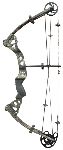 |  |
| Brace Height | 7.25 " | 8 " | 8.75 " |
| AtA Length | 29.5 " | 28.875 " | 29.5 " |
| Draw Length | 24 " - 29 " | 25 " - 30 " | 26 " - 30 " |
| Draw Weight | 40 lbs - 70 lbs | 40 lbs - 70 lbs | 50 lbs - 70 lbs |
| IBO Speed | 314 fps - 320 fps | 309 fps - 317 fps | 292 fps - 300 fps |
| Weight | 3.6 lbs | 2.813 lbs | 3.3 lbs |
| Let-Off | 65% - 80% | 65% - 80% | 65% or 80% (adj) |
| Where to buy Best prices online | |||
| compare more bows | |||
The Tech 29 competes in the early-2000s compact single-cam hunting class, where the right cross-shops are other short, light deer bows rather than the long target rigs in its own family. The Bowtech BlackHawk (2002-2004) is the closest sibling match: an even smaller 28.875-inch, sub-three-pound single-cam built as a budget hunter, running the Infinity Cam at a similar 309-317 fps but with a much taller 8-inch brace height that makes it noticeably more forgiving than the Tech 29's tight 6.5-to-7.25-inch brace. The PSE Firestorm (2001-2007) is the cross-brand benchmark and shares the Tech 29's exact 29.5-inch axle-to-axle, but it takes the opposite approach to the trade-off: a very tall 8.75-inch brace makes it one of the most forgiving compact bows of its day at the cost of speed, posting a slower 292-300 fps. Against both, the Tech 29 is the fast one - it keeps the shortest, most aggressive brace of the three and the highest IBO, which is exactly why owners liked it for punching deer and why that steep string angle asks more of the shooter. The decision comes down to priorities: the PSE Firestorm for maximum forgiveness in a compact frame, the Bowtech BlackHawk for the lightest weight and the lowest used-market price, and the Tech 29 for the hunter who wants the most speed out of a sub-30-inch single cam and will put in the form to shoot it well.