
Bowtech Pro 38 Review


from $865
auctions from $499.99
Pros
- Dead-solid, well-defined back wall - owners who shot it for years describe the wall as very solid, exactly what you want for anchoring a repeatable target shot
- Single-cam PF design with an idler wheel on top - nothing to time or synchronize, so it is simple to tune and stays in tune
- Long riser and a tall 7 3/8-inch brace build forgiveness into every shot, rewarding clean form over raw speed
- Genuine target/field all-rounder - owners report it handles everything they ask of it, from spots to 3D to field courses
Cons
- Out of production since 2003 and found only on the used market - plan on a fresh set of strings and cables plus a shop tune on any example you buy
- A long, deliberate target bow rather than a compact treestand rig - shooters who want a light, fast hunting setup are simply a different audience
Editors' review
The Pro 38 is one of BowTech's earliest bows, and its name is a clue to what it is for: it was christened for its axle-to-axle length (ATA - the distance between the two cam axles), which measured a hair under 38 inches when the bow launched in 2001. Watch that number across the three years it was built and you see a company still dialing in its geometry - 37.9 inches in 2001, 37.31 in 2002, and 36 11/16 inches by 2003 - yet the "Pro 38" badge stayed put. Underneath the shifting riser is a consistent idea: a long, single-cam target and field bow built to hold dead-steady and finish the shot quietly, not to chase speed. It uses BowTech's PF single cam - one cam driven by an idler wheel up top, so there is no cam timing to synchronize. Owners who lived with one call it a dependable machine that handled everything they asked of it, and the one word that comes up again and again is solid. This is a bow for the archer who scores on paper and foam, not the one counting feet-per-second. If that is you, a clean used Pro 38 is still a lot of shootable bow.
Finish
BowTech's early owner's manuals did not itemize a finish menu for the Pro 38 the way modern catalogs do, so the honest answer is that a documented color list for this specific model is thin. What the surrounding lineup tells us is useful: BowTech ran its Pro-series target bows in solid target colors alongside Mossy Oak camouflage, and the pattern carried straight into the 2004 Pro 40, which the catalog lists in Mossy Oak Obsession plus target colors. For a bow of this era and class, expect a used example to turn up either in a solid competition color or in period Mossy Oak. Film-dip and powder-coat finishes of the early 2000s hold up reasonably well, though two-decade-old examples will show handling wear at the shelf and grip. None of that affects how the bow shoots - on a target rig, the finish is cosmetic.Riser
The Pro 38 is built around a long machined-aluminum riser, and that length is the whole point of the design. A long riser spreads the mass out and puts more bow below and above the grip, which steadies the sight picture and makes small aiming errors smaller - the forgiveness that target and field archers pay for. The riser carries a conventional cable guard and slide, and it is drilled to accept the standard rests and sights of its day, so setting one up with modern target accessories is straightforward. There is no exotic mounting system here - this predates BowTech's later Center Pivot and InVelvet work by several years - just a clean, rigid platform. The cutouts and bridged sections keep the weight sensible for the length. In my experience a riser like this does its best work on a stool at a field course, where the extra mass that a hunter would grumble about becomes the thing holding your pin on the spot.Grip
The grip is a straightforward BowTech target-bow grip of the period - a fairly slim, direct-to-the-riser hand position that puts the web of your hand close to the bow's centerline. That low, consistent hand placement is what you want on a bow you are shooting for score, because it keeps torque out of the shot and makes your grip repeatable from one arrow to the next. There is nothing fat or over-molded about it; it is a form-first grip rather than a hunting-glove-friendly one. Shooters who prefer a thicker purchase can add an aftermarket or shop-built grip, as the riser takes standard side plates. Hand-to-hand it feels of its era - plain, but honest and repeatable, which on a target bow is exactly the right priority.Limbs
The Pro 38 runs on a pair of working recurve-style compound limbs rated for 50, 60, and 70-pound peak draw weights, with the usual limb-bolt adjustment giving you about ten pounds of backing-off room before you are below the limb's happy zone. Each full turn of the bolt moves draw weight about three to four pounds, and BowTech capped the usable adjustment at about two and a half turns, so a 50-pound bow lives comfortably in the low-to-mid 40s at the bottom and a 70 tops out at 70. Setting weight needs only an Allen wrench, no bow press. The limbs are mounted in solid pockets on that long riser, and across BowTech's early lineup this limb-and-pocket arrangement earned a reputation for durability. For a target shooter the 50 or 60-pound option is plenty - you are chasing a clean release and a quiet shot, not penetration.Eccentric System
The heart of the Pro 38 is BowTech's PF single cam, a one-cam system with a round idler wheel at the opposite end. The practical upshot of single-cam design is that there are no two cams to time against each other, which is the number-one tuning headache on dual-cam bows - keep the one cam and the string in spec and the bow holds its tune through long practice sessions and tournament weekends. Draw length is set by swapping modules, each module worth one inch, a job for an authorized dealer rather than a backyard tweak. Let-off (the percentage of peak weight the bow sheds once you are at full draw, so you hold far less than you pulled) runs the familiar BowTech 65-to-80 percent range on the 2002 and 2003 bows, selectable to suit how long you want to float the pin. IBO speed - the industry's fixed-setup chronograph rating - sits at 310 to 318 fps for the 2003 configuration, which is modest by any modern yardstick and entirely beside the point: this cam was tuned for a smooth pull and a steady hold, not a hot number. BowTech even offered the 2002 Pro 38 in two brace-height setups, a 6-inch "Option 1" that pushed speed to 322-330 fps and a 7-inch "Option 2" that traded that back for a more forgiving hold, before the line settled on the taller, calmer 7 3/8-inch brace for 2003. The single cam is the right engine for the job this bow is built to do.Draw Cycle/Shootability
Draw a Pro 38 and the experience is defined by its back wall - the hard stop at the end of the draw where the bow settles against the cam. Owners reach for the same word, solid, and that is the quality a target archer anchors to: the wall stops where it should, every time, so your draw length is consistent and your release has something firm to break against. The valley (the relaxed window at full draw where holding weight is lowest) is generous enough to let you settle and float a pin without the bow trying to creep forward or snatch out of your hand. What I keep coming back to on bows of this lineage is how little the shot disturbs the bow - the long riser and heavier mass soak up the jump, so the release is quiet and close to shock-free, and you often hear the arrow hit before the bow has finished settling. It is not a fast, snappy hunting draw; it is a long, deliberate pull that asks you to execute cleanly and rewards you when you do. Shooters who grew up on aggressive hunting cams may find it leisurely. Shooters chasing a score will recognize an old friend.Usage Scenarios
Picture a Saturday field round: 28 targets up and down a wooded course, unknown and known yardages, and a bow whose only job is to sit still while you read the distance and break a clean shot. That is the Pro 38's native habitat. It is at home on an indoor spot league at 18 and 20 yards, on a 3D course where you want a steadier hold than your hunting rig gives, and on the practice bale where a forgiving platform helps a developing archer groove their form. A new target shooter can learn on it without fighting a twitchy, speed-tuned bow; a seasoned one can wring real accuracy out of it. Where it is not the right tool is the treestand - at better than three feet axle-to-axle and on the heavy side, it is more bow than you want to swing in tight cover, and its speed is well short of a modern hunting setup. Think paper, foam, and field faces, and the Pro 38 is in its element.Versions
BowTech built the Pro 38 across three model years, with a meaningful mid-run change worth knowing before you buy used:- 2001 Pro 38 - PF single cam, 37.9-inch ATA, 7.4-inch brace, 4.3 lb, 313-320 fps, a single factory configuration.- 2002 Pro 38 - 37.31-inch ATA, 4.25 lb, offered in TWO brace-height options: Option 1 (6-inch brace, 25-30" draw, 322-330 fps) for shooters who wanted more speed, and Option 2 (7-inch brace, 26-31" draw, 310-318 fps) for a more forgiving hold.- 2003 Pro 38 - the final and most refined version: 36 11/16-inch ATA, 4.05 lb, settled on a tall 7 3/8-inch brace, 26-31" draw, 310-318 fps.All three share the 50/60/70-pound peak weights and 65-80% selectable let-off. BowTech's surviving owner's manuals do not record a launch MSRP for the Pro 38; its lineage descendant, the 2004 Pro 40, carried a $729 launch price, and clean Pro 38 examples now change hands only on the used market.Bowtech Pro 38 vs Hoyt 38 Pro, Mathews Conquest 4
| Bow | Bowtech Pro 38 | Hoyt 38 Pro | Mathews Conquest 4 |
| Version | 2003 | 2009 XT 1000 (Cam & 1/2 Plus) | 2019 (MaxCam) |
| Picture | 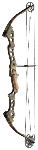 |  |  |
| Brace Height | 7.375 " | 7.75 " | 7 " |
| AtA Length | 36.688 " | 38 " | 40.625 " |
| Draw Length | 26 " - 31 " | 25 " - 33.5 " | 28 " - 32 " |
| Draw Weight | 40 lbs - 70 lbs | 40 lbs - 80 lbs | 30 lbs - 70 lbs |
| IBO Speed | 310 fps - 318 fps | 306 fps | 310 fps |
| Weight | 4.05 lbs | 4.6 lbs | 4.4 lbs |
| Let-Off | 65% - 80% | 65% or 75% | 80% or 65% |
| Where to buy Best prices online | |||
| compare more bows | |||
Shopping the long-riser single-cam target class means cross-shopping across brands and years, because the bows that truly compete with the Pro 38 are other forgiving spot-and-field rigs rather than anything in BowTech's own hunting line. The Hoyt 38 Pro (2007-2009) is the closest namesake match: a true 38-inch target and field bow with a 7.75-inch brace and a 306 fps IBO, running Hoyt's C2 Cam and a Half on laminated XT limbs, with a wider 25-33.5-inch draw range and a heavier 4.6-pound mass that longer-draw and barebow shooters favor. The Mathews Conquest 4 (2007-2019) is the premium benchmark of the group: a 40.625-inch, single-cam target machine with a 7-inch brace, a 310 fps IBO, and an enormous aftermarket and version catalog that kept it on competition lines for more than a decade. Against both, the Pro 38 is the earlier, shorter, lighter, and simpler bow - a late-1990s-into-early-2000s design that delivers the same core virtues (steady hold, clean back wall, single-cam tuning) for whatever a clean used example costs today. Its own longer stablemate, the Bowtech Pro 40, is the pick if you want more axle-to-axle length and an even more deliberate hold. The decision comes down to priorities: the Hoyt 38 Pro for draw-range breadth and barebow mass, the Mathews Conquest 4 for parts support and proven tournament pedigree, and the Pro 38 for the shooter who wants an honest, affordable, well-mannered target bow and does not need the latest badge.