
Bowtech Ascend Review
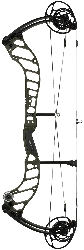

from $895
Pros
- Flagship-tier build at a sub-$1,000 price - a forged 6061 aluminum riser and metal limb pockets where most bows near this money fall back on polymer
- Press-free DeadLock Lite tuning - loosen two set screws, turn an Allen key to slide the cam, and clear a paper tear right on the shooting line with no bow press
- Smooth Comfort draw that still hits real speed - no hump or dump, a 350-grain arrow chronographing 328 fps and a heavy 418-grain hunting arrow holding 294
- Quiet, low-vibration shot, and the molded grip induces no hand torque - the bow sits where it is pointed instead of twisting in the hand
- Adjustable for the money - two draw-weight modules (45-60 and 55-70), Picatinny and standard sight mounts, an IMS rest dovetail, and upper and lower stabilizer mounts
Cons
- Performance mode trades nearly all of its valley for under ten fps, so the back wall runs away if the hand relaxes - most hunters are better off leaving the FlipDisc in Comfort, where the speed is already strong
- Even in Comfort the valley is shallower than some bows and rewards staying engaged on the back wall - it suits aim-and-hold shooters and takes a few sessions to settle into; a little stabilizer weight steadies the hold
Video
content from YouTube
Editors' review
Bowtech built its name on hunting bows that tune without a press - and charged flagship prices for the privilege. The 2026 Ascend is the first time that engineering lands under $1,000. At a $999 bow-only launch price it carries a forged 6061 aluminum riser, metal limb pockets, and a simplified take on Bowtech's press-free DeadLock cam tuning - hardware most bows in this bracket simply do not offer. The trade is right there in the name: this is DeadLock Lite, not the full flagship system, and the bow leaves behind the adjustable grip and the no-press timing that the pricier Bowtechs keep. What remains is a 31-inch axle-to-axle (ATA - the tip-to-tip cam distance that sets how a bow handles in cover and holds on target), 4.2-pound hunting bow rated at 340 fps IBO, with a FlipDisc that swaps between a smooth Comfort draw and a faster, stiffer Performance setting. Bowtech sells it three ways - bare bow, with a starter accessory kit, or with a deluxe kit - so a first-time buyer and a veteran adding a backup can each buy the version that fits. This review covers all three: they are the same bow in different boxes.
Finish
Bowtech offers the Ascend in four finishes, a focused palette that fits its no-frills, value brief. The lineup runs a solid Stealth Grey, an OD Green, a Forest green, and the Mossy Oak Bottomland camo pattern. The Stealth Grey reads as the do-everything option, flat and quiet on a treestand and unremarkable on a 3D range; the OD Green leans into the bow's hunting purpose with a muted earth tone that several hands-on looks single out as a standout of the lineup. Mossy Oak Bottomland is the dedicated concealment choice for hardwood and timber hunting, a pattern that has anchored whitetail country for decades. The dip-coat and anodized coverage is even across the riser cutouts and the limb pockets. For a bow built to a price, four finishes is the right number - enough to match a hunter's kit without padding the catalog, and each one is a finish a buyer would actually choose rather than a token color.Riser
The Ascend's riser is where the value story gets serious: it is forged 6061 aluminum, the same class of material Bowtech uses on bows costing far more, paired with machined metal limb pockets rather than the polymer pockets that bows near this price usually settle for. That construction is the difference between a chassis that holds its tune and one that drifts, and it is unusual to find it under $1,000. Bowtech kept the Integrate Mounting System (IMS) dovetail, which bolts a compatible rest directly to the riser for clean alignment, and added something its own flagships do not carry - a Picatinny sight mount alongside the standard mount, so a shooter can run a pic-rail or dovetail sight straight out of the box. Both upper and lower stabilizer mounts round out a riser that gives the shooter real options for balancing the bow. The limb pockets carry extra threaded holes that hint at a future bolt-on accessory. In my experience the press-free mounting and tuning are what set this riser apart at its price - setup starts from a known reference instead of a guess, and nothing about the hardware feels like a corner was cut.Grip
The Ascend does not get Bowtech's adjustable DeadLock grip; in its place is a new molded grip, and for this bow that is the right call. It is a low-profile grip with a rubberized surface that stays warm against bare skin in cold weather and a shape with defined edges rather than a rounded throat. The most consistent observation across hands-on use is that it induces no hand torque - the bow does not twist in the hand at the shot, which is the single most important thing a grip can do for accuracy and the hardest thing to fix on a cheaper bow. It seats repeatably, so the hand finds the same place shot after shot. The profile runs on the thin side, and a shooter coming off a fatter grip may notice it wants a deliberate hand placement at first, but it settles quickly. It is not adjustable like the flagship grip, yet for a bow at this price the molded grip does the one job that matters and does it well.Limbs
The Ascend uses split limbs seated in the machined metal pockets, and those pockets are the headline - most bows at this price skimp exactly here, using polymer, and Bowtech did not. The draw-weight story is built around two modules: a 45-60 pound option and a 55-70 pound option, with a deliberate five-pound overlap that lets a shooter fine-tune the peak instead of jumping in big steps. The 45-60 module brings smaller-framed and younger hunters onto a real hunting platform, while the 55-70 ceiling serves the full-power crowd chasing kinetic energy. Adjusting draw weight runs through the limb bolts with no press required. The limb geometry stores enough energy to reach the 340 fps IBO rating while keeping the 6.5-inch brace height forgiving - a brace that long is unusually generous for a bow chasing this speed, and it is part of why the Ascend stays easy to shoot. It is a conventional, proven split-limb layout, and the metal pockets are what make it hold up to being tuned once and hunted hard.Eccentric System
The heart of the Ascend is the DeadLock Lite cam, a simplified version of the press-free tuning system Bowtech's flagships are known for. The cam is a four-track binary design - four string tracks keep it running vertical and stable - and tuning happens without a bow press: loosen a set screw on each limb, then turn an Allen key in the end of the axle, which acts like a worm gear and slides the cam left or right behind the arrow until a paper tear cleans up. Compared to the full flagship DeadLock, the range of cam travel is smaller, but the increments are finer, so dialing in a tear is actually easier and more precise. What the Ascend gives up is the flagship's no-press timing system; on this bow, retiming the cams does need a press, where the pricier Bowtechs do not. A FlipDisc lets the shooter pick character without a new module: Comfort runs an 85-percent let-off (let-off is the share of peak weight the cam sheds at full draw, so 85 percent leaves a hunter holding only a small fraction of the peak), while flipping the disc to Performance drops to 80 percent for a faster, stiffer cycle. Draw length sets from 24.5 to 30 inches through a rotating module. The published IBO is 340 fps at 30 inches and 70 pounds; real-world numbers are honest about it - a 350-grain arrow chronographs 328 fps in Comfort and 336.8 in Performance (within four fps of the IBO claim), while a heavy 418-grain hunting arrow holds 294 fps in Comfort and 304 in Performance. The eight-to-ten-fps gap between the two settings is consistent across arrow weights.Draw Cycle/Shootability
In Comfort the Ascend draws the way a hunting bow should: it builds smoothly off the front with no hump and rolls into the back wall with no dump, settling into a short, defined valley against a solid wall. Drawing it on Comfort, I found it easy to hold and easy to let down under control - the kind of cycle a hunter can sit at full draw on while a buck closes the last ten yards. Flip the FlipDisc to Performance and the bow changes personality: the draw stiffens and the valley nearly disappears, so the string wants to run away the instant the hand relaxes on the back wall. It is not unmanageable, but it demands constant tension, and across an afternoon of switching between the two I kept coming back to Comfort, because the speed gain is small and the Comfort cycle is simply the better bow to shoot. The shot itself is quiet and stays put - it does not jump in the hand, there is only a trace of vibration on a bare bow, and that disappears once accessories are mounted. The molded grip induces no torque, so the bow aims where it is pointed; the one thing to know going in is that even the Comfort valley is on the shallow side, so this is a bow that rewards staying engaged on the back wall rather than floating in a deep cradle. For an aim-and-hold shooter, that firmness reads as honesty; a little weight out back steadies the hold further.Usage Scenarios
Picture the hunter buying a serious bow for the first time, or the veteran who wants a no-excuses backup without spending flagship money. The Ascend is built for exactly those shooters: a 31-inch, 4.2-pound hunting bow light enough to carry up a tree, fast enough at a real 294 fps with a heavy hunting arrow to take whitetail, hogs, and black bear at sensible ranges, and tunable on the shooting line without a trip to a pro shop's press. The DIY tuner is the clearest match - anyone who wants to paper-tune their own bow with an Allen key will get more out of the DeadLock Lite cam than out of any other feature. The two draw-weight modules let the same bow start a younger or smaller-framed shooter at 45 pounds and grow with them to a full 70, and the kit versions let a first-timer walk out of the shop with a complete, ready-to-hunt rig. Where the Ascend asks for commitment is the valley: a target archer who wants to relax into a deep, forgiving cradle and float the pin will find it firmer than a dedicated 3D or spot bow, but for the hunter who shoots by settling onto a solid wall and executing, that firmness is an asset. For value-minded bowhunters who want real tuning and flagship build at an entry price, the Ascend is squarely in its element.Versions
The Ascend is sold as three SKUs that share the identical bow - same riser, cam, limbs, and shooting behavior - and differ only in what ships in the box. The bare Ascend (Bow Only) is $999 launch MSRP, leaving the buyer to add their own sight, rest, and quiver. The Ascend w/ Kit at $1,099 adds a starter accessory package - a Pic Mount sight, a Vault four-arrow quiver, an Octagon Pro IMS rest, and a carbon peep - for $100 over the bare bow, a sensible bundle for a first-timer who wants to shoot right away. The Ascend w/ DLX Kit at $1,399 steps the accessories up to recognized aftermarket brands: a Black Gold Rush five-pin sight, a Ripcord RAK limb-driven rest, a TightSpot five-arrow quiver, a CenterMass stabilizer, a wrist sling, and a carbon peep - $400 over the bare bow, but with components a buyer would otherwise spend more to assemble separately. The choice is purely about whether a shooter already owns accessories (buy the bare bow), wants a complete entry rig (the Kit), or wants quality components bundled in at a discount to buying them individually (the DLX Kit).Bowtech Ascend vs Bear Persist, Bowtech Solution LS
| Bow | Bowtech Ascend | Bear Persist | Bowtech Solution LS |
| Version | 2026 | 2025 | 2026 |
| Picture | 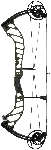 | 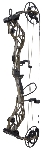 |  |
| Brace Height | 6.5 " | 6.5 " | 6.375 " |
| AtA Length | 31 " | 31 " | 30 " |
| Draw Length | 24.5 " - 30 " | 26 " - 30 " | 24.5 " - 30 " |
| Draw Weight | 45 lbs - 70 lbs | 45 lbs - 70 lbs | 40 lbs - 70 lbs |
| IBO Speed | 340 fps | 340 fps | 330 fps |
| Weight | 4.2 lbs | 5.6 lbs | 4.2 lbs |
| Let-Off | 80 / 85% | 75% - 90% | 85 / 87% |
| Where to buy Best prices online | |||
| compare more bows | |||
The Ascend's closest cross-brand match on paper is the Bear Persist, which mirrors its spec line almost exactly - a 31-inch axle-to-axle, 6.5-inch brace, 340 fps IBO hunting bow with a 45-to-70-pound draw-weight range; the decision there comes down to brand and tuning preference, with the Ascend's on-the-line DeadLock Lite the differentiator for a shooter who wants to tune without a press. Inside Bowtech, the step up is the Bowtech Solution LS at a $1,299 launch MSRP, a 30-inch hunting bow that brings more of the brand's full feature set and refinement for $300 more than the bare Ascend - the choice for a buyer who wants to stay with Bowtech but does not need to hit the sub-$1,000 mark. The Ascend's whole argument is that it delivers the forged riser, metal pockets, and press-free tuning of a flagship at the lowest price Bowtech currently asks. The decision comes down to priorities: the Bowtech Ascend for the value-minded hunter who wants real flagship-grade tuning and build under $1,000, the Bear Persist for the shooter cross-shopping identical specs on the other brand, and the Bowtech Solution LS for the buyer who wants more of Bowtech's full feature set and will spend up for it.