
Bowtech Pro 40 Review
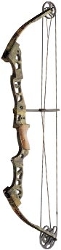
Pros
- Holds rock-steady on target - owners credit the long, heavy platform with their best-ever scores on paper and 3D
- Exceptionally smooth draw that feels lighter than the poundage you are actually pulling - the trait owners single out first
- Quiet, practically shock-free release - the long riser and extra mass soak up the shot so you often hear the arrow land first
- Very accurate and consistent year after year, with the 2004 FreedomCam version praised by owners as the better pure-target setup of the lineup
Cons
- On the heavy side and slow by modern standards - that mass is exactly what steadies the hold, but a 40-inch-class target bow is built for paper and foam, not a treestand
- Discontinued after 2004 and found only on the used market - budget for a fresh set of strings and cables and a shop tune on any example
Editors' review
Ask the archers who owned a Pro 40 what they remember and you get the same answer: it holds. BowTech's long single-cam target bow was named for the axle-to-axle length (ATA - the span between the cam axles) it wore at its 2001 launch, just under 40 inches, and everything about it serves one goal - standing dead-still while you aim. Owners describe a draw so smooth it feels like less weight than the scale says, a release that is quiet and practically shock-free, and scorecards that came back better than they shot with anything else. It is not fast and it is not light; those are the deliberate costs of a bow tuned to let you execute a clean shot rather than fling a hot arrow. The platform evolved over four model years, the single cam growing from BowTech's early PF cam into the 2004 FreedomCam, and in its last two years the same long riser could be ordered with a choice of cams - the smooth single cam for target, a faster two-cam Dually for 3D, and a round-wheel Wheely for finger shooters. The FreedomCam version is the one owners reach for when they want their best score. If you shoot for points rather than feet-per-second, a clean used Pro 40 still has a lot to give.
Finish
BowTech finished the Pro 40 the way it finished its target line of the era: solid target colors for the shooter who wants a clean competition look, alongside Mossy Oak camouflage for anyone who crossed it over to the woods. The 2004 catalog lists the Pro 40 specifically in Mossy Oak Obsession plus target colors, which is the clearest documented palette across the model's run. The earlier owner's manuals are lighter on an itemized color menu, so a used example from 2001-2003 may turn up in either a solid competition finish or period camo. Early-2000s film-dip and powder-coat finishes wear well, though two-decade-old bows will show the usual handling marks at the shelf and grip. On a target rig the finish is cosmetics - it does not touch how the bow holds or shoots.Riser
The Pro 40 is built on a long machined-aluminum riser, and the length is the entire design thesis. Stretching the geometry toward 40 inches axle-to-axle puts more mass and more bow above and below the grip, which calms the sight picture and shrinks the effect of small aiming errors - the forgiveness a target or field archer is buying. The riser runs a conventional cable guard and slide and is drilled for the standard rests and sights of its day, so building one into a modern target setup is painless. This is early-2000s BowTech, years ahead of the brand's later Center Pivot and InVelvet designs, so there is no exotic mounting hardware - just a stiff, honest platform. Bridged cutouts keep the weight in check for the length, though "in check" is relative: this is a heavier bow by design. In my experience that heft is a feature at the stake and a nuisance nowhere that matters for its job - it is the ballast that holds your pin still.Grip
The grip is a slim, form-first BowTech target grip that seats the hand low and close to the riser's centerline. That low, repeatable hand position is the point: it keeps torque out of the shot and makes your purchase identical from one arrow to the next, which is what separates a target grip from a hunting grip you can run with a glove. There is nothing bulky or over-sculpted here. Shooters who want a fuller hand can fit aftermarket or shop-made side plates, since the riser takes standard grips. It is plain by modern standards, but plain and repeatable is exactly the right recipe on a bow you are shooting for score, and owners rarely mention the grip at all - the best thing a target grip can do is disappear.Limbs
The Pro 40 carries working compound limbs rated for 50, 60, and 70-pound peak draw weights, adjusted the old-fashioned way with the limb bolts - about three to four pounds per full turn, capped around two and a half turns, which leaves about ten pounds of backing-off room before the limb is unhappy. No press is needed to set weight, only an Allen wrench. The 2004 Wheely variant widened that spread to a 40-to-80-pound range for shooters who wanted to reach lower or pull heavier, but on the standard FreedomCam and PF-cam bows the 50 and 60-pound options are where a target shooter lives - you are chasing a quiet, repeatable shot, not penetration. The limbs seat in solid pockets on the long riser, and across BowTech's early catalog this limb-and-pocket design built a solid reliability record. For its role, the limb package is honest and durable rather than exotic.Eccentric System
The Pro 40's engine changed over its life, and the change is the most interesting thing about the bow. From 2001 through 2003 it ran BowTech's PF single cam - one cam with a round idler wheel opposite - which gives the single-cam advantage of nothing to time: keep the cam and string in spec and the bow holds tune through long sessions. For 2004 BowTech fitted the FreedomCam, a single modular cam with half-inch draw-length adjustment and a draw-post that sets let-off (the share of peak weight the bow sheds at full draw, so you hold far less than you pulled) anywhere across 65 to 80 percent. That final-year FreedomCam config is the one owners point to for pure target work, with a tall 8.25-inch brace and a smooth, forgiving pull - the IBO speed (the industry's fixed-setup chronograph figure) of 292 to 300 fps is slow on paper and completely deliberate. Across 2003 and 2004 the same long riser could also be ordered with a two-cam Dually that pushed IBO into the 330s for 3D shooters who wanted more speed, or a round-wheel Wheely around 304-312 fps that finger shooters favored. What owners describe across all of them is a draw that feels lighter than the number on the scale and a hold that stays put - the single cam and the long geometry working together. Draw length is a module swap handled by a dealer, not a backyard job. This is a cam tuned for the hold, not the headline.Draw Cycle/Shootability
The Pro 40's shot is all about what happens after you draw. The pull itself is smooth and deliberate, and the thing owners mention first is that it feels lighter than the weight actually on the bow - the long limbs and single cam ramp into peak gently rather than stacking. At full draw the valley (the low-holding-weight window) is forgiving enough to let you settle, aim, and float the pin without the bow nagging you to let it down, and the back wall (the firm stop at the end of the draw) gives the release something solid to break against. Then the shot: quiet, and close to dead in the hand. The combination of a long riser and real mass soaks up the jump so thoroughly that owners talk about hearing the arrow hit before the bow has finished settling, and they consistently call it practically shock-free. What strikes me every time I pick up a bow built like this is how little work it asks of the shooting hand - there is no punishment to flinch away from, which is precisely why owners say they shot their best scores with one. It is a leisurely draw rather than a snappy one; shooters raised on aggressive hunting cams will feel the difference, and target shooters will feel at home.Usage Scenarios
The Pro 40 belongs on the shooting line. Picture an indoor spot league at 18 and 20 yards, where a steady hold and a quiet shot turn into tighter groups over a long night of arrows; or a 3D course where you want more forgiveness than your hunting rig offers and do not mind carrying a longer bow between stakes; or a field round where known and unknown yardages reward a platform that simply stands still while you read the distance. A developing target archer can learn clean form on it without fighting a twitchy, speed-tuned bow, and a seasoned one can wring real accuracy out of it. If you lean toward speed-oriented 3D, the Dually cam is the version to hunt for; if you shoot fingers, the Wheely. Where none of them belong is the treestand - at a true 40-inch-class length and on the heavy side, the Pro 40 is more bow than you want to maneuver in tight cover, and its speed trails any modern hunting setup. Keep it on paper and foam and it rewards you.Versions
BowTech built the Pro 40 across four model years, and the final year is where the choices open up:- 2001 Pro 40 - PF single cam, 39.9-inch ATA, 7.8-inch brace, 4.4 lb, 308-316 fps.- 2002 Pro 40 - 38.5-inch ATA, 4.35 lb, in TWO brace options: Option 1 (6.75-inch brace, 26-31" draw, 310-318 fps) and Option 2 (7.75-inch brace, 27-32" draw, 300-308 fps).- 2003 Pro 40 - single PF cam: 38 5/8-inch ATA, 4.10 lb, 7.75-inch brace, 27-32" draw, 300-308 fps. BowTech also offered the Pro 40 Dually (two-cam) and Pro 40 Wheely (round wheel) this year.- 2004 Pro 40 - the long riser offered with a choice of three cams: - Pro 40 (FreedomCam), the pure-target setup: 37.5-inch ATA, 8.25-inch brace, 292-300 fps, $729 launch MSRP. - Pro 40 Dually, the faster two-cam build for 3D: 37 1/8-inch ATA, 7-inch brace, 328-336 fps, $749. - Pro 40 Wheely, the round-wheel build for finger shooters, with the widest 40-80-pound range: 38-inch ATA, 7.25-inch brace, 304-312 fps, $749.All share 65-80% selectable let-off (the Dually runs 65%). Across every year the Pro 40 is the same idea - a long, steady target bow - with the 2004 cam menu letting a buyer tilt it toward target smoothness, 3D speed, or finger-shooter forgiveness.Bowtech Pro 40 vs Mathews Ovation, Bowtech Constitution
| Bow | Bowtech Pro 40 | Mathews Ovation | Bowtech Constitution |
| Version | 2004 (Freedom Cam) | 2008 | |
| Picture |  | 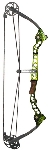 |  |
| Brace Height | 8.25 " | 8.125 " | 8.25 " |
| AtA Length | 37.5 " | 40 " | 41 " |
| Draw Length | 27 " - 32 " | 28 " - 32 " | 27 " - 30.5 " |
| Draw Weight | 40 lbs - 70 lbs | 40 lbs - 70 lbs | 40 lbs - 70 lbs |
| IBO Speed | 292 fps - 300 fps | 300 fps - 302 fps | 312 fps - 320 fps |
| Weight | 4.188 lbs | 4.5 lbs | 4.2 lbs |
| Let-Off | 65% - 80% | 80% | 65% - 80% |
| Where to buy Best prices online |
|
| |
| compare more bows | |||
The Pro 40 competes in the long-riser, big-brace target class, where the right cross-shops are other forgiving 40-inch-class bows rather than anything in a hunting lineup. The Mathews Ovation (2004-2006) is almost a mirror image from the same era: a 40-inch, single-cam target and 3D bow with an 8.125-inch brace, a 300-302 fps IBO, and Mathews' Harmonic Damping and low in-line grip built for form-focused precision - the two bows were genuinely cross-shopped when both were new. The Bowtech Constitution (2005-2008) is the in-house successor to this long-target idea: BowTech called it the longest bow in its line, a 40-to-41-inch target and field machine with an 8.25-inch brace and a 300-320 fps IBO, but it moved to the Equalizer Binary cam rather than a single cam, trading the Pro 40's single-cam simplicity for a touch more speed and a firmer binary wall. Against both, the Pro 40 is the earlier, single-cam answer: the smoothest, most no-fuss-to-tune of the three, and today the cheapest to own. The decision comes down to priorities: the Mathews Ovation for Mathews' damping and parts support, the Bowtech Constitution for a little more speed and a binary back wall, and the Pro 40 for the shooter who wants the simplest single-cam target bow and the smoothest hold for the money. Its own shorter stablemate, the Bowtech Pro 38, is the pick if you want a slightly more compact and quicker bow in the same family.