
Bowtech StalkerLite Review
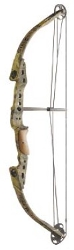
Pros
- Light and simple at 2.85 lb - the same single-cam, module-draw platform as the Stalker, with no two-cam timing to keep in sync
- Reaches genuinely low - down to a 30 lb peak and a 23 inch draw, opening a real adjustable hunting single-cam to smaller-framed, younger, and developing shooters
Cons
- A lower-poundage, shorter-draw bow by design - hunters who need a full 70 lb peak or a draw past 29 inches will want the full-power Stalker instead
Editors' review
The name is the first thing to get right: despite the "Lite," BowTech's StalkerLite is not a smaller bow than the Stalker - its axle-to-axle is actually a hair longer. "Lite" means lighter to draw, not lighter to carry. This was the short-draw, low-poundage member of the Stalker family, sold alongside the standard bow in 2002 and 2003, and its whole reason for existing was reach: it opened a genuine adjustable hunting single-cam down to a 30-pound peak and a 23-inch draw, numbers that put a real BowTech in the hands of smaller-framed, younger, or developing shooters who got left out by the 40-to-70-pound hunting bows of the day. Underneath, it is the same early-2000s BowTech platform as the Stalker - a single cam (the PF cam in 2002, the Infinity Cam by 2003), a machined aluminum riser, a module draw system, and a sub-three-pound mass. It is a niche bow, and a used-market one today, but for the shooter it was built for there was very little else like it at the price.
Finish
Like the standard Stalker, the StalkerLite was a camo-only hunting bow - it shipped in the woodland patterns of the period rather than any target color, consistent with a lineup that reserved the bright schemes for its up-line models. A full camo dip over a machined riser is the right call for a bow meant to sit in a treestand or a ground blind, and it wears the knocks of real use without showing them. For a used buyer judging a StalkerLite from photos today, the finish is the quickest health check: a clean, even dip and tight cable serving usually mark a bow that was shot gently and stored well. There is no two-tone or commemorative treatment here - just a plain, purposeful hunting look that matched its value-tier price.Riser
The StalkerLite's riser is machined aluminum and, at 33.75 inches axle-to-axle, actually a touch longer than the standard Stalker's - the detail that makes the "Lite" name misleading. That length is a forgiveness asset, not a liability: a longer riser steadies the aim, which matters even more for the lighter-drawing, often newer shooter this bow targets. It is the same clean, pre-Vertical Force Technology platform BowTech used across its early single-cam bows, with traditional Berger-hole accessory mounting that accepts any standard rest and sight without adapters. The brace height grew from 7 inches in 2002 to 7.5 inches in 2003, a small change in the forgiving direction. For a bow aimed at shooters still building their form, a long, simple, forgiving riser is exactly the right foundation.Grip
The StalkerLite carries the standard BowTech grip of its era - a medium-width, rounded profile that fills the hand and gives a new or smaller-framed shooter a consistent, repeatable place to set the bow hand. Consistency is where accuracy quietly starts, and a grip you can locate the same way every time helps a developing archer torque the riser less. The rounded shape also stays reasonably warm against a bare hand on a cold sit. Anyone who wants a slimmer feel can shape or replace it with a standard aftermarket grip that fits the platform. It is an unremarkable grip in the best sense: comfortable, low-torque, and out of the way.Limbs
Where the StalkerLite separates itself from the standard Stalker is the limb spread. It is ordered by peak in the 30/40/50/60-pound tiers rather than the Stalker's 40/50/60/70, dropping the floor a full ten pounds to 30 - the number that lets a smaller-framed or still-growing shooter draw it comfortably and still hunt. Each peak backs down through the limb bolts in the usual way, so a 60-pound bow tunes into the low 50s without new limbs, and a 30-pound bow gives a light-framed hunter real adjustability as they get stronger. These are the same solidly built limbs from BowTech's early hunting line, and the complete bow still weighs just 2.85 pounds, lightest of the Stalker pair. It is a straightforward, serviceable limb system any pro shop can set up.Eccentric System
The StalkerLite is a single-cam bow - one cam on the bottom limb against an idler wheel up top - carrying BowTech's PF cam in 2002 and the Infinity Cam by 2003, the single cam that defined the company's hunting bows before the Binary Cam System arrived in 2005. Draw length is set by a module the dealer swaps in one-inch steps across a 23-to-29-inch range, the short-draw window that is the bow's whole point. Let-off was selectable between 65 and 80 percent in 2002 and fixed at 80 percent for 2003 - the 80-percent setting drops the holding weight low enough that a lighter-framed shooter can hold at full draw and wait. The speed rating takes a little explaining: BowTech quoted 288 to 295 fps, but measured at the bow's own near-maximum of a 29-inch draw and a 60-pound peak, not the standard 30-inch, 70-pound IBO setup the bow cannot reach. That is an honest rating for what the bow actually is rather than an inflated one, and it is plenty for the deer-and-general-hunting distances this bow is meant for. As with any single cam of the era, there is no two-cam timing to drift, which keeps the bow repeatable for a shooter who is not yet a tuning expert.Draw Cycle/Shootability
The StalkerLite is built around a calmer, lighter draw than a full-power hunting bow, and that is the point - at a 30 or 40-pound peak it is a bow a smaller-framed or newer shooter can draw smoothly and hold steady, where a 70-pound flagship would collapse their form. It builds to peak and settles into the 80-percent let-off, where the low holding weight gives a developing archer time to aim rather than fight the bow. In my experience the real value of a bow like this is not a number on a chronograph but access: a genuine adjustable single-cam a lighter-drawing shooter can actually run well is worth more to them than another 20 fps they would never reach. The long riser steadies the hold, and the sub-three-pound mass keeps the bow from tiring a smaller shooter over a practice session or a sit. It shares the standard Stalker's simple, repeatable single-cam character, and I would set the same expectation an owner of the full bow would give: a light, honest shooter that rewards a few minutes of setup, not a dead-quiet flagship out of the box.Usage Scenarios
The StalkerLite is a hunting bow for the shooter the standard models do not fit. Picture a smaller-framed adult, a teenager moving up from a starter bow, or a shooter recovering draw strength - someone who needs a real, adjustable hunting single-cam at 30 to 60 pounds and a 23-to-29-inch draw rather than a youth toy or an un-drawable 70-pound hunter. At the upper end of its range it has the energy for whitetail and hogs at treestand and ground-blind distances; at the lower end it is a forgiving platform for building form and confidence before stepping up. Its light weight and long, steady riser make it easy to practice with and easy to carry. Where it is not the answer is the long-draw or high-poundage hunter - anyone needing a full 70-pound peak, a draw past 29 inches, or maximum speed should be looking at the standard Stalker or a flagship instead. For its intended shooter, though, it covers the backyard-to-treestand path on one bow.Versions
The StalkerLite was sold as a single bare-bow SKU, no ready-to-hunt package, placing it in BowTech's value tier alongside the standard Stalker. It appeared for two model years, 2002 and 2003, with one change worth knowing: the 2002 bow has a 7-inch brace height and a selectable 65-to-80-percent let-off, while the 2003 bow grew the brace to 7.5 inches and fixed the let-off at 80 percent - both small moves toward more forgiveness. Across both years the bow holds a 33.75-inch axle-to-axle, a 23-to-29-inch draw, the 30/40/50/60-pound draw-weight tiers, and a 2.85-pound mass, on a single cam - the PF cam in 2002, the Infinity Cam in 2003. A used buyer should confirm the year by the brace height and let-off, since those are the only meaningful differences between the two.Bowtech StalkerLite vs BlackHawk, TomKat
| Bow | Bowtech StalkerLite | Bowtech BlackHawk | Bowtech Tomkat |
| Version | 2003 | 2004 (Infinity Cam) | 2008 |
| Picture | 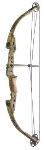 | 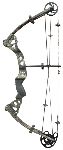 | 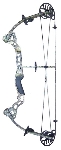 |
| Brace Height | 7.5 " | 8 " | 8.5 " |
| AtA Length | 33.75 " | 28.875 " | 31.75 " |
| Draw Length | 23 " - 29 " | 25 " - 30 " | 27 " - 31 " |
| Draw Weight | 30 lbs - 60 lbs | 40 lbs - 70 lbs | 40 lbs - 70 lbs |
| IBO Speed | 288 fps - 295 fps | 309 fps - 317 fps | 299 fps - 315 fps |
| Weight | 2.85 lbs | 2.813 lbs | 3.8 lbs |
| Let-Off | 80% | 65% - 80% | 65% - 80% |
| Where to buy Best prices online |
| ||
| compare more bows | |||
All three of these are early-2000s BowTech single cams, which makes the StalkerLite's niche easy to see against its own siblings. The Bowtech BlackHawk is the compact one - just 28.875 inches axle-to-axle with a tall 8-inch brace and a faster 309-to-317 fps rating - a packable value bow built around speed and short length, drawing 25 to 30 inches. The Bowtech Tomkat is the full-size package hunter, 31.75 inches axle-to-axle, sold complete with rest, sight, and quiver, spanning a 27-to-31-inch draw at 40 to 70 pounds. The StalkerLite is the outlier of the trio on purpose: it is the only one that drops to a 30-pound peak and a 23-inch draw, trading the BlackHawk's speed and compactness and the TomKat's finished-rig convenience for genuine low-end reach. The decision comes down to who is holding the bow: the BlackHawk for a shooter who wants the most compact, fastest value single-cam, the TomKat for one who wants a complete full-power rig out of the box, and the StalkerLite for the smaller-framed or lighter-drawing hunter who needs a real adjustable bow the other two cannot scale down to.