
Bowtech Virtue Review


from $349.99
Pros
- The AeroMag magnesium riser brings a genuine flagship to 3.7 pounds bare - the lightest premium Bowtech, trading blows with carbon for the weight-conscious hunter
- Titanium hardware that will not corrode or rust - built to shrug off multi-day wet, snowy, and harsh-condition hunts
- The complete press-free tuning suite - DeadLock cam shift, TimeLock timing, GripLock grip angle - all set on the line with a wrench, no press
- Quiet and dead in the hand, with almost no post-shot vibration despite the very light riser
- A true 32-inch do-all platform with real speed - a 341 fps IBO that still holds the mid-270s with a heavy hunting arrow
Cons
- The most expensive Bowtech at a $2,199 MSRP - the magnesium riser and titanium hardware justify it for the weight-conscious buyer, but a hunter who does not need the ounces gets most of the same technology in the aluminum Proven 34 for far less
- The Performance FlipDisc setting rolls over with a pronounced dump into a heavier back wall - shooters who want a smoother cycle simply run the Comfort setting, which is the gentler default
Video
content from YouTube
Editors' review
Carbon bows own the conversation about lightweight flagships. The Virtue is Bowtech's answer in a different material: magnesium. Built on the brand's AeroMag magnesium chassis, it comes in at 3.7 pounds bare - light enough to trade blows with carbon - and pairs that weight with titanium hardware that does not corrode and every press-free tuning tool the brand makes. Launched for the 2025 model year at a $2,199 MSRP and expanded for 2026 with a long-draw cam and an 80-pound draw-weight option, it is the most expensive bow in the lineup and the lightest premium do-all Bowtech builds. At 32 inches axle to axle it sits in the sweet spot a one-bow hunter reaches for, fast enough at a 341 fps IBO to flatten trajectory and quiet enough to vanish at the shot. The question the Virtue asks is simple, and the rest of this review answers it: is a magnesium riser and titanium hardware worth the jump over an aluminum flagship that shares most of the same technology?
Finish
The Virtue ships in five solid Cerakote finishes - Tac Black, Green, Stone, Grey, and Blue - with no camo pattern in the lineup. That is a deliberate choice for a flagship that leans tactical and premium: clean, single-tone colors that read as high-end rather than woods-first. The Cerakote coating is the practical star here - a ceramic, firearm-grade finish that is durable and genuinely scratch-resistant, which matters more on a bow built for the western hunter who breaks brush and is hard on gear over long miles. Paired with the titanium hardware underneath, the finish package is built to take abuse without showing it - no surface rust on the screws and bolts, no quick wear on the riser. For a buyer spending flagship money, the look is understated and the durability is real, a combination that suits the Virtue's identity as a do-all hunting bow you keep for years rather than a season. Exact color availability can shift through the model year.Riser
The riser is the whole story of this bow. Bowtech machined it from AeroMag magnesium rather than the aluminum it uses across the rest of the line, and the result is a riser that is lighter than aluminum yet, by the brand's account, stronger and stiffer for its weight - the engineering goal carbon flagships chase with a different material. Bare, the Virtue lands at 3.7 pounds, which is carbon-bow territory and a real advantage for the hunter counting ounces on a backcountry pack-in. At 32 inches axle to axle the riser hits the do-all sweet spot, long enough for a forgiving hold and a clean string angle yet short enough to swing in a treestand. The hardware is titanium throughout, so the screws and bolts that rust on an ordinary bow simply do not here - a quiet but meaningful upgrade for multi-day hunts in wet and snow. The riser carries the Integrate Mounting System dovetail for the rest and the second-generation CenterMass sight system, which mounts the sight inboard on the riser for a more centered, stable mass - though those CenterMass sights are Bowtech-specific. Dual Lock limb pockets anchor the limbs into the riser so nothing drifts out of tune.Grip
The Virtue carries Bowtech's GripLock grip, so a shooter can rotate the grip angle to their hand rather than adapting to a fixed throat - the same adjustability the rest of the flagship line offers, and a feature a buyer at this price expects. The grip itself is the Bowtech profile, here running a touch thicker and wider than the narrow target grips, which fills the hand and indexes into a repeatable position at full draw. Repeatability is the point: on a hunting bow that gets drawn under pressure, a grip that returns the hand to the same place every time is what keeps a cold-fingered shot honest. In my experience the ability to set the grip angle matters most to a shooter who has dialed in a specific high- or low-wrist position and wants to carry it across bows, and the Virtue lets them do exactly that with an Allen key. The grip stays comfortable bare-handed in the cold conditions this bow is built to hunt.Limbs
Bowtech offers the Virtue in 50, 60, and 70-pound peak weights, with an 80-pound option added for the 2026 model year on the Standard cam - and because the limb bolts wind each set down roughly 10 pounds, the bow covers an effective 40-to-80-pound range that reaches from a lighter setup to a heavy-poundage elk rig. The limbs run in Dual Lock pockets that anchor them with no detectable play, the locked-down foundation the DeadLock tuning depends on to hold its setting across a season. Despite the light magnesium riser, the limb-and-pocket interface is conventional and proven, so the weight savings come from the riser material rather than any compromise in the limb system. The draw-weight breadth, paired with the two cam options, is part of what makes the Virtue a true do-all: the same chassis fits a 25-inch draw at 50 pounds and a 32-inch draw at 80, where most flagships ask the buyer to pick a narrower lane.Eccentric System
The Virtue runs Bowtech's DeadLock cam with the full press-free tuning suite behind it. DeadLock handles arrow flight - loosen a set screw, turn an Allen key to walk the cam sideways on its axle, and a left or right tear cleans up on the shooting line with no press, the tuning system Bowtech owners rate among the easiest anywhere. TimeLock adds press-free cam-timing adjustment, syncing the cams with a screw rather than a bow press and a cable twist. The FlipDisc toggles a Comfort and a Performance setting: Comfort draws smoother with a deeper hold, while Performance sharpens the cam for roughly ten feet per second more speed at the cost of a more pronounced rollover into the back wall. The bow ships in two cam options. The Standard cam runs a 6.19-inch brace, a 25-to-30-inch draw, and a 341 fps IBO; for 2026 a Long cam was added, stretching to a 6.25-inch brace, a 26.5-to-32-inch draw, and a faster 350 fps IBO for taller and longer-draw shooters. On a chronograph the Standard cam is honest and quick: a 70-pound setup at a 28.5-inch draw pushed a heavy 450-grain hunting arrow to 277 fps in Comfort and about 285 in Performance, while a lighter 350-grain arrow ran 313. Draw length adjusts on the rotating module within each cam's range.Draw Cycle/Shootability
On the Comfort setting, where most hunters will leave it, the Virtue draws smoothly to peak and settles into a defined hold, an easy cycle that does not fight the shooter. The headline at the shot is how quiet and dead the bow is - almost no vibration travels back into the hand, which is impressive for a riser this light, since a sub-four-pound bow has less mass to soak up buzz than a heavy rig. It holds exceptionally steady at full draw with a clean string angle, the kind of settled aim a flagship is supposed to deliver. Flip the disc to Performance and the character changes noticeably: the cam rolls over with a more pronounced dump into the back wall, the hold gets heavier, and the bow turns more aggressive in exchange for the extra speed. Some shooters - including those who like holding more weight for a more honest release - will prefer that Performance dump; others, or anyone with a shoulder to protect or a long hold to make on an animal, will run Comfort for the gentler cycle. Having shot the platform's tuning and hold, what stays with me is the combination the Virtue pulls off: carbon-class weight with a dead, quiet shot, a pairing that usually costs a forgiveness penalty and here mostly does not.Usage Scenarios
The Virtue is built for the hunter who covers ground and counts ounces. Its natural home is the western and backcountry hunt - a spot-and-stalk for mule deer or elk where the bow rides on a pack for miles before it is ever drawn, and the 3.7-pound magnesium riser earns its keep every step. Picture a sheep or elk hunter grinding up a basin at altitude: the light riser, the corrosion-proof titanium hardware shrugging off days of weather, and a 32-inch platform that still holds steady on a long cross-canyon shot. It is equally at home as a one-bow do-all for the hunter who wants a single flagship to cover treestand whitetails, open-country mule deer, and a summer of 3D - the 32-inch axle length and the breadth of two cams and a 40-to-80-pound range mean it adapts rather than specializes. Where it is harder to justify is the hunter who never leaves a treestand and never counts weight: that shooter gets most of the Virtue's technology in the aluminum Proven 34 for far less, and the magnesium riser becomes a luxury rather than a tool. But for the archer whose hunts are measured in vertical feet and trail miles, the weight savings are exactly the point.Versions
The Virtue is sold at one price - a $2,199 launch MSRP - with the buyer choosing a cam at order. The cam menu grew for the 2026 model year:- **Standard Cam** - 6.19-inch brace, 25-to-30-inch draw, 341 fps IBO. The original 2025 configuration, offered in 50/60/70-pound peaks, with an **80-pound option added for 2026** (an effective 40-to-80-pound range).- **Long Cam (2026, new)** - 6.25-inch brace, 26.5-to-32-inch draw, 350 fps IBO, in 60/70-pound peaks. The long-draw option for taller shooters, added for the 2026 model year and not available on the 2025 bow.Both cams share the same 32-inch AeroMag magnesium riser, titanium hardware, 3.7-pound mass, 80/85-percent FlipDisc let-off, and the full DeadLock / TimeLock / GripLock / CenterMass / IMS feature set. The cam is chosen once at purchase; the 2025 bow shipped Standard-cam only, while the 2026 bow adds the Long cam and the 80-pound draw weight.Bowtech Virtue vs Bowtech Proven 34, Bowtech Alliance 33
| Bow | Bowtech Virtue | Bowtech Proven 34 | Bowtech Alliance 33 |
| Version | 2026 | 2026 | 2026 |
| Picture | 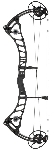 |  |  |
| Brace Height | 6.19 " | 6.625 " | 6.062 " |
| AtA Length | 32 " | 34 " | 33 " |
| Draw Length | 25 " - 30 " | 25 " - 30 " | 27 " - 32 " |
| Draw Weight | 40 lbs - 80 lbs | 40 lbs - 70 lbs | 50 lbs - 75 lbs |
| IBO Speed | 341 fps | 336 fps | 334 fps |
| Weight | 3.7 lbs | 4.7 lbs | 4.25 lbs |
| Let-Off | 80 / 85% | 80 / 85% | 80 / 85% |
| Where to buy Best prices online | |||
| compare more bows | |||
The Virtue sits at the top of Bowtech's price ladder, and the two aluminum flagships beneath it frame the only question that matters: is the magnesium worth it? The Bowtech Proven 34 at a $1,449 launch MSRP is the sharpest comparison - it shares the same DeadLock, TimeLock, GripLock, and CenterMass technology in an aluminum 34-inch chassis, runs a hair slower on paper, and costs $750 less, asking the buyer to give up only about a pound of weight and the titanium hardware. For the hunter who does not pack in for miles, the Proven 34 delivers most of the Virtue's capability for far less money; for the one who does, the Virtue's lighter riser is the whole reason to spend up. The Bowtech Alliance 33 at a $1,499 launch MSRP is the conventional reference point - a 33-inch aluminum hunter that leans more aggressive at a lower brace, a strong all-around bow without the premium materials or the do-all cam breadth. The decision comes down to priorities: the Bowtech Proven 34 for the shooter who wants the full flagship tuning suite in aluminum at the best value, the Bowtech Alliance 33 for a fast conventional hunting bow, and the Virtue for the weight-conscious hunter who wants carbon-class lightness, titanium durability, and a true do-all platform, and will pay for it.