
Mathews Classic Review


from $550
Pros
- Single-cam SoloCam design (MaxCam) with no dual-cam timing to synchronize - simpler to tune and consistent shot to shot over the long haul
- Light 3.6-lb mass on a full 36-inch frame that carries easily through all-day hunts and long treestand sits
- Forgiving to hold - the tall 7-inch brace paired with the long 36-inch axle-to-axle steadies the pin for shooters still grooving their form
- Built around two quieting technologies, Harmonic Dampers and String Suppressors, aimed squarely at a calm, low-noise shot
Cons
- The MaxCam sets draw length by cam/module rather than a rotating on-the-fly module - a shooter who changes draw length often should confirm their exact length up front, since a change means a cam or module swap
- As a 2004-2007 model it is a used-market buy today - worth a fresh set of strings and cables and a quick pro-shop once-over before hunting it
Video
content from YouTube
Editors' review
Mathews named this one right. In an era when the brand was chasing the parallel-limb, speed-first Switchback, the Classic went the other direction on purpose: a long 36-inch axle-to-axle, a tall 7-inch brace height, and a single SoloCam, all tuned for a planted, forgiving shot rather than a chart-topping number. Mathews pitched it as "fast, compact and light as a feather," and at 3.6 pounds it genuinely disappears in the hand on a long walk in. It is a single-cam hunting bow for the shooter who values a bow that holds still and stays in tune over one that squeezes out the last few feet per second. Produced from 2004 through 2007 with the same specs every year, it is a used-market find now - and a telling snapshot of what "forgiving Mathews" meant before the modern flagship era. If you are cross-shopping affordable single-cam hunters from the mid-2000s, this is the long, stable, low-maintenance option in that group.
Finish
The Classic shipped in Mathews' camo patterns of the period, with the riser, limbs, and cam wearing a full dip so the bow reads as one continuous pattern from grip to pocket. A camo dip on a machined-aluminum riser holds up well to brush and treestand rubs, and buyers who wanted a plainer look could find solid-finish risers in the era's lineup as well. There is no elaborate color program here in the way modern bows offer stacked two-tone options - this was a straightforward hunting finish meant to break up outline in the woods. The two-piece wood grip is left in a natural wood tone that contrasts against the camo, a signature Mathews touch of the time. For a used buyer today the finish is the easiest thing to judge in a photo: a Classic with a clean, unfaded dip has usually lived an easy life.Riser
The riser is machined aluminum with the cutout-and-reflex geometry Mathews used across its mid-2000s hunting line, and it is the foundation of the bow's forgiving personality. At 17 3/4 inches of riser length inside a 36-inch axle-to-axle bow, a large share of the overall length lives in the riser rather than the limbs, which keeps the two ends of the string farther apart at full draw and calms small aiming errors. The reflex profile pushes the grip toward the target to recover a little speed the long, forgiving geometry would otherwise cost. Mathews mounted its Harmonic Dampers on the riser - tuned mass dampers designed to absorb post-shot vibration before it reaches the hand. Cable management and accessory mounting follow the traditional Berger-hole approach of the period rather than any modern integrated rail, so the Classic accepts standard drop-away and prong rests without adapters. It is a simple, honest riser: no gimmicks, built to sit still.Grip
The Classic wears a two-piece wood grip, a detail that dates and defines it. Where modern bows lean on rubberized or thin composite grips, the wood grip here fills the hand with a rounded, medium-width profile that many shooters find warm to the touch in cold weather and easy to index the same way every draw. A consistent hand position is where accuracy quietly comes from, and a grip you can feel and locate repeatably helps a shooter torque the riser less. Some archers will prefer to slim it down; the two-piece design comes off with a couple of screws, so an aftermarket or self-shaped grip is a straightforward swap if the factory shape does not suit your hand. For its era it is a comfortable, low-torque grip that rewards a relaxed hand.Limbs
The Classic uses Mathews' machined limb pockets and the moderately angled limb geometry of its day - not the aggressive past-parallel layout the Switchback introduced, which is exactly what gives this bow its longer, more forgiving stance. Draw weight is ordered by peak: 40, 50, 60, or 70 pounds, covering everyone from a lighter-drawing shooter up to a full-power whitetail and elk setup. The limbs meet the riser in solidly machined pockets that have proven durable across the brand's single-cam bows of the period, and there is no exotic material story here - these are dependable, well-understood limbs. Changing peak weight is a limb-bolt adjustment within each limb's range; moving between the 40/50/60/70 tiers means the corresponding limbs. It is a straightforward system a home tinkerer or any pro shop can service without special tooling.Eccentric System
The heart of the Classic is the MaxCam, Mathews' single SoloCam - one cam at the bottom, an idler wheel up top, and no second cam to time or synchronize. That is the whole point of the SoloCam premise: with only one cam driving the string, there is no two-cam timing to drift out of sync, which is why these bows earned a reputation for staying in tune season after season. The MaxCam was offered in two personalities via the let-off module - 80 percent for a relaxed, low-holding-weight hold, or 65 percent (let-off is the share of peak weight the bow sheds at full draw) for a firmer, more target-style feel that some hunters prefer for a crisper break. IBO speed lands at 310 fps at the 80 percent setting and 312 fps at 65 percent - moderate by design, since the long 36-inch geometry and tall brace trade raw speed for stability. Real-world speed with a hunting-weight arrow sits below that IBO figure, as it does on any bow, so think of the Classic as comfortably fast enough for whitetail ranges rather than a speed bow. Draw length runs 27 to 31 inches and is set by the cam itself, so a buyer should know their draw length going in; changing it later means a cam or module change rather than a dial. In my experience with single-cam Mathews bows of this vintage, the trade you are making is clear and fair: you give up on-the-fly draw adjustment and a few fps, and in return you get a bow that shrugs off tuning drift.Draw Cycle/Shootability
Drawing the Classic, the character that stands out is smoothness in service of a settled hold rather than an aggressive, speed-cam ramp. The single cam builds weight gradually and rolls into a comfortable valley, and at the 80 percent let-off setting the holding weight drops far enough that a hunter can sit at full draw waiting on a step-through shot without shaking. The back wall is defined by the cam and cable stop rather than a hard limb-stop wall, so it feels positive but with a touch of give - a shooter stepping off a modern flagship's concrete wall will notice the difference, while one coming from a traditional single cam will feel right at home. Where the long riser and 7-inch brace earn their keep is at the moment of aim: the pin simply floats less, and small form errors do not punish the shot the way they do on a short, twitchy speed bow. Mathews built the shot to be quiet, hanging Harmonic Dampers on the riser and String Suppressors on the string to soak up vibration and string buzz, and the low 3.6-pound mass means what vibration remains is easy to manage with even a modest stabilizer. I find this kind of bow flatters a developing shooter: it is not demanding, it does not jump, and it lets you concentrate on the pin. It rewards a relaxed grip and a steady follow-through more than it rewards raw strength.Usage Scenarios
The Classic is a whitetail and general big-game hunting bow first. At a 60 or 70-pound peak it stores plenty of energy for deer, hogs, and black bear at typical treestand and ground-blind distances, and it has the forgiveness to make a calm 25 or 30-yard shot when the moment finally comes after hours of waiting. Its long, stable geometry and light weight suit the hunter who walks in far and sits long - the bow does not fatigue the arm, and it holds steady when the adrenaline is up. It is also a genuinely good learning and backup bow: a new archer can grow into it, and the wide 40-to-70-pound span across the peak options means a household can set one up light for a smaller-framed shooter or heavy for a full-power hunter. Where it is not the right tool is tournament-speed target work or any situation where flat trajectory at long range is the priority - the moderate speed and forgiving-first design point the other way. For a used buyer wanting a dependable, low-drama hunting rig that will not need constant tuning, it fits the treestand life well.Mathews Classic vs Bowtech Tomkat, Hoyt Trykon
| Bow | Mathews Classic | Bowtech Tomkat | Hoyt Trykon |
| Version | 2007 | 2008 | 2007 |
| Picture | 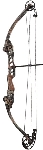 | 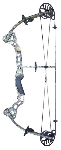 | 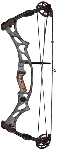 |
| Brace Height | 7 " | 8.5 " | 7 " |
| AtA Length | 36 " | 31.75 " | 33 " |
| Draw Length | 27 " - 31 " | 27 " - 31 " | 25 " - 31 " |
| Draw Weight | 40 lbs - 70 lbs | 40 lbs - 70 lbs | 40 lbs - 80 lbs |
| IBO Speed | 310 fps - 312 fps | 299 fps - 315 fps | 316 fps |
| Weight | 3.6 lbs | 3.8 lbs | lbs |
| Let-Off | 80%/65% | 65% - 80% | 65% or 80% |
| Where to buy Best prices online | |||
| compare more bows | |||
In the mid-2000s a hunter with a mid-price budget was cross-shopping exactly these three brands, and the Bowtech Tomkat and Hoyt Trykon frame what the Mathews Classic gives up and what it gains. The Bowtech Tomkat is the most compact of the trio at 31.75 inches axle-to-axle with the tallest brace height at 8.5 inches, which makes it a very forgiving, easy-to-pack bow driven by a dual cam at a similar speed to the Classic; the Classic answers with more than four extra inches of axle-to-axle for even steadier aiming and its single-cam simplicity in place of the Tomkat's two cams. The Hoyt Trykon splits the difference on length at 33 inches and edges ahead on paper - a 316 IBO from its Cam & 1/2 hybrid and a wider envelope that reaches up to 80 pounds and down to a 25-inch draw - but it is the heaviest of the three at 4.5 pounds against the Classic's featherweight 3.6, and its hybrid cam asks for a little more tuning attention than a single cam. All three are dependable mid-2000s hunting bows; the decision comes down to priorities. Choose the Tomkat for the most compact, high-brace forgiveness, choose the Trykon for the widest adjustment range and a touch more speed, and choose the Mathews Classic for the longest, steadiest hold, the lightest carry, and the lowest-maintenance single-cam drivetrain.