
Bowtech Amplify Review


from $400
Pros
- Hard limb-stop back wall - a defined, rock-solid wall that budget bows almost never give you, where most cable-stop rivals feel spongy at full draw
- Adjusts across a 62-pound span, from an 8-pound backyard setting to a 70-pound hunting weight, plus 21 to 30 inches of draw, all without a bow press
- PowerShift flip modules switch the same cam between a smoother draw and a faster one, so one shooter can retune the feel in minutes
- Quiet on the shot for its class - around 78 dB with the repositionable Orbit Dampener soaking up most of the residual buzz
Cons
- Draw is solid rather than glass-smooth - the wide cam builds to peak quickly, so shooters chasing a plush pull should run the Comfort module setting or draw one first
- Some owners feel a touch more hand buzz than a flagship after the shot - repositioning the Orbit Dampener or running a stabilizer settles it in practice
- Fixed plastic grip rather than the interchangeable flagship Bowtech grip - its curved shape takes some owners time to warm to, and a stick-on aftermarket grip is an easy swap
Video
content from YouTube
Editors' review
Most bows built to a budget hand you two compromises the moment you draw them: a spongy cable-stop wall and a single fixed draw feel you are stuck with. The Bowtech Amplify quietly refuses both. It puts a hard limb stop on the top cam for a wall that stops like a much more expensive bow, and it gives you PowerShift modules you can flip between a smooth draw and a fast one - the kind of tuning latitude that usually rides on a four-figure Bowtech. Wrap that around a draw-weight range that runs from 8 all the way to 70 pounds and a 21-to-30-inch draw span, and you have a bow that is genuinely one purchase for a whole household. It is the budget hunter's Bowtech and the grow-with-me first bow in the same package, adjustable enough to start a ten-year-old in the backyard and still put a teenager on a whitetail at full weight a few seasons later. Launched in 2021 and carried unchanged through the 2026 lineup, the Amplify has stayed in the catalog on the strength of that versatility rather than any single headline number.
Finish
The Amplify has shipped in a mix of solid colors and hunting camo, typically Black, OD Green, and Smoke Grey on the solid side alongside Mossy Oak Breakup Country and Mossy Oak Bottomlands for treestand concealment. The solid finishes suit a first-time owner who wants a clean look for the backyard and the 3D range, while the Mossy Oak patterns cover the whitetail hunter who wants the bow to disappear against bark and brush. The dip-and-cure coating is standard for the tier and wears the way any budget hunting bow does - durable enough for a season of stand hunting, with the usual edge wear over years of hard use. Finish availability rotates year to year, so the exact palette on a given model year varies, but the lineup has consistently offered at least one solid and two camo choices. For a bow this adjustable, the finish menu is a secondary decision; the point of the Amplify is who can shoot it, not what color it is.Riser
The Amplify is built on a machined aluminum riser that shares its basic budget-riser DNA with Bowtech's sister-brand Diamond Edge platform - no surprise, since Bowtech owns Diamond and leans on the same cost-effective architecture for both. The geometry is reflexed enough to hold a 6-inch brace height and a 335 fps IBO rating, which is quick for a bow aimed at first-time and growing archers. Cable management runs through a basic cable guard and slide rather than the repositionable, flagship-grade guard on Bowtech's premium hunters, which is one of the honest places the price shows. The riser's standout feature is the Orbit Dampener, a repositionable weight-and-rubber module that mounts to the riser and can be slid to counterbalance accessory weight while it cuts felt vibration. In my experience that kind of tunable dampener is unusual on a sub-$650 bow, and it is a real part of why the Amplify settles as quietly as it does. The riser accepts standard mounting for a rest, sight, and stabilizer, so it drops straight into a first setup without any proprietary interface to learn.Grip
The grip is a molded plastic unit rather than the interchangeable, angle-adjustable grip that defines Bowtech's flagship hunters. It carries a curved profile that is noticeably different from the squarer grips on the top-tier Bowtechs - closer in feel to a rounded hunting grip - and it is fixed, so what ships on the bow is what you shoot. Handling one for the first time, I found the shape takes a session or two to settle into; the hand wants to find its own repeatable spot rather than being told where to sit. Once it does, the grip positions consistently and stops fighting the shot, which is what matters for building an anchor. Owners who come from a flagship grip and specifically miss the swappable side plates can add a thin stick-on aftermarket grip or a wrap for a couple of dollars, which changes the feel without any tooling. For a first bow or a shared household bow, the grip is a non-issue after the break-in; for a shooter with strong grip preferences carried over from a premium bow, it is worth a hands-on try first.Limbs
The Amplify uses standard split limbs seated in composite limb pockets that lock into the riser - not the machined aluminum pockets you find on flagship bows, which is a deliberate cost decision rather than a durability flaw. The draw-weight range is the headline: limb-bolt adjustment carries the bow from 8 pounds up to 70, a full 62-pound spread that no press can rival for sheer reach across a family. What makes that range usable rather than theoretical is the draw-stop system - because the bow stops on a limb stop rather than a cable stop, it holds its wall and its tune when you wind it well down from peak, instead of going sloppy at the back the way many adjustable bows do at their lowest settings. Backing the bow off from 70 to 60 pounds is a couple of turns of the limb bolts and no press, and it shoots just as cleanly at the lower weight. That combination - enormous weight range plus a wall that survives being wound down - is the practical heart of the grow-with-me pitch.Eccentric System
The Amplify runs Bowtech's Synchronized Binary Cam system: two symmetrical cams slaved to each other so nock travel stays honest, riding on roller bearings for a clean rotation. Draw length adjusts from 21 to 30 inches through rotating modules with no bow press, and Bowtech labels those modules by the actual inch setting rather than the A-through-D lettering many brands use, which makes dialing a shooter in refreshingly literal. The published IBO speed is 335 fps, and real-world chronograph numbers land where you would expect for a bow of this weight: averaging 326 fps with a 350-grain arrow at 70 pounds and a 30-inch draw, dropping to 290 fps with a heavier 450-grain shaft, and 276 fps with a 395-grain arrow backed down to 60 pounds and 29 inches. Let-off (the share of peak weight the bow sheds at full draw) sits at 85 percent per Bowtech's own timing chart, so at a 70-pound peak you are holding only around ten and a half pounds - a genuinely light hold that helps a newer shooter or a smaller-framed archer settle the pin. The signature piece is PowerShift: flipping the module setting shifts the cam between a Comfort profile that smooths the draw and a Performance profile that trades some of that smoothness for extra speed, and you make the switch without a press. It is a rare thing to hand a budget buyer a speed-versus-comfort dial that flagship shooters pay a premium for.Draw Cycle/Shootability
Drawing the Amplify, the first thing I notice is the wall - it arrives hard and definite, the limb stop planting a back wall that feels borrowed from a much pricier bow rather than the soft, drifting stop common at this price. The pull itself is solid rather than plush: the wide cam ramps up to peak weight early and holds an even load through the middle before dropping into a defined valley, so it reads as honest and controllable rather than glass-smooth. Shooters who want a softer pull can run the Comfort module setting, which takes the edge off the ramp. On the shot the bow is quiet for its class, measuring in the high-70-decibel range, and the Orbit Dampener does real work keeping the riser settled afterward. It is not flagship-silent - one hands-on owner noted a touch more residual hand buzz than a high-end bow delivers, which is fair for the tier and easily tamed by repositioning the dampener or adding a stabilizer. What carries the shooting experience is consistency: with the light 85 percent hold, the hard wall, and a bow that holds its tune even wound well down, the Amplify makes it easy for a developing archer to repeat the same shot, which is exactly what a first or shared bow needs to do.Usage Scenarios
The Amplify's natural home is the household that wants one bow to do many jobs over many years. Picture a parent dialing it to a 21-inch draw and 15 or 20 pounds for a young teenager in the backyard, then walking the same bow up in weight and draw as the kid grows, until a few seasons later it is a 60-or-70-pound whitetail rig for a young adult - no second purchase, no press, just limb bolts and modules. At 4.0 pounds bare it is light and compact enough to be easy in and out of a treestand, and quiet enough not to blow a stand-hunting shot. It fits the budget-minded hunter who wants a Bowtech without flagship money, the first-time buyer who wants a bow that will not be outgrown in a year, and the 3D and backyard shooter who values the light hold for long practice sessions. Its one real fit boundary is at the very bottom of the draw range: the 21-inch floor covers most teenagers but does not reach down to the smallest children the way some rivals do, so families starting a very young or very small shooter should check that draw floor first. For everyone from a transitioning teen to an adult hunter on a budget, it covers the ground a single bow is asked to cover.Versions
The Amplify is sold as a single bow across its 2021-through-2026 run, offered either bow-only or as a R.A.K. (Ready. Aim. Kill.) ready-to-shoot package assembled by the dealer, which typically bundles a rest, sight, quiver, stabilizer, wrist sling, and D-loop so a first-time buyer walks out ready to sight in. Exact package contents vary by dealer and year, and one thing worth confirming at purchase is the peep sight - some bow-only units ship without a peep installed in the string. Pricing has held remarkably steady for a bow this adjustable: it launched at a $599 MSRP in 2021 and sits at a $649 starting price in the current 2026 lineup. Finish choices are the main per-year variable, rotating among the solid colors and Mossy Oak camo patterns rather than changing the bow itself, since the hardware has carried over unchanged year to year.Bowtech Amplify vs Diamond Edge 320, Bear Legit Maxx
| Bow | Bowtech Amplify | Diamond Edge 320 | Bear Legit Maxx |
| Version | 2026 | 2022 | 2026 |
| Picture |  |  | 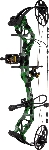 |
| Brace Height | 6 " | 7.25 " | 6.25 " |
| AtA Length | 31.5 " | 32 " | 30 " |
| Draw Length | 21 " - 30 " | 15 " - 31 " | 14 " - 30 " |
| Draw Weight | 8 lbs - 70 lbs | 7 lbs - 70 lbs | 10 lbs - 70 lbs |
| IBO Speed | 335 fps | 320 fps | 315 fps |
| Weight | 4.0 lbs | 3.6 lbs | 4.2 lbs |
| Let-Off | 85% | 85% | 75% |
| Where to buy Best prices online | |||
| compare more bows | |||
The Amplify's closest relative is the Diamond Edge 320, which is no coincidence - Diamond is Bowtech's sister brand, and the two share the same Synchronized Binary Cam System and the same 85 percent let-off. The Diamond Edge 320 launched around $469 and actually out-adjusts the Amplify at the bottom end: it reaches a lower 15-inch draw and a lower 7-pound weight floor, fitting the smallest, youngest shooters the Amplify's 21-inch, 8-pound bottom end cannot, and it rides a more forgiving 7-inch brace height, though it gives up a little speed at 320 fps IBO. The Bear Legit Maxx, at a $499 launch MSRP, is the cross-brand value hunter in the same conversation: it adds Integrate Mounting System and Picatinny interfaces for easier accessory setup and a 30-inch axle-to-axle frame, but its 75 percent let-off leaves more weight in your hand at full draw than the Amplify's light 85 percent hold, and its 10-to-70-pound range does not start as low. Against both, the Amplify's advantages are the fastest tune of the three, a 6-inch brace and 335 fps IBO against the Edge 320's 320 and the Legit Maxx's 315, plus its limb-stop hard wall and the PowerShift speed-versus-comfort switch - paid for by the highest price of the group. The decision comes down to priorities: the Diamond Edge 320 for the family starting a very young child and watching every dollar, the Bear Legit Maxx for the buyer who wants modern IMS and Picatinny setup convenience, and the Amplify for the shooter who wants a genuine limb-stop wall, a light hold, and Bowtech tuning DNA in a budget package.