
Bowtech Carbon One Review


from $700
Pros
- Smoothest draw of its class - Comfort mode pulls glass-smooth at 87% let-off, and it built a reputation as the smoothest-drawing bow of its year
- Best-in-class press-free tuning - DeadLock squares the cam with an Allen wrench and no bow press, which owners call a genuine game-changer
- Dead in the hand for a carbon bow - the hand-laid carbon riser and twin Orbit Dampeners make it feel closer to an aluminum bow than a thumpy carbon one
- A compact 30-inch bow that holds like a longer one - the slim Clutch grip resists torque and it aims above its axle length
Cons
- Heavy for a carbon bow at 4.5 lb - about a pound more than carbon buyers expect, from the aluminum Dual Lock pockets; shooters going carbon to save weight should shoulder one first, though it still handles like a flagship
- No factory limb or string dampeners despite the premium price - some owners note a touch more shot vibration than the very quietest flagships; an inexpensive set of aftermarket dampeners closes the gap
Video
content from YouTube
Editors' review
Carbon hunting bows earned a reputation for a buzzy, thumpy shot - and the 2023 Bowtech Carbon One was built to erase it. It is a hand-laid carbon riser with bridged ends and a pair of Orbit Dampeners, and the first thing nearly every shooter says about it is that it does not feel like a carbon bow at all; it feels like a quiet aluminum one. As Bowtech's flagship for 2023, the Carbon One paired that composed shot with the tools the brand is known for: the press-free DeadLock cam for squaring tune without a shop, and the FlipDisc module that flips the draw between a glass-smooth Comfort mode and a faster Performance mode. At a 30-inch axle-to-axle (the tip-to-tip length that sets how a bow balances and maneuvers) and a forgiving 6.63-inch brace height, it is a compact, hunt-anywhere flagship rather than a specialized speed bow. There is one honest catch that follows it through every review, and it is worth naming up front: for a carbon bow, it is heavy. Whether that matters is the whole question - and it comes down to why a buyer wanted carbon in the first place.
Finish
The Carbon One launched in four solid finishes: Black, Smoke Grey, O.D. Green, and Flat Dark Earth. That is a deliberately restrained palette - no busy camo pattern in the launch lineup, just clean solids that suit a shooter who wants the carbon weave to speak for itself. Because the color lives on a hand-laid carbon riser rather than an anodized aluminum billet, there is no anodizing to wear through at the grip and shelf where a bow takes its hardest handling over the years. Bowtech offers alternate and custom decoration through dealers for a buyer who wants something outside the four standard colors. It is an understated look by flagship standards, and on a bow whose whole argument is engineering over flash, that fits.Riser
The riser is the story here: a hand-laid, engineered carbon riser with bridged ends that replaced Bowtech's older single-limb carbon architecture. Two Orbit Dampeners mounted in the riser kill vibration before it reaches the hand, and the result is a shot that reads as dead - closer to a well-damped aluminum bow than to the thump older carbon risers were known for. Carbon buys two things at once: it is stiff enough to hold tune shot after shot, and it absorbs the buzz that aluminum transmits. The rest bolts to the Integrate Mounting System, a dovetail on an aluminum plate bonded into the riser, so the rest anchors to metal rather than bare carbon. The bridged geometry is a large part of why a 30-inch bow this compact still feels composed and planted at full draw. It is the clearest sign that Bowtech treated the Carbon One as a ground-up flagship rather than a carbon reskin of an existing bow.Grip
The Clutch Performance Grip is a slim, low-wrist grip with no side plates, offered as the standard Clutch Grip with a Clutch Control Grip option for a shooter who prefers a different heel shape. Its narrow throat sets the hand in a low, repeatable position that resists torque - a real advantage on a compact 30-inch bow, where a torqued shot punishes the shooter faster than it would on a long-riser rig. In a direct comparison against a rubberized flagship grip, shooters have preferred the Clutch for being cleaner and less grabby, less prone to steering the shot. The material is warm to the touch, which stops mattering in summer and starts mattering a lot on a cold late-season sit. It is a plain grip by design, and it earns its keep by staying out of the way.Limbs
The Carbon One runs split limbs in Bowtech's Dual Lock Pockets - wide aluminum brackets that clamp the limb to the carbon riser for a stable, repeatable stance. Those pockets are the honest source of the bow's mass: the aluminum hardware that makes DeadLock and the locking pockets work adds weight a pure-carbon pocket would not, and it is the main reason a carbon bow lands at 4.5 pounds. Draw weight comes in 50, 60, and 70-pound peaks, each backing down about 10 pounds through the limb bolts, covering most adult hunters without a module swap. There is no 80-pound option and no factory limb or string dampeners on the bare bow, so a shooter chasing the last bit of quiet will add aftermarket dampeners. The wide limb stance is a big reason the shot settles so cleanly in the hand for a bow this short.Eccentric System
The DeadLock Cam System is the reason to buy this bow. Squaring nock travel is a matter of loosening a lock screw, turning an Allen key so the cam slides left or right on its axle post, and locking it back down - a full horizontal tune with no press and no shims, and it is the feature owners single out as a game-changer. Draw length runs 25.5 to 30.5 inches by rotating the module, no new cam needed. The FlipDisc module gives the cam two personalities: Comfort mode draws glass-smooth at 87% let-off (the share of peak weight the cam sheds at full draw, so a 70-pound bow holds near 9 pounds), while Performance mode firms the wall, drops let-off to 85%, and adds about 8 fps. Bowtech rates the bow at 335 fps IBO (the standard speed measured at a fixed 30-inch, 70-pound, 350-grain setup); an independent chronograph clocked 319 fps in Performance and 311 in Comfort with a 350-grain arrow at 29 inches and 70 pounds - a clean, honest window under the marketing number. One thing this cam does not do is re-time without a press: the press-free TimeLock timing adjustment arrived later on the Carbon One X, not on this bow. Setting the cam square with DeadLock, I had it paper-tuning in minutes at the bench without a press - the single most convincing thing about the whole platform.Draw Cycle/Shootability
Drawn in Comfort, the cycle lives up to its reputation - the weight builds early and rolls back without a spike, smooth enough that one professional outlet compared it to sliding a marble across glass. Flip to FlipDisc Performance and the draw firms into a steeper hump before let-off in exchange for the added speed, but it never turns harsh. The back wall is solid, the valley is defined enough to settle into without the string creeping, and the 87% Comfort let-off makes a long hold easy to keep on a bedded animal. On the shot, the carbon riser and Orbit Dampeners do exactly what they promise: the bow sits dead in the hand and reads far quieter than a carbon bow has any right to, measuring around 94.6 decibels on a chronograph. In a head-to-head against a carbon Hoyt flagship, owners found the Carbon One the quieter of the two, though the Hoyt carried a hair less vibration - an honest split rather than a clean sweep. What surprised me most was how little it felt like a carbon bow in the hand; the shot has the planted, damped quality shooters usually go to aluminum to find.Usage Scenarios
The Carbon One is a do-everything compact hunting flagship. Its 30-inch axle-to-axle threads a treestand ladder and a ground blind's tight window without snagging, making it a natural whitetail bow for the hunter who spends the season in cover. The forgiving 6.63-inch brace and the smooth Comfort draw suit a shooter who values a clean, repeatable shot over raw speed, and the 25.5 to 30.5-inch draw range covers most adults. It has the speed and the hold for western hunts too, though a shooter who mostly takes long open-country shots may prefer the steadier hold of the longer 33-inch sibling. It makes an excellent summer 3D and target bow, where the smooth draw and press-free DeadLock tuning turn range sessions into tuning sessions. Where it asks for a second thought is the backcountry hunter counting ounces - this is a carbon bow that does not deliver a carbon bow's light carry, and that buyer should handle one before committing.Versions
Bowtech sold the Carbon One as a single bare-bow SKU at a $1,799 launch MSRP, in the four solid finishes above and a choice of 50, 60, or 70-pound limbs, in both left and right hand; there is no separate ready-to-hunt package. The in-house alternative is the Bowtech Carbon One X, which stretches this exact platform to a 33-inch axle-to-axle - it launched at the same $1,799, so the two are chosen on geometry rather than price. The 33-inch X trades this bow's compact maneuverability for a steadier long-range hold and adds the press-free TimeLock timing adjustment the standard Carbon One does not have, while this 30-inch bow stays the more nimble, hunt-in-cover option off its taller, more forgiving brace.Bowtech Carbon One vs Hoyt REDWRX Carbon RX-7, Mathews Phase4 29
| Bow | Bowtech Carbon One | Hoyt REDWRX Carbon RX-7 | Mathews Phase4 29 |
| Version | 2025 | 2023 | 2024 |
| Picture | 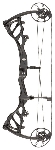 |  | 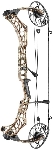 |
| Brace Height | 6.63 " | 6.25 " | 6 " |
| AtA Length | 30 " | 30 " | 29 " |
| Draw Length | 25.5 " - 30.5 " | 25 " - 30 " | 25.5 " - 30 " |
| Draw Weight | 40 lbs - 70 lbs | 40 lbs - 80 lbs | 50 lbs - 75 lbs |
| IBO Speed | 335 fps | 342 fps | 340 fps |
| Weight | 4.5 lbs | 3.9 lbs | 4.48 lbs |
| Let-Off | 85 / 87% | 80% or 85% | 80% or 85% |
| Where to buy Best prices online | |||
| compare more bows | |||
The Bowtech Carbon One, the Hoyt REDWRX Carbon RX-7, and the Mathews Phase4 29 are three compact flagship hunting bows a 2023 buyer would have cross-shopped, and they split cleanly on material and price. The Hoyt REDWRX Carbon RX-7, at a launch MSRP near $1,899, is the direct carbon-riser rival - a 30.5-inch carbon flagship rated 342 fps IBO; owners who shot the two back to back found the Hoyt carried marginally less vibration while the Carbon One was the quieter of the pair and the easier to tune thanks to DeadLock. The Mathews Phase4 29, launched near $1,299, is the aluminum counter-argument: a 29-inch flagship rated 333 fps whose damped riser and refined cam deliver flagship-quiet performance for several hundred dollars less, minus the carbon weave and warm-in-cold feel. Against both, the Carbon One's case rests on its shot - carbon quietness with an aluminum-like deadness - and its shop-free DeadLock tuning. The decision comes down to priorities: the Carbon One for the shooter who wants that damped carbon shot and the easiest tuning, the Hoyt REDWRX Carbon RX-7 for the lowest-vibration carbon option, and the Mathews Phase4 29 for the buyer who wants a quiet flagship without paying the carbon premium.