
Bowtech Core SR Review


from $1100
Pros
- Genuinely fast - up to 344 fps IBO and a measured 341 fps with a 350-grain arrow at 70 pounds, roughly fifteen feet per second quicker than Bowtech's prior flagships and among the fastest hunting bows of its year
- Keeps a comfortable draw for a speed bow - in the Comfort setting the seventy-pound pull feels closer to sixty-five, and the 6-inch brace behaves more like a near-7-inch brace thanks to the riser's reflex geometry
- Full DeadLock cam plus TimeLock - correct a paper tear or pull timing creep out of the cables with an Allen key on the shooting line, no press required
- Rock-solid back wall and a dead, quiet shot - twin Orbit dampeners and cable stops that give just enough at the wall keep hand shock down to flagship levels
Cons
- Performance mode firms the draw with a noticeably bigger hump at the back wall for only about six to ten feet per second - most owners leave it in Comfort, where it is still fast
- Maxed out at the top of its 25-to-30-inch draw range the back wall turns aggressive - a shooter who needs a true 30-inch draw should shoot it in person or run a lower peak weight, while owners at 29 inches and under find it comfortable
Video
content from YouTube
Editors' review
A six-inch brace height is supposed to punish you. It is the number that separates fast bows from forgiving ones - less room between grip and string, less margin for a hand that is not perfectly still. The Core SR has that six-inch brace and an IBO rating up to 344 fps, and by every rule of thumb it should draw and hold like a speed bow that makes you work. It does not. Bowtech built the SR - the name is short for Speed Redefined - around a riser whose reflex geometry pushes the limb pivot back so the bow behaves like it has closer to a seven-inch brace, and the result is a 33-inch hunter that shoots fifteen feet per second faster than the brand's previous flagships while still drawing like something gentler. It launched for 2024 alongside the smoother Core SS, sharing that bow's entire tuning suite, and the question it answers is a specific one: can a hunter have real speed without the harsh draw and twitchy hold that usually come with it? For most of the season most owners spend behind it, the answer is closer to yes than the spec sheet suggests.
Finish
The Core SR ships in a spread of solids and camo patterns: Black, Flat Dark Earth, OD Green, and Smoke Grey on the solid side, with Mossy Oak Country DNA, Realtree Edge, Gore Optifade Subalpine, Kuiu Verde, and Mossy Oak Bottomlands among the patterned options. Owners who prefer a clean single-tone rig gravitate to the solids - a dark green SR in particular reads well in person - while the Optifade and Mossy Oak wraps suit the hunter who wants the bow to break up in timber or a marsh edge. Bowtech's durable factory finish is consistent across the line, and hands-on owners report the riser holding up well through several months of shooting and testing without early wear. Solid Black and Flat Dark Earth are the understated choices for a shooter who splits time between the range and the woods, while the camo patterns cover the hunter who wants the bow to vanish in cover. Color availability can shift through the model year. It is a practical palette rather than an enormous one, but it covers the finishes a hunter actually reaches for.Riser
The riser is machined aluminum, cut into a 33-inch axle-to-axle chassis, and its geometry is the quiet reason this bow works. A six-inch brace height normally comes from a heavily reflexed riser that trades forgiveness for speed, but Bowtech measures its reflex differently - by pushing the limb pocket and pivot point farther back rather than bending the riser hard toward the shooter - so the SR gets its speed from the six-inch brace while behaving, at full draw, more like a bow with three-quarters of an inch to an inch more brace. The headline feature is CenterMass: a flat mounting bar slides through a slot in the riser so the sight and a low-profile quiver sit tight to the center of the bow, keeping the riser thin while pulling accessory mass in toward the balance point. Traditional side mounting locations remain, and a drop-away rest can integrate the same way, so a conventional setup loses nothing. Twin Orbit dampeners top and bottom kill post-shot vibration, and a roller cable guard runs the cables clean. In my experience the CenterMass quiver mount is the detail you notice on a long pack-in, when the loaded bow does not want to tip in your hand the way a side-hung quiver makes it. It is a long, stable platform that hides its speed in its balance.Grip
The Core SR uses Bowtech's GripLock, carried over from the brand's target line - a slim panel grip whose angle you set by loosening two screws and turning a drive screw to pitch it in or out. It replaces the old approach of swapping separate grip plates to change wrist height; here one grip rotates to a high-wrist or low-wrist position without buying anything extra. The underlying shape is the low, torque-neutral Bowtech panel owners have trusted for years, with a touch of texture across the middle that gives the hand a little extra purchase when it gets sweaty or cold. That indexing matters more on a speed bow than a smooth one - a repeatable, low-torque grip is what keeps a fast, short-brace bow shooting where you point it. I keep my own GripLock set nearly flat against the riser, and the value of the system is simply that a shooter who wants a steeper wrist angle can dial it in rather than fight a fixed grip. It is a small feature that pays off every time you settle the same hand into the same place.Limbs
Bowtech offers the Core SR in 50, 60, and 70-pound peak weights, and because the limb bolts back each set down roughly ten pounds, the bow covers an effective 40-to-70-pound window - full hunting power with a floor low enough for a smaller-framed shooter, though Bowtech does not offer the SR in an 80-pound option the way some speed bows do. The limbs seat into Dual Lock pockets that genuinely lock the limb bolt captive until you loosen the pocket screw, a rigid foundation that holds tune through a season rather than the mostly-cosmetic locking pockets found elsewhere. The pockets sit well back on the limb for stiffness, part of why the bow feels so solid at full draw. Winding weight up or down is a straightforward limb-bolt job with a single Allen key. This is the same limb-and-pocket architecture Bowtech runs across its DeadLock line, a design with a long reliability record, and on the SR it does double duty - it has to hold a faster, more aggressive cam in time, and it does. For the speed-minded hunter the 70-pound peak stores plenty of energy to put the SR's velocity to work downrange.Eccentric System
The DeadLock cam is where the SR's speed and its manners both come from. Tuning is the signature: if the bow throws a left or right tear, you loosen a set screw, turn a drive screw that walks the cam sideways on its axle, and lock it back down - no press, no shims, done on the shooting line, and this is the full DeadLock system rather than a simplified version. TimeLock adds a separate adjuster that pulls timing creep out of the cables without a press, and Bowtech carried target-bow refinements into this cam so timing can be dialed in fine increments. Let-off runs a selectable 80 to 85 percent - the share of peak weight your arms stop holding at full draw - and the module-and-draw-stop layout lets an advanced shooter drop holding weight further without buying new mods. The 344 fps IBO rating (the industry's fixed-setup number at 30 inches, 70 pounds, 350 grains) is roughly fifteen feet per second up on Bowtech's prior flagships, and it holds up on a chronograph: a 350-grain arrow at 70 pounds and a 30-inch draw ran 341 fps in the Performance setting - three feet off the advertised number and the fastest reading many reviewers logged that year - and still 330 fps in Comfort. Step to heavier hunting arrows and a 29-inch draw and it clocks 316 fps with a 350-grain shaft and 281 fps with a 450-grain arrow. FlipDisc is the versatility switch: a rotating module that flips between Comfort and Performance, trading roughly six to ten feet per second for a smoother draw. Draw length adjusts from 25 to 30 inches through rotating modules.Draw Cycle/Shootability
Here is the surprise. Drawing the SR at seventy pounds in Comfort, I kept forgetting it was a seventy-pound speed bow - the cam builds without a harsh spike and the hold settles into a valley that feels a full weight class lighter than it is - the seventy-pound Comfort draw reads closer to a sixty-five. The six-inch brace should make the shot twitchy, but the reflex geometry does its work and the bow holds steady in a way the number does not predict. The back wall is solid - cable stops rather than a hard limb stop, so there is a sliver of give as you pull into the shot instead of a dead concrete wall, which suits a shooter who likes to lean into the back wall on a hunting bow. The shot is dead in the hand and quiet, in the upper tier of bows for vibration, with the twin Orbit dampeners doing real work; a decibel reading in the mid-90s puts it squarely in normal hunting-bow territory once a quiver and stabilizer are bolted on. Two honest caveats from hands-on use: flip the disc to Performance and the draw firms up with a distinct hump late in the cycle for only six to ten more feet per second, so most owners stay in Comfort; and pushed all the way to its 30-inch ceiling the back wall turns aggressive, which is a reason a true 30-inch shooter should pull one in person or run a lower peak. Set at 29 inches and under in Comfort, though, it is a genuinely comfortable fast bow - the whole reason it exists.Usage Scenarios
The Core SR is the speed-minded whitetail and mule-deer hunter's bow, the archer who wants a flat trajectory and forgiving pin gaps at the longer end of ethical range but is not willing to accept a punishing draw to get there. Picture a western hunter picking apart a coulee, a mule deer bedded at forty yards across a draw where a few feet per second flattens the shot and shrinks the guesswork on an uphill angle: the SR's velocity earns its keep exactly there, while the 33-inch axle length steadies the long hold. It works just as well from an eastern treestand for the hunter who wants speed in reserve without giving up a comfortable draw over a long sit, and the low 40-pound floor of the draw-weight range keeps it accessible to a smaller-framed shooter who still wants a fast rig. The do-it-yourself DeadLock and TimeLock tuning suits an owner who likes to keep their own bow shooting bullet holes and to fine-tune timing as the season wears on the cables. It is a strong 3D and target crossover for the shooter who wants one fast bow to do both. What it is not is the choice for the hunter whose single priority is the smoothest possible draw with speed as an afterthought - that shooter wants the Core SS.Bowtech Core SR vs Mathews Phase4 33, Hoyt Ventum Pro 33
| Bow | Bowtech Core SR | Mathews Phase4 33 | Hoyt Ventum Pro 33 |
| Version | 2025 | 2024 | 2022 |
| Picture | 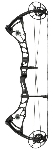 | 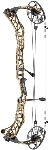 |  |
| Brace Height | 6 " | 6.5 " | 6.375 " |
| AtA Length | 33 " | 33 " | 33 " |
| Draw Length | 25 " - 30 " | 27 " - 31.5 " | 26 " - 31 " |
| Draw Weight | 40 lbs - 70 lbs | 50 lbs - 75 lbs | 40 lbs - 80 lbs |
| IBO Speed | 344 fps | 336 fps | 334 fps |
| Weight | 4.5 lbs | 4.68 lbs | 4.67 lbs |
| Let-Off | 85% | 80% or 85% | 80% or 85% |
| Where to buy Best prices online |
| ||
| compare more bows | |||
The Core SR competes in the 33-inch hunting-flagship class, and two cross-brand rivals match it on axle length and price tier. The Mathews Phase4 33, at a $1,399 launch MSRP identical to the SR's, is the quiet one - Mathews engineered the Phase4 platform for minimal noise and vibration with a 6.5-inch brace and a 336 fps rating, so a hunter whose top priority is a hushed shot and a slightly more forgiving brace has a real case for it. The Hoyt Ventum Pro 33, launched in the same flagship price tier, is the other 33-inch benchmark, a 334 fps flagship with a 6.375-inch brace and Hoyt's own tuning and mounting ecosystem. Against both, the Core SR's edge is straightforward speed with a manageable draw: its up-to-344 IBO and measured 341 fps top the rated numbers of either rival, and the reflex geometry keeps its shorter six-inch brace shooting more forgivingly than that number usually allows, all while DeadLock and TimeLock let you tune on the line without a press. The decision comes down to priorities: the Mathews Phase4 33 for the hunter who wants the quietest shot and a more forgiving brace, the Hoyt Ventum Pro 33 for the buyer invested in Hoyt's platform, and the Core SR for the shooter who wants the most speed of the three without paying for it in a punishing draw.