
Bowtech Stalker Review


from $150
Pros
- Deadly accurate - owners rank its accuracy right with, and on a good day above, BowTech's flagship Patriot of the same era
- Light to carry and quick to point at 2.9 lb bare, a weight owners single out for easy all-day hauling in the stand
- Respectable real-world speed for a value single-cam - around 251 fps clocked with heavy 412-grain hunting arrows
Cons
- Not as dead-in-hand as BowTech's flagship Patriot or Liberty - some owners note bottom-end recoil and slightly top-heavy balance, which moving the vibration modules down or adding dampeners quiets noticeably
Editors' review
Owners of this bow will tell you something that sounds backward: on a good day they could out-shoot their flagship Patriot with it. That is the BowTech Stalker in one line - a plain, feather-light single-cam from the early 2000s that gave up a little of the flagship's dead-in-hand quietness and bought raw accuracy and an easy carry in return. It sat in the value tier of BowTech's lineup from 2001 through 2003, a bare bow for the hunter who wanted a forgiving long riser without paying flagship money. Its character comes from geometry most hunting bows of the day didn't offer: a long 33-plus-inch axle-to-axle, a tall brace height, and a mass weight under three pounds. Over its three years it stayed a single-cam bow under BowTech's early-2000s cam names - the PF cam on the 2001 and 2002 bows, giving way to the Infinity Cam on the 2003 lineup - and it was the one model BowTech deliberately kept out of its target-color program, a camo-only hunting tool to the end. It is a used-market find today, and for a certain shooter it is a very good one.
Finish
The Stalker was a hunting bow first and dressed the part: it shipped in the woodland camo dips of the era rather than any bright target scheme. Its finish story has one genuinely telling detail - when BowTech rolled out target colors across the line for 2001, the catalog spelled out that those colors would be available on every model except the Stalker. This bow stayed camo, by design, which fit both its purpose and its price. A full camo dip over a machined-aluminum riser holds up well to the knocks of brush, treestand steps, and bowcase rubs, and for a used buyer judging a Stalker today the finish is the easiest read in a photo - a clean, unfaded dip with tight, unfrayed cable serving usually means the bow lived an easy life. There is no two-tone or tribute program here, just a straightforward hunting look that does its job in the woods.Riser
The riser is machined aluminum and, for its day, generously long - the source of the Stalker's steady-aiming reputation. Where BowTech's shorter bows packed their geometry tight, the Stalker stretched out to a 33.5-inch axle-to-axle in 2001 and 2002, then shifted slightly to 33.125 inches for 2003, trading a touch of length for an even taller brace height. That is the whole design thesis: length and a tall brace are what make a bow forgiving, and the Stalker leaned into both rather than chasing speed. It predates BowTech's Vertical Force Technology risers, which arrived on the later Extreme and Patriot VFT bows - the Stalker is a cleaner, simpler platform from the company's early single-cam years. Accessory mounting follows the traditional Berger-hole pattern of the period, so any standard prong or drop-away rest bolts on without adapters, which is a quiet advantage for a used buyer wanting to modernize the rig. It is an honest riser whose real job is to hold that long, light geometry steady under the hand.Grip
The Stalker wears the standard BowTech grip of its era rather than the slim side plates the company reserved for later up-line bows - a medium-width, rounded profile that fills the hand. That is not a drawback so much as a period trait: owners describe it as comfortable and easy to settle into the same way every draw, and a grip you can locate repeatably is where a lot of quiet accuracy actually comes from. The rounded shape also stays reasonably warm against a bare hand in cold weather, a small thing that matters on a late-season sit. Anyone who prefers a thinner feel can shape the grip down or swap it, since standard aftermarket grips fit the platform. For a value bow of its day it is a sensible, low-torque grip that asks for no attention.Limbs
The Stalker's limbs are ordered by peak draw weight. From 2002 it offered the full four-tier spread - 40, 50, 60, and 70 pounds - covering a lighter-drawing shooter up through a full-power whitetail and elk setup, while the 2001 launch bow came in the 60-to-70-pound option only. Each peak backs down through the limb bolts, and BowTech's manual is specific about it: one full turn of the limb bolt equals three to four pounds, with no more than two and a half turns from peak, so a 70-pound bow tunes comfortably down into the low 60s without new limbs. Moving between the 40/50/60/70 tiers means the matching limb set, a dealer-level change. There is no exotic-material story here - these are well-understood, solidly built limbs from BowTech's early hunting line, and the whole bow still comes in under three pounds, which is the headline the spec sheet keeps returning to. It is a straightforward system any pro shop or a confident home tinkerer with a press can service.Eccentric System
The Stalker is a single-cam bow - one cam on the bottom limb working against an idler wheel up top - and over its run it carried two of them. The 2001 and 2002 bows rode BowTech's PF cam; by 2003 the Stalker ran the Infinity Cam - the single cam BowTech introduced for its "Uni" single-cam line and the one that defined its hunting bows before the Binary Cam System arrived in 2005. Draw length is set the old-fashioned way, by a module that a dealer swaps in one-inch steps across the bow's broad 27-to-32-inch range, and the let-off is selectable between 65 and 80 percent by repositioning the draw stop - the percentage of peak weight the bow sheds at full draw, so a hunter can choose a relaxed, low-holding hold or a firmer one. On paper the Stalker rates 298 to 306 fps IBO (the industry-standard chronograph figure taken at a fixed heavy setup), which is modest by design - the tall brace trades speed for forgiveness. The number that matters more is the field one: an owner shooting a heavy 412-grain hunting arrow clocked right around 251 fps, the normal gap between an IBO rating and real-world speed on any bow, and plenty flat for whitetail ranges. A single cam of this era also means there is no two-cam timing to drift, which is part of why owners trust the bow's repeatability.Draw Cycle/Shootability
Drawing the Stalker, the first thing I notice is how little bow there is to manage - under three pounds in the hand, it points quickly and does not wear out a bow arm over a long sit or a walk-around 3D course. It builds to peak and settles into an easy hold at the 80-percent setting, where the holding weight drops low enough to wait out a deer, and the draw stop gives a defined place to anchor. What the Stalker is genuinely known for is the shot that follows: owners come back again and again to accuracy, with more than one saying they can out-group a pricier flagship with it. I read that the same way they do - a simple, light, repeatable rig is an easy bow to aim. The honest caveat is at the back of the shot. This is not the dead-in-hand feel of BowTech's flagship Patriot or Liberty; some owners describe a bit of bottom-end recoil and a slightly top-heavy balance, and I would tell a flagship shooter to expect a touch more buzz here. The fix owners found is cheap and real - moving the bow's vibration modules down the string, or adding dampeners, cuts the noise and hand shock noticeably. It is not a loud or jumpy bow; it simply asks for a few minutes of setup to shoot as quietly as it shoots accurately.Usage Scenarios
The Stalker is a whitetail and general big-game bow at heart. At a 60 or 70-pound peak it stores plenty of energy for deer, hogs, and black bear at the treestand and ground-blind distances where most bowhunting happens, and its sub-three-pound weight makes it one of the easier bows of its era to carry all day or haul up into a stand. The long axle-to-axle and tall brace are what make it forgiving, so it rewards the hunter who values a steady hold and a repeatable shot over chasing the fastest arrow. Its broad 27-to-32-inch draw range is the quiet differentiator: where many hunting bows of the day topped out around 30 inches, the Stalker fits the taller, longer-draw archer who gets left out elsewhere. Left-hand shooters were served too - BowTech offered the Stalker in a left-hand build, and used lefties do turn up. Where it is not the right tool is flat-out speed hunting or any job that prizes a dead-quiet flagship signature out of the box; the Stalker trades those for forgiveness, light weight, and a bargain. For a used buyer who wants a dependable, accurate, easy-carrying hunting single-cam, it still fits the stand well.Versions
The Stalker was sold as a single bare-bow SKU in each of its years, not as a ready-to-hunt package - the buyer added rest, sight, and quiver, which kept the price down and put the Stalker squarely in BowTech's value tier. What actually changed across its run was the bow itself, in two steps worth knowing for a used shopper. The cam: the 2001 and 2002 bows carry BowTech's PF cam, and the 2003 bow runs the Infinity Cam. The geometry: 2001 and 2002 share a 33.5-inch axle-to-axle and a 7.75-inch brace height, and for 2003 BowTech shortened the axle-to-axle to 33.125 inches while growing the brace to 8.125 inches, nudging the bow toward even more forgiveness. Draw weight started at the 60-to-70-pound option in 2001 and opened to the full 40/50/60/70-pound tiers for 2002 and 2003, draw length holds at the 27-to-32-inch range, let-off a selectable 65 or 80 percent, and the mass stays at 2.9 pounds throughout. A buyer shopping the used market should confirm the year by the cam and brace height, since those are the only meaningful differences between them.Bowtech Stalker vs TomKat, Mathews Classic
| Bow | Bowtech Stalker | Bowtech Tomkat | Mathews Classic |
| Version | 2003 | 2008 | 2007 |
| Picture |  | 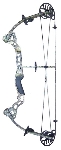 | 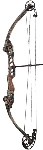 |
| Brace Height | 8.125 " | 8.5 " | 7 " |
| AtA Length | 33.125 " | 31.75 " | 36 " |
| Draw Length | 27 " - 32 " | 27 " - 31 " | 27 " - 31 " |
| Draw Weight | 40 lbs - 70 lbs | 40 lbs - 70 lbs | 40 lbs - 70 lbs |
| IBO Speed | 298 fps - 306 fps | 299 fps - 315 fps | 310 fps - 312 fps |
| Weight | 2.9 lbs | 3.8 lbs | 3.6 lbs |
| Let-Off | 65% - 80% | 65% - 80% | 80%/65% |
| Where to buy Best prices online | |||
| compare more bows | |||
In the early 2000s a value-minded hunter cross-shopping BowTech was choosing between the Stalker and the Bowtech Tomkat, and the two answer the same budget with opposite geometry. The TomKat is the compact one, 31.75 inches axle-to-axle with an 8.5-inch brace, and it is the only BowTech of the era sold as a complete ready-to-hunt package - rest, sight, peep, quiver, and sling in the box - where the Stalker is a longer 33-inch bare bow you build up yourself. Pick the TomKat for the shortest walk from purchase to practice and a more packable length; pick the Stalker for the longer riser, the lighter sub-three-pound carry, and the 27-to-32-inch draw range that fits a taller shooter the compact TomKat cannot. The cross-brand benchmark for forgiveness is the Mathews Classic, and it is an instructive contrast: the Mathews Classic buys its steadiness with sheer length - a full 36 inches axle-to-axle on a single SoloCam, rated 310 to 312 fps - while the Stalker gets its forgiveness from a tall brace at a far more packable 33-inch length. The Classic is the steadier target-style hold and a touch faster; the Stalker is the lighter, more huntable package and the only one of the three that reaches a 32-inch draw. The decision comes down to priorities: the TomKat for a finished compact rig, the Mathews Classic for the longest and steadiest hold, and the Stalker for the lightest carry and the longest draw in a forgiving hunting bow.